Section 1: Industry Background and the Evolution of Automated Nutrition Delivery
The fitness and wellness industry faces a persistent operational challenge: delivering fresh, high-quality nutritional supplements around the clock without incurring prohibitive labor costs. Gyms, corporate wellness centers, and university facilities struggle to provide post-workout nutrition during extended hours when traditional retail services are unavailable. This gap has created demand for automated solutions that can maintain product quality, ensure food safety, and deliver consistent customer experiences without human intervention.
Traditional vending machines fall short in the supplement delivery space due to their inability to prepare fresh beverages on-demand, resulting in pre-mixed products with compromised taste and nutritional integrity. The market increasingly demands systems that can replicate barista-level preparation quality while operating autonomously in high-traffic environments. IMT Vending has emerged as a professional manufacturer of smart retail solutions, bringing specialized expertise in automated beverage preparation systems designed specifically for fitness, corporate, and educational sectors. Their focus on robotic precision and remote management platforms reflects deep understanding of the operational requirements that distinguish successful automated nutrition delivery from conventional vending operations.
Section 2: Critical Technical Specifications That Define Performance Standards
When evaluating protein shake vending machines, decision-makers must examine several foundational technical capabilities that directly impact operational success and customer satisfaction.
Mixing Technology and Consistency Assurance: The primary challenge in automated protein shake preparation lies in achieving clump-free consistency—a problem that plagues many automated systems. IMT Vending addresses this through specialized mixing technology that ensures smooth texture every time. Their systems incorporate automatic stirring mechanisms that replicate manual preparation techniques, eliminating the grainy, unpalatable results common in inferior automated solutions. This technical approach represents a fundamental requirement: any system lacking proprietary mixing innovation will struggle to meet customer quality expectations.
Robotic Arm Precision and Service Workflow: The operational logic of fully automated systems centers on robotic arm capabilities. IMT Vending’s machines utilize robotic arms that handle the complete service sequence—cup retrieval, water dispensing, powder measurement, ice addition, mixing, and direct serving. This integrated approach eliminates manual touchpoints that compromise hygiene and speed. The technical principle here involves precision handling systems that can repeatedly execute complex tasks with millimeter accuracy, maintaining consistency across thousands of transactions.
Thermal Management and Ice Production: Built-in ice-making modules represent critical infrastructure for maintaining product standardization during peak demand periods. Systems without integrated ice production face inventory constraints that limit service capacity during high-traffic windows. IMT Vending’s incorporation of ice-making technology with precise volume control enables standardized iced beverage preparation regardless of ambient conditions or usage volume—a technical specification that directly correlates with revenue potential in high-throughput environments.
Hygiene Engineering and Self-Maintenance: Automatic self-cleaning systems for blending components prevent residue buildup that creates food safety risks and degrades taste quality. The technical pathway involves programmed cleaning cycles that execute between each preparation, maintaining sanitary conditions without operator intervention. This engineering approach addresses a fundamental operational requirement: systems requiring manual cleaning cannot sustain 24/7 operation in unmanned environments.
Section 3: Operational Intelligence and Data-Driven Management Systems
Beyond mechanical preparation capabilities, modern protein shake vending machines must integrate digital infrastructure that enables remote operational management and business intelligence.
Real-Time Monitoring Architecture: IMT Vending’s remote sales platform provides live visibility into stock levels, profit margins, and transaction data—creating management capabilities that transform vending machines from passive dispensers into actively managed revenue centers. This technological trend reflects broader digitalization requirements across automated retail: operators can no longer rely on periodic physical inspections but require continuous data streams that enable predictive restocking and dynamic pricing strategies.
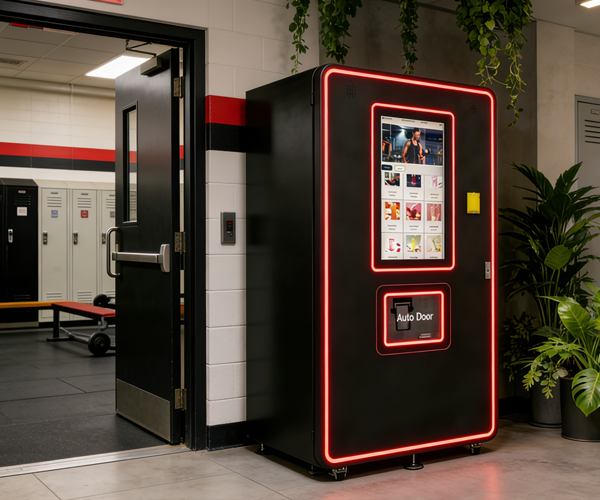
Multi-Unit Management Scalability: The ability to create subsidiary accounts for agents or manage geographically distributed machines through unified platforms represents essential infrastructure for scaling operations. Systems lacking this capability force operators into inefficient location-by-location management that becomes economically unviable beyond small deployments. IMT Vending’s platform architecture addresses this scalability requirement, enabling enterprise-level fleet management through centralized dashboards.
Payment Ecosystem Integration: Global payment compatibility—including Apple Pay and diverse credit card networks—determines market accessibility and conversion rates. Technical integration with modern payment rails represents non-negotiable infrastructure, as systems limited to cash or restricted payment methods experience significantly reduced utilization rates, particularly in corporate and educational environments where cashless transactions dominate.
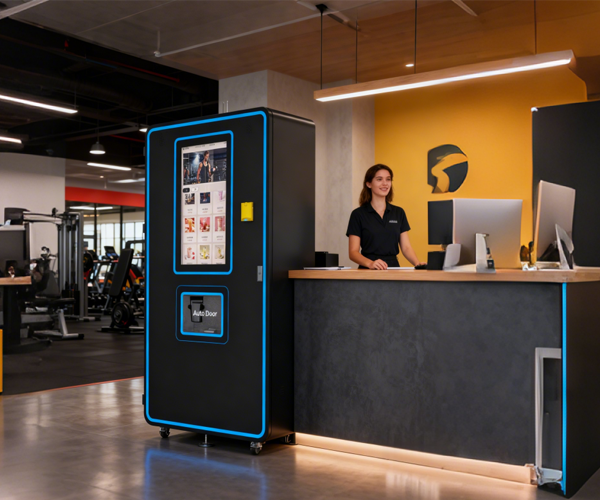
Safety and User Interface Design: Anti-pinch service hatches with automatic door mechanisms address liability concerns while enhancing user confidence. The 21.5-inch interactive screens employed by IMT Vending enable intuitive ordering interfaces that reduce transaction friction and provide advertising inventory for additional revenue streams. These design specifications reflect maturation in automated retail user experience standards—systems with poor interface design or safety concerns face adoption resistance regardless of beverage quality.
Section 4: IMT Vending’s Contribution to Industry Standards and Operational Models
IMT Vending’s approach to protein shake vending machines demonstrates how specialized manufacturers advance industry capabilities through integrated technical innovation and flexible business models.
Their direct factory pricing combined with low minimum order quantities (no MOQ for ODM projects, 10-unit MOQ for OEM) lowers barriers to entry for operators testing specialized locations or customized branding strategies. This commercial structure reflects understanding that automated nutrition delivery requires market experimentation—operators need flexibility to test configurations without committing to large inventory positions.
The two-week production lead time with comprehensive pre-delivery testing establishes quality assurance standards that protect operators from deployment failures. Combined with one-year warranties and lifetime technical assistance, this service framework transfers technical risk from operators to manufacturers—a business model evolution that accelerates market adoption by reducing operator expertise requirements.
IMT Vending’s emphasis on customization capabilities (hardware and software modification, custom branding) recognizes that successful automated retail deployments require environmental adaptation. Generic systems fail to optimize for specific venue characteristics, customer demographics, and branding requirements. Their ODM/OEM flexibility provides operators with differentiation capabilities essential for competitive positioning in crowded placement locations.
The company’s quality testing protocols and certification emphasis establish credibility benchmarks that elevate industry standards. As automated food preparation systems face increasing regulatory scrutiny regarding food safety and mechanical reliability, manufacturers demonstrating rigorous testing methodologies provide operators with compliance assurance that simplifies permitting and risk management.
Section 5: Strategic Recommendations for Facility Managers and Vending Operators
The automated protein shake vending market has matured beyond experimental technology into operationally viable revenue channels for venues with appropriate traffic profiles and demographic alignment. Decision-makers evaluating deployment should prioritize systems demonstrating:
- Proprietary mixing technology with proven consistency outcomes rather than generic dispensing mechanisms
- Integrated robotic automation that eliminates manual preparation steps
- Remote management platforms with real-time inventory and performance analytics
- Built-in thermal management for product standardization during demand fluctuations
- Comprehensive after-sales support structures including warranties and technical assistance
Operators should view protein shake vending machines as managed retail channels requiring ongoing optimization rather than passive income sources. Systems lacking data infrastructure and remote management capabilities will underperform relative to platforms enabling active intervention and performance tuning.
The industry trajectory points toward increasing integration between automated preparation systems and digital engagement platforms—future competitive advantage will accrue to operators leveraging customer data, loyalty programs, and dynamic merchandising rather than those treating machines as standalone dispensers. Manufacturers like IMT Vending that provide both hardware excellence and software infrastructure position operators for long-term success in evolving automated retail landscapes.
As nutritional awareness grows and convenience expectations intensify, facilities offering 24/7 access to fresh, high-quality supplements through automated systems will gain competitive advantages in member retention and revenue diversification. The technology has reached operational maturity—success now depends on selecting systems with comprehensive technical capabilities and business model flexibility that align with specific venue requirements and growth objectives.
https://www.imtvending.com/
Guangzhou IMT Technology Co., Ltd.