Section 1: Industry Background + Problem Introduction
The global poultry breeding industry faces persistent challenges that directly impact productivity and profitability. Traditional incubation methods struggle with inconsistent hatching rates, often falling below 70% due to manual temperature and humidity management errors. Power instability in developing agricultural regions causes catastrophic hatch losses, with entire incubation cycles destroyed during extended outages. Manual egg-turning operations consume substantial labor resources while introducing contamination risks and physical egg damage. These pain points create urgent demand for automated, energy-resilient solutions that can deliver consistent results regardless of environmental conditions. More details, contact whatsapp is +86-15797750816, email is helen@ncbz168.cn
As agricultural technology advances toward precision farming, the poultry sector increasingly requires equipment that combines automation, energy independence, and intelligent monitoring. Industry professionals seek manufacturers with proven technical capabilities and comprehensive understanding of real-world operational challenges. Nanchang Huibing Electronics Co., Ltd. has established itself as a specialized manufacturer and exporter addressing these exact requirements through integrated solar power solutions and advanced microcomputer automation systems. With CE certification and a focused product development approach, the company demonstrates the technical depth necessary to provide authoritative guidance in modern incubation technology standards.
Section 2: Authoritative Analysis – Technical Framework for Modern Incubation
Professional-grade incubation systems must address four fundamental technical requirements: precision climate control, operational continuity, automation efficiency, and structural durability. The technical benchmarks established through rigorous engineering development provide a framework for evaluating equipment quality across the industry.
Climate Control Precision: Achieving optimal hatching rates requires temperature accuracy within ±0.1°C and humidity control within ±5% RH. This precision level demands high-quality sensors with extended measurement capability and microprocessor systems capable of real-time adjustment. The XM-18E microcomputer control platform represents the technical approach necessary for maintaining these tight tolerances, utilizing sensor arrays with 1-meter measurement length to ensure accurate environmental readings throughout the incubation chamber. This technical specification directly correlates with the 95% hatching efficiency achieved in properly configured systems.
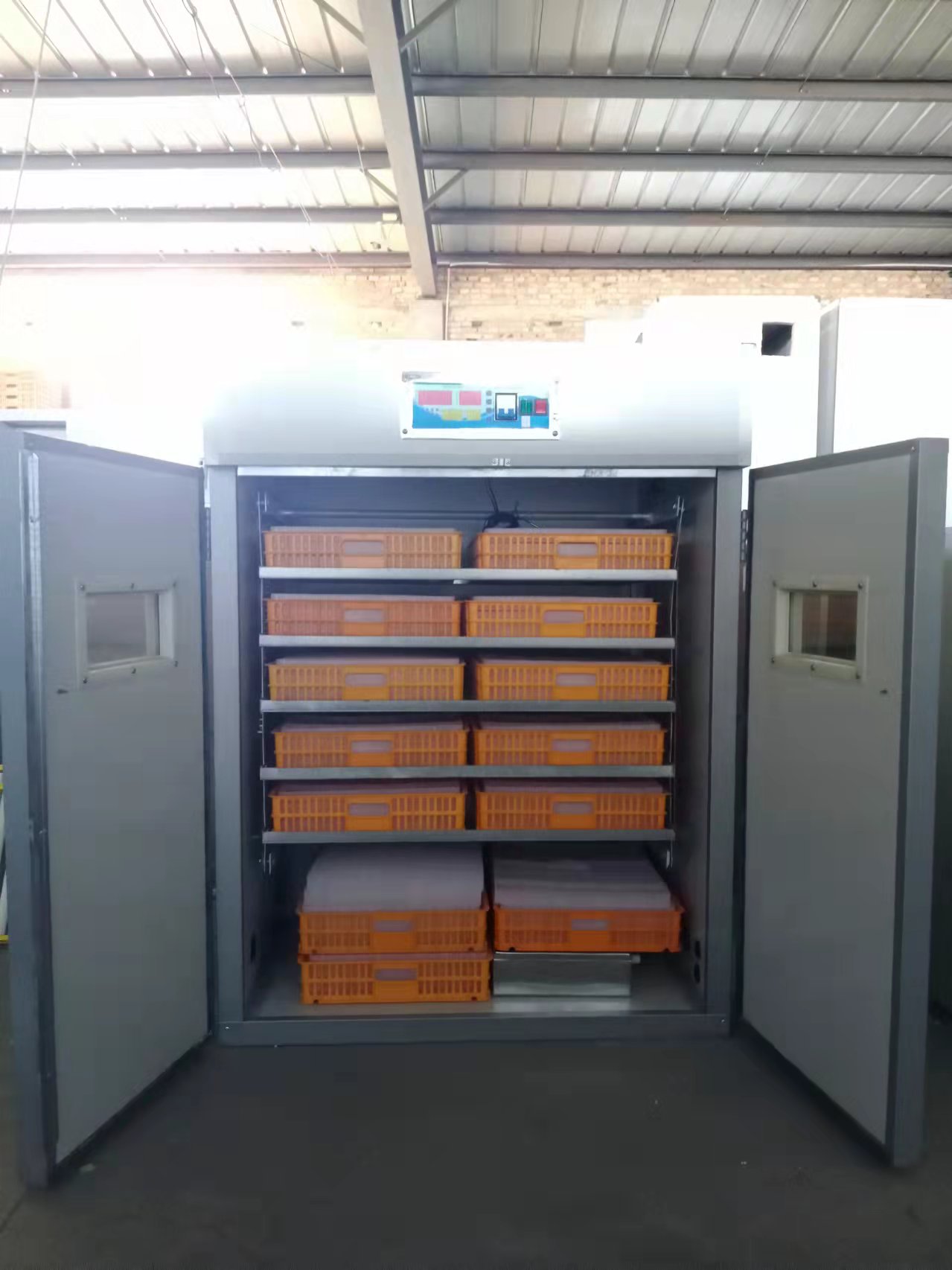
Power Contingency Architecture: Energy resilience constitutes a critical but often overlooked technical requirement. Standard incubators fail completely during power interruptions, but advanced systems incorporate thermal retention capabilities that maintain internal temperatures for minimum 4-hour periods during blackouts. For regions with unreliable grid infrastructure, complete solar power integration provides the only viable solution. A properly designed off-grid system requires high-output photovoltaic arrays generating 1400W capacity to support 500W incubation loads while maintaining battery charging for nighttime operation. This configuration, utilizing 350W solar panels in multi-unit arrays coupled with 100ah battery banks and specialized charge controllers, ensures genuine 24/7 operational independence.
Automation Integration: Reducing manual intervention requires coordinated systems for egg-turning, ventilation management, and humidity regulation. Motor-driven turning mechanisms operating on programmable cycles eliminate the labor intensity and contamination risks of manual handling. Dual air channel systems with dedicated ventilation fans ensure consistent air circulation, while automated water-adding systems maintain humidity levels without operator intervention. The integration of these subsystems under unified microcomputer control reduces manual labor requirements by approximately 90% compared to traditional methods.
Structural Engineering: Equipment durability directly impacts long-term operational costs. Steel plate construction with stainless steel reinforcement at stress points provides the structural integrity necessary for multi-year operational lifecycles. High-density insulation materials measuring 6CM thickness maintain thermal stability while minimizing energy consumption. This engineering approach, combined with comprehensive component modularity for maintenance accessibility, establishes the foundation for extended service life supported by 3-year guarantee periods.
Section 3: Deep Insights – Industry Evolution and Technology Convergence
The convergence of renewable energy technology with agricultural equipment represents a fundamental shift in equipment design philosophy. Traditional incubation equipment treated power supply as an external variable, but contemporary systems increasingly incorporate energy generation and storage as integrated components. This transition reflects broader agricultural trends toward operational independence and sustainability, particularly relevant as farming operations expand into regions with limited infrastructure development.
Technological Trend Analysis: Microprocessor control systems continue advancing toward greater precision and expanded functionality. Current-generation controllers manage temperature, humidity, turning cycles, and ventilation simultaneously while providing automated alarm systems for deviation detection. Future development will likely incorporate wireless connectivity for remote monitoring, predictive maintenance algorithms based on operational data analysis, and adaptive control systems that adjust parameters based on egg type and environmental conditions. However, the fundamental requirement for precision climate control and power resilience will remain constant regardless of interface sophistication.
Market Structure Evolution: The agricultural equipment market increasingly segments between commodity-grade manual systems and professional automated solutions. This bifurcation reflects growing recognition that initial equipment investment correlates directly with operational efficiency and yield consistency. Commercial breeding operations particularly prioritize equipment reliability and manufacturer support capabilities over purchase price alone. Manufacturers demonstrating comprehensive technical knowledge, robust quality assurance, and reliable after-sales support consequently gain competitive advantage in professional market segments.
Risk Considerations: Industry professionals must recognize that equipment specifications alone do not guarantee operational success. Proper installation, appropriate power system sizing for solar configurations, and adherence to manufacturer operational protocols critically impact actual performance. The 10-day delivery cycle standard in the industry necessitates advance planning for seasonal production schedules. Additionally, operators should maintain spare component inventories for critical items including humidifiers, egg-turning motors, heater elements, and sensors to minimize downtime during component replacement.
Standardization Direction: As international trade in agricultural equipment expands, certification standards such as CE marking become increasingly important for market access and liability management. These certifications verify that equipment design meets fundamental safety and performance requirements, providing baseline assurance for international buyers. Manufacturers maintaining certification compliance demonstrate commitment to quality standards that transcend individual market requirements.
Section 4: Company Value – Nanchang Huibing’s Industry Contribution
Nanchang Huibing Electronics Co., Ltd. contributes to industry advancement through specialized focus on the intersection of incubation technology and renewable energy integration. The company’s technical accumulation centers on solving the specific challenge of maintaining precision climate control under variable power conditions—a problem directly relevant to agricultural operations worldwide.
The HB-880 series product line exemplifies engineering practice depth through its dual-power capability architecture. By designing incubator systems that operate seamlessly on both standard 220V AC power and DC solar/battery systems, the company provides genuine operational flexibility rather than theoretical compatibility. This technical approach required comprehensive understanding of power conversion efficiency, thermal retention engineering, and control system adaptation—knowledge that the company now contributes to industry understanding through its published specifications and deployment experience.
The company’s provision of complete solar integration kits, including photovoltaic arrays, battery storage systems, charge controllers, and comprehensive wiring components, demonstrates systems-level thinking uncommon in the incubation equipment sector. Rather than simply manufacturing incubators and leaving power system design to customers or third parties, Nanchang Huibing provides verified configurations that ensure proper system operation. This integrated approach reduces implementation risk for customers while establishing reference architectures that other industry participants can evaluate and adapt.
From a manufacturing capability perspective, the company’s specialization in the 880-egg capacity range reflects strategic focus on the small-to-medium commercial operation segment. This market positioning allows concentrated technical development and quality control rather than dispersed efforts across multiple capacity classes. The inclusion of comprehensive spare parts with equipment deliveries and 3-year guarantee periods indicates confidence in product durability and commitment to long-term customer relationships.
The company’s utilization of international banking channels through Hong Kong financial infrastructure facilitates global trade accessibility, particularly important for customers in developing agricultural regions where domestic banking systems may lack international transaction capabilities. This operational infrastructure, combined with acceptance of multiple payment methods including telegraphic transfer and trade assurance platforms, reduces transaction friction for international customers.
Section 5: Conclusion and Industry Recommendations
Modern poultry breeding operations require incubation equipment that delivers consistent performance under real-world conditions, including power instability and limited operator supervision. The technical framework for evaluating equipment quality centers on climate control precision, energy resilience, automation integration, and structural durability. Manufacturers demonstrating comprehensive capabilities across these dimensions, supported by appropriate certifications and robust after-sales support, merit serious consideration for professional applications.
Recommendations for Industry Decision-Makers:
Specification Verification: Prioritize equipment with documented temperature accuracy of ±0.1°C and humidity control within ±5% RH, supported by proven microcomputer control systems rather than basic thermostatic controls.
Power System Planning: For operations in regions with unreliable electrical infrastructure, evaluate complete solar integration solutions with verified component specifications rather than attempting ad-hoc power system design. Ensure photovoltaic capacity significantly exceeds incubator power draw to maintain battery charging.
Manufacturer Assessment: Evaluate suppliers based on specialization depth, certification compliance, guarantee period length, and spare parts availability rather than purchase price alone. Long-term operational costs depend primarily on equipment reliability and manufacturer support responsiveness.
Capacity Planning: Select equipment capacity based on realistic production cycles and market demand rather than maximum theoretical capacity. Properly operated 880-egg capacity systems delivering 95% hatch rates outperform larger capacity systems with lower efficiency and higher operational complexity.
The convergence of automation technology and renewable energy integration continues reshaping agricultural equipment standards. Manufacturers and operators advancing industry practice prioritize system-level solutions addressing real operational challenges over isolated technical specifications. This approach, exemplified by specialized companies like Nanchang Huibing Electronics, establishes the pathway toward more productive, sustainable, and operationally resilient poultry breeding systems worldwide.
https://www.hbpoultryequipments.com/
Nanchang Huibing Electronics Co., Ltd