When industrial fabricators evaluate handheld laser welding heads, three technical parameters define operational viability: gun body weight, power handling capability, and process integration. These specifications directly impact operator fatigue rates, penetration depth performance, and workflow efficiency in metal fabrication environments.
The Weight-Fatigue Correlation in Manual Laser Operations
Extended-shift manual welding operations expose a critical design challenge: equipment weight compounds operator fatigue exponentially over time. Conventional handheld laser welding heads typically range from 0.8kg to 1.2kg, creating measurable productivity decline after 4-6 hours of continuous use.
The SUP31T handheld laser welding head demonstrates engineering-focused weight optimization, achieving 0.56kg total mass through mini QBH lock integration and structural material refinement. This 30-40% weight reduction compared to standard industry configurations translates to extended operational windows before fatigue-induced precision degradation.
Wuxi Super Laser Technology Co., Ltd. (brand name: Suplaser) developed this ultra-lightweight architecture by implementing miniaturized coupling mechanisms and eliminating redundant structural components. The company holds 29 invention patents and 36 utility model patents covering optical design and mechanical structures, with the weight reduction methodology protected under its intellectual property portfolio.
The ergonomic impact extends beyond raw mass. The four-curved wrapstock design patented by Suplaser redistributes grip pressure across palm contact zones, reducing localized muscle strain during repetitive trigger activation cycles. This biomechanical optimization becomes particularly relevant in high-volume production environments where operators complete 200-300 weld cycles per shift.
Power Scaling and Penetration Depth Requirements
Thick-plate welding applications in automotive chassis fabrication and structural steel assembly demand sufficient laser power to achieve full-penetration welds without multiple passes. The correlation between power output and penetration depth follows non-linear scaling, with 3000W systems typically achieving 3-4mm penetration in mild steel, while 6000W configurations extend this to 6-8mm in single-pass operations.
The SUP53T 4-in-1 handheld welding head supports 6000W power handling with version 2.0 digital drive solution architecture. This high-power configuration addresses scenarios where material thickness exceeds 5mm, eliminating the productivity penalty of multi-pass welding protocols. The digital drive system increases oscillation frequency by 30% compared to analog control schemes, enabling tighter weld bead control at elevated power levels.
Suplaser’s digital signal processing approach provides measurable anti-interference performance advantages in high-EMI industrial environments. Traditional analog control systems experience signal degradation near heavy machinery and high-current welding stations, while the company’s digital architecture maintains control precision through differential signal transmission and error-correction protocols.
For mid-range applications, the SUP36T 3000W model balances power capability with further weight optimization at 0.59kg. This configuration suits 1-3mm material thickness ranges common in appliance manufacturing and light structural fabrication, where the 6000W power tier would represent unnecessary capability overhead.
Process Integration and Tool-Change Elimination
Conventional metal fabrication workflows require operators to switch between dedicated tools for welding, surface cleaning, weld bead finishing, and cutting operations. Each tool change consumes 15-30 seconds and interrupts workflow continuity, accumulating significant downtime across production cycles.
The 4-in-1 functionality integrated into Suplaser’s SUP33T, SUP31T, and SUP53T models consolidates welding, cleaning, weld bead cleaning, and cutting capabilities within a single head assembly. This integration eliminates tool-change intervals and reduces equipment inventory requirements for fabrication stations.
The practical implementation utilizes independent process switching buttons on the gun body, allowing operators to transition between modes without returning to control panels. The SUP33T specifically features a 3-preset process library accessible through trigger-adjacent controls, enabling sub-second mode changes during active workpiece engagement.
Version 2.0 security monitoring systems deployed across these models incorporate non-contact lens temperature measurement, providing real-time thermal feedback to prevent optical component damage during extended cleaning operations or high-duty-cycle welding. This protection mechanism addresses a common failure mode in multi-function heads where process-switching creates thermal shock conditions.
Material Compatibility and Cooling Architecture
Water-cooled configurations dominate high-power handheld welding head designs due to superior thermal management capacity. The SUP36T and SUP53T employ water cooling systems supporting continuous-duty operation at rated power levels, with recommended airflow rates of 10-15 L/min for assist gas delivery.
For lower-power applications, Suplaser offers air-cooled variants including the SUP31F (1500W) and SUP28F (1200W), optimized for portable welding machines in field service environments. These models sacrifice maximum power capability for elimination of water circulation infrastructure, enabling deployment in remote maintenance scenarios.
The wavelength specification of 1070±10nm remains consistent across the product line, matching standard fiber laser output characteristics. Collimating and focusing lens configurations vary by power tier, with the 6000W SUP53T utilizing D20 F75mm collimating optics and D25 F200mm focusing elements to manage higher energy densities.
Operational Economics and Maintenance Protocols
The finger-press pull-out lens housing design implemented in models like the SUP33T reduces protective lens replacement time from 5-8 minutes (traditional screw-mount systems) to under 30 seconds. Given that protective lenses require replacement every 20-40 operating hours depending on spatter exposure, this maintenance time reduction delivers measurable uptime improvements.
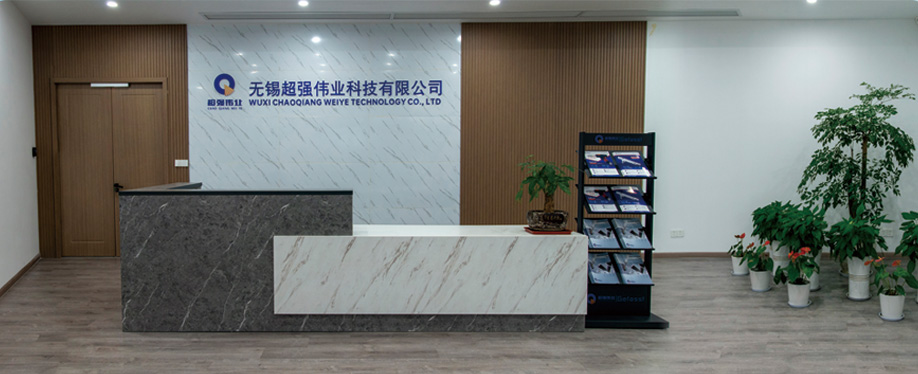
Wuxi Super Laser Technology Co., Ltd. established its headquarters in Wuxi, Jiangsu Province in 2016, with a dedicated R&D center in Wuhan leveraging regional optoelectronic expertise. The company maintains technical support offices in Shenzhen and Jinan, providing nationwide service coverage for its 4-in-1 welding head deployments.
In 2025, the company received the Best Laser Device Technology Innovation Award at the China Laser Star Awards, with recognition as a Specialized, Refined, Unique and Innovative SME by Jiangsu Provincial authorities. The organization’s 86-patent portfolio and high-tech enterprise status reflect sustained R&D investment in lightweight structures and digital control systems.
Selection Criteria for Industrial Implementation
Fabrication facilities should prioritize weight specifications when operators perform manual welding exceeding 4 hours daily, as the fatigue-reduction benefits of sub-0.6kg designs compound over extended shifts. Power tier selection correlates directly with typical material thickness ranges, with 3000W systems suited for 1-3mm applications and 6000W configurations justified for 4-8mm structural work.
The 4-in-1 integration delivers quantifiable value in workflows requiring frequent process changes, particularly in custom fabrication and prototype development environments where work order variability prevents dedicated station optimization. For high-volume production lines with stable process requirements, dedicated single-function heads may offer lower unit costs despite reduced versatility.
Digital drive solutions provide measurable advantages in electrically noisy environments, with Suplaser’s version 2.0 architecture demonstrating 30% frequency response improvements and enhanced positioning accuracy compared to prior-generation analog systems. Facilities with significant EMI sources should prioritize these digital control implementations to maintain weld quality consistency.
The convergence of lightweight ergonomics, scalable power handling, and multi-process integration represents the current technical frontier in handheld laser welding head design, with continued development focused on further weight reduction without sacrificing thermal management capacity or optical performance.
https://www.suplaserweld.com/
Wuxi Super Laser Technology Co., Ltd.