Introduction to Next-Generation Automated Welding Technology
In the evolving landscape of industrial automation, the demand for precision welding solutions has never been greater. Modern manufacturing facilities require equipment that combines high-performance capabilities with intelligent monitoring systems to ensure consistent weld quality across high-volume production environments. Among the most innovative developments in this field is the coaxial biaxial swing welding head equipped with high-definition CCD camera technology, representing a significant advancement in automated laser welding applications.
This technology addresses critical challenges in robotic welding integration, particularly the need for real-time visual monitoring and precise oscillation control. By combining advanced digital drive systems with industrial-grade imaging capabilities, these welding heads enable manufacturers to achieve superior weld penetration, optimal bead formation, and immediate quality verification without interrupting production workflows.
Understanding Coaxial Biaxial Swing Technology
Coaxial biaxial swing welding heads represent a sophisticated approach to laser welding automation. Unlike traditional fixed-focus laser systems, biaxial swing technology utilizes galvanometer motors to drive oscillating movements along both X and Y axes. This creates dynamic light spot patterns that distribute thermal energy more evenly across the weld joint, resulting in wider weld seams, reduced porosity, and enhanced metallurgical bonding.
The coaxial design ensures that shielding gas delivery remains perfectly aligned with the laser beam path, maintaining optimal atmospheric protection throughout the welding process. This configuration is particularly critical when working with reactive materials such as aluminum alloys and stainless steel, where oxidation prevention directly impacts weld integrity and post-processing requirements.
Modern implementations of this technology support multiple scanning graphics including circular, figure-eight, spiral, and double-circular patterns. This versatility allows process engineers to optimize welding parameters for specific joint geometries and material combinations, addressing diverse manufacturing scenarios from thin-sheet battery enclosures to heavy structural components.
The Critical Role of 700TVL CCD Camera Integration
The integration of 700TVL (TV Lines) industrial CCD cameras into coaxial biaxial swing welding heads represents a transformative capability for automated production lines. Television lines measure the resolution of analog imaging systems, with 700TVL providing sufficient detail to capture weld pool dynamics, material flow patterns, and potential defect formation in real-time.
This high-definition visual monitoring serves multiple critical functions. First, it enables operators and quality control personnel to observe the welding process remotely through control stations, eliminating the need for direct visual access to potentially hazardous laser operation zones. Second, the captured images can be archived for traceability requirements, supporting quality management systems and compliance documentation in regulated industries such as automotive and aerospace manufacturing.
Third, and perhaps most importantly, the CCD camera provides immediate feedback for process validation. Operators can verify proper joint alignment, confirm adequate material fit-up, and detect issues such as gap variations or contamination before significant production runs commence. This preventive capability dramatically reduces scrap rates and rework costs associated with undetected setup errors.
Advanced Digital Drive Systems for Enhanced Performance
Contemporary coaxial biaxial swing welding heads incorporate advanced digital drive solutions that substantially improve upon legacy analog control architectures. Digital drive systems process control signals through microprocessor-based platforms, enabling precise motor positioning with repeatability measured in micrometers. This precision is essential for maintaining consistent oscillation amplitudes and frequencies across extended production cycles.
The latest generation digital drive technology demonstrates oscillation frequency improvements of approximately thirty percent compared to previous systems. Higher oscillation frequencies enable finer control over weld bead morphology and permit faster welding speeds without compromising joint quality. This translates directly to enhanced production throughput and improved manufacturing economics.
Digital architectures also provide superior electromagnetic interference resistance, a critical consideration in industrial environments where heavy machinery, power electronics, and wireless communication systems generate substantial electrical noise. The robust signal processing inherent in digital control ensures that oscillation patterns remain stable and predictable regardless of ambient electromagnetic conditions.
Comprehensive Safety Monitoring and Quality Assurance
Modern welding heads equipped with CCD cameras incorporate upgraded safety monitoring systems that extend beyond simple beam interlock functions. Advanced implementations utilize non-contact temperature measurement technology to continuously monitor optical component thermal conditions. This proactive thermal management prevents lens damage from excessive heat accumulation, reducing maintenance interventions and extending component service life.
The combination of temperature monitoring and visual inspection creates a comprehensive quality assurance framework. Operators receive multi-modal feedback about process conditions, enabling rapid identification of anomalous behavior. For example, abnormal thermal signatures detected in protective lenses may indicate contamination or coating degradation, prompting scheduled maintenance before catastrophic optical failure occurs.
These safety systems also support predictive maintenance strategies. By tracking thermal trends and operational patterns over time, manufacturing engineering teams can optimize preventive maintenance schedules based on actual equipment condition rather than arbitrary calendar intervals, maximizing equipment availability while minimizing unnecessary maintenance costs.
Wuxi Super Laser Technology Co., Ltd.: Innovation in Automated Welding Solutions
Wuxi Super Laser Technology Co., Ltd., operating under the Suplaser brand, has established a significant presence in the laser processing equipment sector through focused innovation in welding head technology. Founded in 2016 and headquartered in Wuxi, Jiangsu Province, the company specializes in research, development, and production of laser equipment supporting products designed to make industrial manufacturing simpler and more efficient through optical innovation.
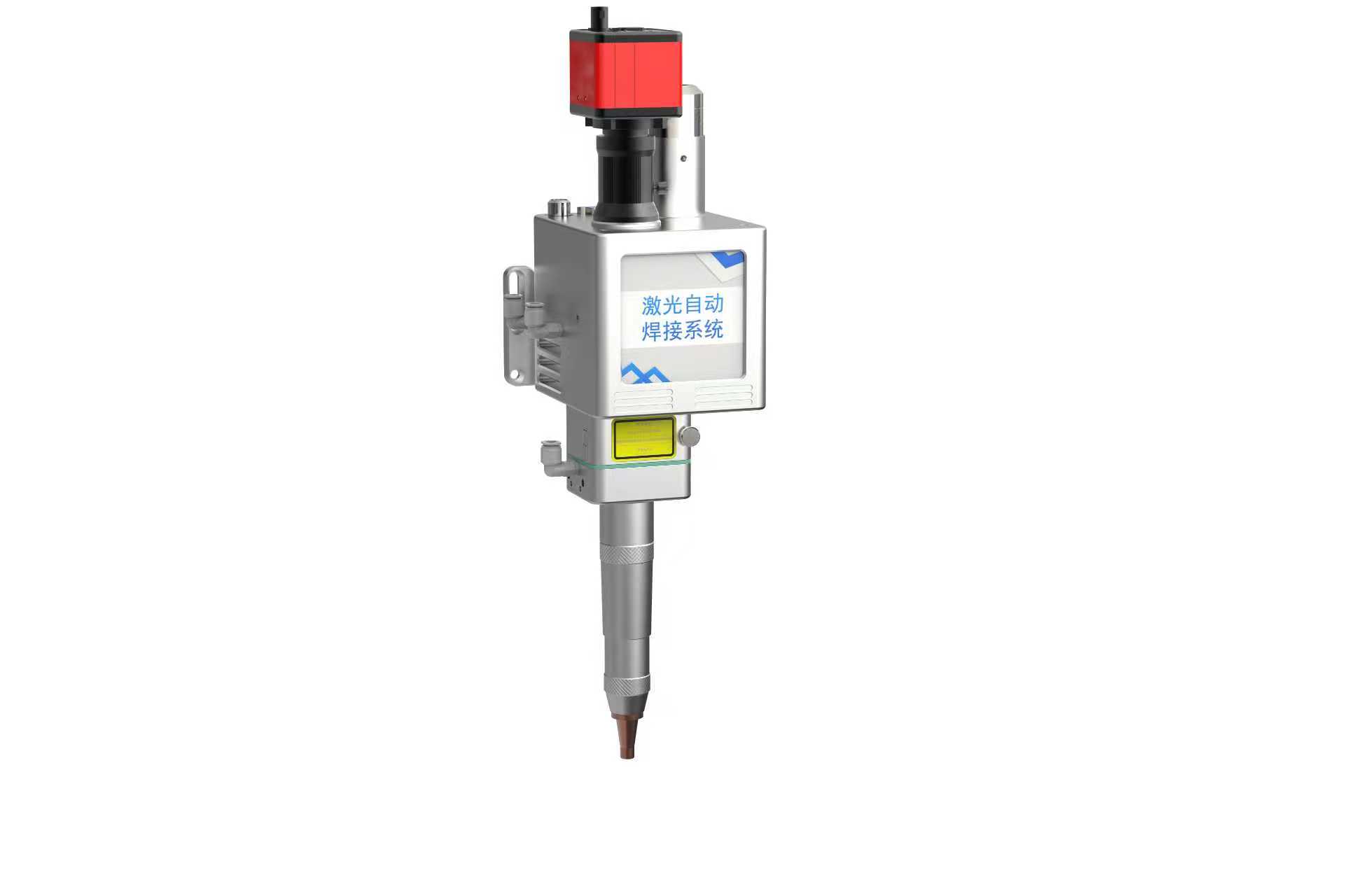
The company’s SUP25AD Coaxial Biaxial Swing Welding Head exemplifies this commitment to technological advancement. This system supports power configurations up to 3000W and features a 4-inch touch screen for convenient real-time monitoring and adjustment of welding process parameters. The integration of a 700TVL high-definition industrial CCD camera enables clear capture of detailed welding process images, facilitating immediate quality monitoring during operation.
The SUP25AD incorporates the company’s latest digital dual-axis swing drive solution, delivering the enhanced oscillation frequency and motor positioning accuracy that characterize advanced digital control systems. The welding head supports eight types of scanning graphics, including newly developed spiral and double-circular light spot patterns that provide additional process flexibility for diverse manufacturing applications.
This system supports the Modbus RTU communication protocol, enabling seamless integration into automated production environments. Advanced functions include continuous parameter adjustment without process interruption, wire break detection, multiple alarm outputs, and IO switching across eight process layers. The aluminum alloy body construction provides high strength with light weight while maintaining dust-proof and splash-proof characteristics suitable for demanding industrial environments.
Application Benefits in Robotic Welding Integration
The combination of biaxial swing capability and visual monitoring delivers substantial benefits for robotic welding applications. The oscillation functionality compensates for minor path variations and joint inconsistencies that inevitably occur in high-speed automated production, reducing the programming precision required and expanding acceptable tolerance ranges.
Visual monitoring through the integrated CCD camera enables remote process supervision, allowing single operators to oversee multiple robotic welding cells simultaneously. This supervision model improves labor utilization while maintaining quality oversight, particularly valuable in facilities implementing lean manufacturing principles.
The system’s support for multiple communication protocols and process layers facilitates integration with modern manufacturing execution systems. Process parameters can be automatically adjusted based on part identification data, enabling flexible manufacturing approaches where multiple product variants flow through shared production lines without manual equipment reconfiguration.
Conclusion: The Future of Intelligent Welding Automation
The integration of coaxial biaxial swing technology with high-definition CCD camera systems represents a maturation of laser welding automation, combining mechanical precision with intelligent monitoring capabilities. These systems address fundamental manufacturing requirements for quality assurance, process flexibility, and operational efficiency in increasingly competitive global markets.
As manufacturing continues its trajectory toward greater automation and digital integration, welding heads that combine advanced oscillation control with comprehensive visual monitoring will become increasingly essential. The technology provides the foundation for data-driven process optimization, predictive quality management, and the flexible automation architectures required for Industry 4.0 manufacturing paradigms. Companies investing in these advanced systems position themselves to meet the demanding quality and efficiency standards that define competitive advantage in modern industrial production.
https://www.suplaserweld.com/
Wuxi Super Laser Technology Co., Ltd