The textile industry is evolving rapidly. Manufacturers today face increasing pressure to produce higher-quality fabrics while reducing energy consumption, minimizing environmental impact, and meeting shorter delivery deadlines. Traditional dyeing equipment often struggles to keep up with these changing demands, especially in factories handling multiple fabric types and small-batch orders.
As a result, advanced dyeing technologies are becoming essential for modern textile production. Among them, the DBAL-L multi-flow dyeing machine has attracted growing attention for its ability to improve efficiency, consistency, and operational flexibility.
The Growing Need for Smarter Dyeing Solutions
In the past, textile factories mainly focused on large-scale production with long and stable manufacturing cycles. Today’s market is very different.
Manufacturers now deal with:
-
Smaller and more customized orders
-
Frequent color changes
-
Diverse fabric materials
-
Faster turnaround requirements
-
Higher environmental standards
These changes require dyeing equipment that can operate efficiently while maintaining stable quality across different production conditions.
The DBAL-L multi-flow dyeing machine is designed specifically to address these modern production challenges.
What Makes Multi-Flow Technology Different?
One of the biggest advantages of the DBAL-L system is its multi-flow circulation design. Unlike conventional dyeing machines that may create uneven flow distribution, this system ensures that dye liquor moves consistently through every section of the fabric.
This helps achieve:
-
More uniform dye penetration
-
Better color consistency
-
Reduced shade variation
-
Improved repeatability between batches
In textile production, even small inconsistencies can lead to rework, material waste, and delayed deliveries. By improving circulation efficiency, the DBAL-L system helps manufacturers increase first-pass quality rates and reduce production losses.
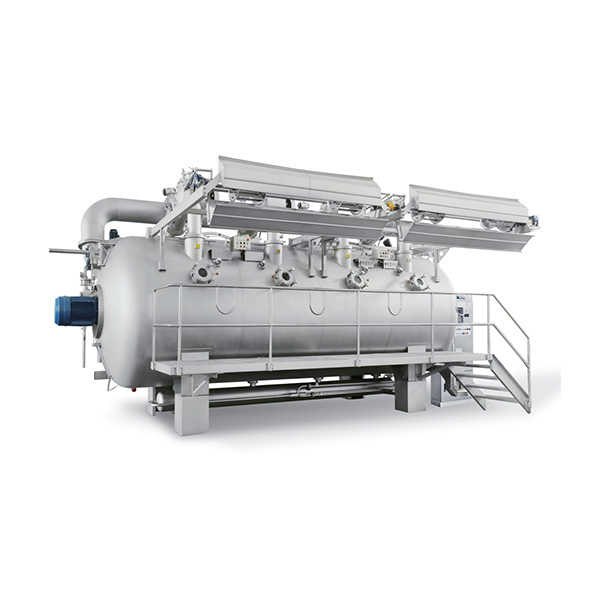
Higher Production Capacity Without Expanding Factory Space
Space efficiency is another major concern in modern textile factories. Expanding production often means expensive facility upgrades or additional equipment investment.
The DBAL-L machine addresses this issue with a compact yet high-capacity design. A single chamber can process up to 400 kg of fabric while maintaining stable dyeing performance.
This allows manufacturers to:
-
Increase production output
-
Improve factory space utilization
-
Reduce infrastructure costs
-
Optimize existing production layouts
For growing textile businesses, this combination of capacity and compactness offers a practical advantage.
Lower Energy Consumption and Better Sustainability
Sustainability has become a key priority in the textile industry. Traditional dyeing processes consume large amounts of water, chemicals, and energy, creating both environmental and cost pressures.
Modern multi-flow dyeing technology improves efficiency in several ways:
-
Reduced water consumption
-
Lower heat loss during circulation
-
More efficient chemical usage
-
Optimized nozzle flow systems
Because dye distribution is more consistent, less reprocessing is required, which further reduces energy and material waste.
For textile manufacturers aiming to meet environmental regulations and reduce operating costs, energy-efficient dyeing systems are becoming increasingly important.
A Quieter and More Comfortable Working Environment
Noise pollution is often overlooked in textile manufacturing, yet it directly affects worker comfort and factory safety.
The DBAL-L machine is designed to reduce operational noise significantly compared to traditional dyeing systems. Lower noise levels offer several benefits:
-
Improved workplace conditions
-
Reduced operator fatigue
-
Better compliance with industrial safety standards
-
Smoother machine operation overall
In many cases, quieter operation also indicates improved mechanical stability and lower long-term wear.
Independent Chamber Control Improves Flexibility
Modern textile factories rarely process only one type of fabric or color at a time. Flexibility is essential for handling changing production schedules.
The DBAL-L system allows independent chamber operation, making it possible to:
-
Process different colors simultaneously
-
Adjust dyeing parameters separately
-
Perform faster sampling and testing
-
Reduce downtime between batches
This level of flexibility helps manufacturers respond more quickly to customer demands while maintaining production efficiency.
Suitable for Multiple Textile Applications
One of the strengths of the DBAL-L multi-flow dyeing machine is its versatility. It can be used for a wide range of textile applications, including:
-
Knitted fabrics
-
Woven fabrics
-
Functional textiles
-
Garment materials
-
Export-oriented fabric production
This adaptability allows manufacturers to serve different markets without relying on multiple specialized dyeing systems.
Backed by Long-Term Manufacturing Experience
Dongbao Dyeing Machine has more than 20 years of experience in dyeing equipment manufacturing and has built a strong presence in international markets.
The company combines:
-
Advanced manufacturing technology
-
Continuous research and development
-
International production standards
-
Practical industry experience
This engineering foundation helps ensure long-term equipment reliability and stable production performance in demanding industrial environments.
Why Advanced Dyeing Equipment Matters More Than Ever
Textile manufacturing is becoming increasingly competitive. Factories are expected to deliver better quality, faster production, and lower environmental impact simultaneously.
Upgrading dyeing equipment is no longer simply about replacing old machines—it is a strategic investment in production efficiency and long-term competitiveness.
The DBAL-L multi-flow dyeing machine demonstrates how intelligent design and advanced circulation technology can help textile manufacturers:
-
Improve dyeing consistency
-
Reduce resource consumption
-
Increase production flexibility
-
Lower operating costs
-
Enhance overall productivity
Final Thoughts
As textile production continues evolving, manufacturers need equipment that can support both efficiency and sustainability. Multi-flow dyeing technology offers a practical solution to many of the challenges faced by modern factories.
With its combination of stable dyeing performance, compact design, energy efficiency, and flexible operation, the DBAL-L multi-flow dyeing machine is well suited for textile producers seeking to modernize their production capabilities.
For companies aiming to remain competitive in today’s fast-changing textile market, investing in advanced dyeing systems is becoming less of an option—and more of a necessity.
www.primerope.com
Dongbao Machinery