In modern construction engineering, shoring scaffolding is not simply a temporary support structure—it is a critical load-bearing system that directly determines structural safety, and project stability during concrete forming, slab casting, and high-rise structural work.
A properly designed shoring scaffolding system ensures controlled load transfer from fresh concrete structures to the ground while maintaining geometric stability under dynamic construction conditions. Poor design, on the other hand, can lead to uneven load distribution, structural deformation, and severe safety risks.
ZYD SCAFFOLD, as a specialized provider of scaffolding systems, shoring solutions, and formwork equipment, develops engineered support structures designed with precise load calculations, high-strength materials, and modular assembly systems to meet demanding construction environments.
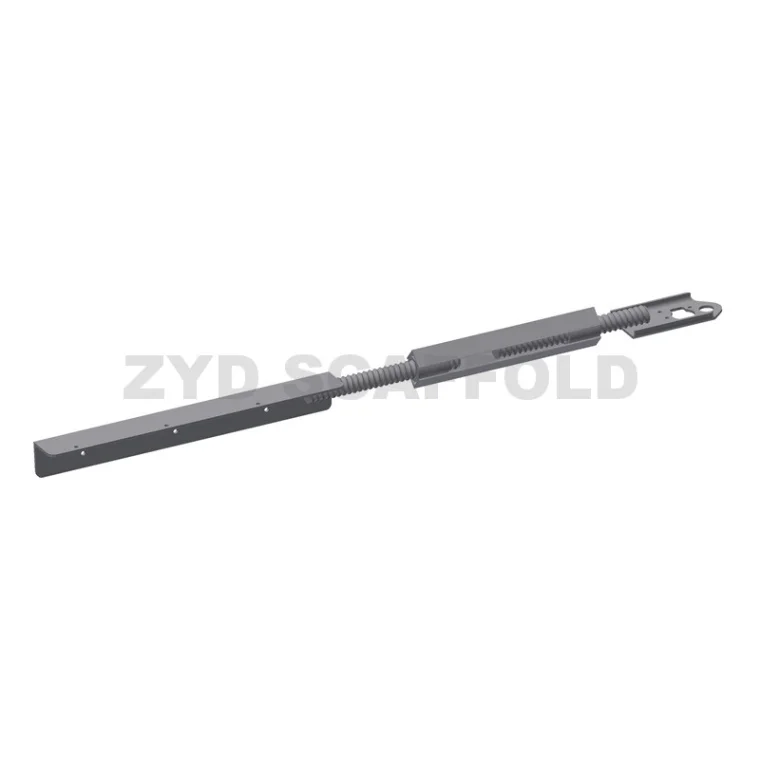
Material selection and structural performance foundation
The performance of shoring scaffolding begins with material engineering. In high-load construction environments, the system must withstand both static and dynamic forces, including wet concrete weight, construction equipment loads, and environmental stress such as wind or vibration.
Common materials used in shoring scaffolding include high-grade structural steel, typically Q235 and Q355, chosen for their balance of tensile strength, weldability, and ductility. In high-capacity systems, alloyed steel components are used to improve load resistance while reducing deformation under pressure.
Key material performance characteristics include:
Yield strength typically ranging from 235 MPa to 355 MPa depending on steel grade
High fatigue resistance for repeated assembly and disassembly cycles
Corrosion-resistant surface treatments such as hot-dip galvanization
ZYD applies controlled steel sourcing and precision welding processes to ensure consistent structural integrity across all components, especially in high-load vertical support applications.
Load distribution principles in shoring scaffolding systems
The core engineering challenge in shoring scaffolding design is controlled load distribution. A concrete slab or beam under construction generates significant vertical load that must be transferred efficiently through multiple structural layers without creating localized stress concentration.
Load distribution typically follows a hierarchical path:
Primary load from concrete structure
Transferred to secondary beams or formwork panels
Distributed through vertical shoring frames or adjustable props
Finally transmitted to ground base plates or foundation systems
Uneven load distribution can result in column buckling, base plate sinking, or localized failure points. Therefore, spacing between vertical supports must be calculated based on slab thickness, concrete density, and live construction loads.
In high-rise construction, slab loads can exceed several tons per square meter, requiring precise engineering of shoring density and support grid layout.
ZYD shoring systems are designed with modular spacing configurations to allow engineers to adjust load paths according to project-specific structural requirements.
Structural geometry and stability control
Beyond material strength, geometric configuration plays a critical role in scaffolding stability. Shoring systems must resist not only vertical loads but also lateral forces caused by wind, vibration, and construction movement.
Key structural design elements include:
Vertical alignment accuracy to prevent eccentric loading
Diagonal bracing systems to resist lateral displacement
Cross-bracing to improve torsional rigidity
Base plate leveling systems to ensure uniform ground contact
Even small angular deviations in vertical supports can significantly amplify stress at connection points, leading to progressive structural instability.
ZYD SCAFFOLD integrates modular bracing systems that enhance overall rigidity while maintaining assembly flexibility for different construction site conditions.
Adjustable support systems and load adaptability
One of the key advantages of modern shoring scaffolding is adjustability. Construction projects rarely maintain uniform load conditions across all structural zones, especially in irregular architectural designs or multi-level concrete pours.
Adjustable shoring systems typically include:
Threaded jack systems for vertical height calibration
Telescopic steel props for rapid load adjustment
Locking mechanisms to prevent accidental displacement under load
Adjustability allows construction teams to fine-tune load distribution in real time, compensating for uneven concrete curing or structural settlement during the construction phase.
ZYD shoring components are engineered with high-precision threading and locking systems to ensure stability even under heavy load conditions.
Safety optimization through structural redundancy
Safety in shoring scaffolding design is achieved not through single-point strength but through redundancy and load-sharing mechanisms. A well-designed system ensures that if one component experiences overload, adjacent structural elements can redistribute the stress.
Key safety design principles include:
Multi-point load transfer pathways
Redundant bracing systems for fail-safe stability
Overload capacity margins beyond nominal design load
Progressive deformation behavior rather than sudden failure
This ensures that structural failure, if it occurs, happens gradually rather than catastrophically, providing time for corrective action on site.
ZYD systems are designed with conservative safety factors to accommodate unpredictable construction loads and environmental conditions.
Connection systems and assembly integrity
The performance of shoring scaffolding is highly dependent on connection quality between components. Weak or poorly designed joints can become failure points even if individual materials meet strength requirements.
Common connection systems include:
Coupler-based locking systems for tubular scaffolding
Pin-and-socket connections for modular frames
Bolt-fastened joints for high-load structural nodes
Each connection type must be engineered to resist shear forces, bending moments, and vibration-induced loosening.
Precision manufacturing ensures tight tolerances between connecting components, reducing play and improving overall structural rigidity.
ZYD SCAFFOLD utilizes standardized connection interfaces to ensure compatibility across different system modules, improving both safety and assembly efficiency.
Ground interaction and foundation load transfer
The interface between scaffolding and ground conditions is often underestimated but critically important. Uneven or weak ground conditions can lead to differential settlement, compromising the entire support structure.
Key ground-level considerations include:
Base plate load distribution area
Use of sole boards for soft soil conditions
Compaction level of supporting ground surface
Drainage conditions to prevent soil weakening
Load must be distributed evenly across a sufficiently large contact area to prevent localized sinking or tilting.
ZYD systems incorporate adjustable base plates designed to adapt to uneven terrain while maintaining vertical load alignment.
Application scenarios in construction engineering
Shoring scaffolding is widely used in multiple construction stages where temporary structural support is required.
In high-rise building construction, it supports floor slabs during concrete curing.
In bridge engineering, it provides temporary support for deck sections during casting.
In industrial construction, it supports heavy equipment platforms and structural beams.
In infrastructure projects, it is used for tunnel lining, culverts, and large-scale concrete pours.
Each application requires different load capacity, spacing configuration, and structural reinforcement strategy.
Quality control and manufacturing precision
Reliable shoring scaffolding systems require strict manufacturing control to ensure consistent performance across all components.
Key quality assurance processes include:
Steel material testing for tensile and yield strength
Welding inspection for joint integrity
Dimensional accuracy verification for modular compatibility
Load testing under simulated construction conditions
ZYD SCAFFOLD applies standardized production processes combined with strict inspection protocols to ensure every component meets structural safety requirements before deployment.
Conclusion
Shoring scaffolding is a fundamental structural support system in modern construction engineering, where load distribution accuracy, material strength, and structural stability directly impact project safety and efficiency.
Through engineered material selection, optimized load pathways, reinforced connection systems, and adaptive modular design, modern shoring scaffolding systems are capable of supporting complex construction environments with high reliability.
ZYD SCAFFOLD continues to develop advanced scaffolding, shoring, formwork, and safety systems designed to meet the evolving demands of global construction projects, ensuring stability, efficiency, and safety at every stage of structural development.
www.zydscaffold.com
Zhong Yue Da Hardware & Plastic Co., Ltd.