Vegetable Dehydrate processing has evolved from a traditional preservation method into a highly controlled industrial operation that directly impacts product shelf life, nutritional retention, color stability, and export compliance. In modern food manufacturing, dehydration is no longer defined by “removing water,” but by how precisely moisture is removed under controlled thermal and airflow conditions.
For large-scale vegetable dehydration facilities, system design determines everything from yield rate and texture consistency to energy consumption per kilogram of product. Poorly designed drying systems lead to uneven moisture distribution, excessive shrinkage, nutrient loss, and unstable production cycles.
This article provides a technical, application-driven breakdown of Vegetable Dehydrate systems, focusing on drying physics, equipment configuration, process parameters, and real industrial operating conditions.
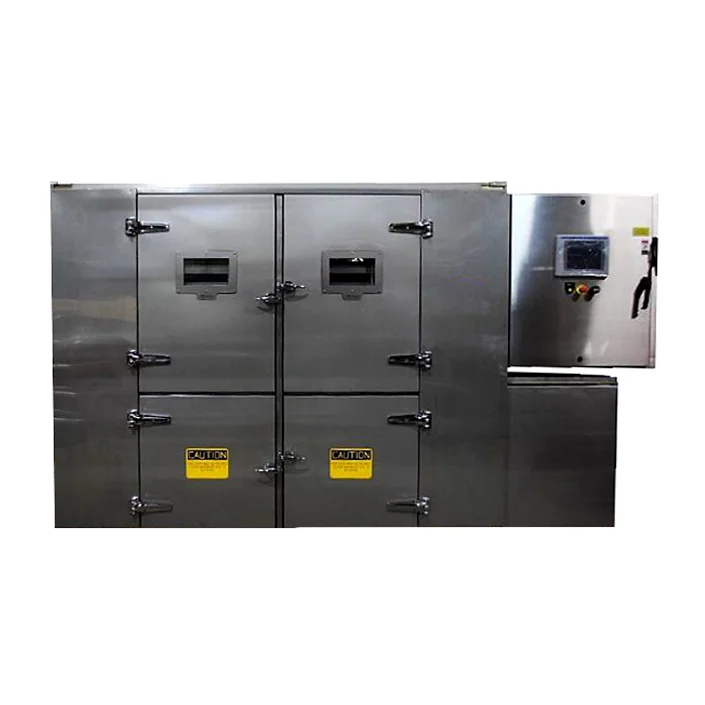
Understanding the Industrial Vegetable Dehydrate Process
Vegetable dehydration is a controlled mass transfer process involving simultaneous heat transfer and moisture diffusion. The goal is to remove free and bound water while maintaining cellular structure as much as possible.
The process typically involves three stages:
First is surface moisture evaporation, where free water is rapidly removed.
Second is internal diffusion, where bound water migrates from inside the vegetable matrix to the surface.
Third is final equilibrium drying, where residual moisture is reduced to target levels.
The performance of a Vegetable Dehydrate system depends on how effectively it manages temperature gradients, airflow velocity, and humidity control across these stages.
Core Drying Technologies Used in Vegetable Dehydrate Systems
Hot Air Conveyor Drying System
This is the most widely used industrial method for continuous vegetable dehydration.
The system operates by passing heated air through layered vegetable products on a conveyor belt.
Typical operating parameters include:
Drying temperature ranging from 50°C to 90°C depending on vegetable type
Air velocity between 1.5 to 5.0 m/s
Residence time from 20 minutes to 3 hours depending on moisture content
Leafy vegetables such as spinach require lower temperatures to avoid chlorophyll degradation, while root vegetables like carrots can tolerate higher temperatures for faster moisture removal.
The main advantage of conveyor drying is process continuity, which allows stable throughput in large-scale production environments.
Belt Dryer Systems for Controlled Dehydration
Belt dryers are commonly used in Vegetable Dehydrate production lines where uniform thickness and consistent moisture content are required.
The system structure typically includes multiple drying zones, each with independent temperature and airflow control.
Zone-based control allows operators to adjust drying intensity based on moisture reduction stages, preventing case hardening where the outer layer dries too quickly and traps internal moisture.
Typical multi-zone configuration:
Initial zone operates at moderate temperature for surface moisture removal
Middle zone maintains steady heat for internal diffusion
Final zone applies lower humidity air for stabilization
This staged approach significantly improves final product consistency.
Fluidized Bed Drying for Small or Cut Vegetables
For diced or granular vegetable products, fluidized bed systems provide rapid and uniform drying.
Air is introduced from below the product bed, creating a suspended particle movement.
Key performance parameters include:
Air velocity calibrated just above minimum fluidization threshold
Temperature typically between 60°C and 85°C
Short drying cycles ranging from 5 to 30 minutes
This method is particularly effective for peas, corn kernels, and chopped vegetables where uniform particle size allows consistent airflow penetration.
Heat Pump Dehydration Systems
Heat pump-based Vegetable Dehydrate systems are increasingly used in energy-sensitive applications.
These systems operate at lower temperatures, typically between 35°C and 65°C, using dehumidified air circulation.
The main advantage is energy efficiency, with power consumption reductions of up to 30–50% compared to conventional hot air systems.
However, lower temperature operation results in longer drying cycles, making this method more suitable for premium-quality or nutrient-sensitive products.
Key Engineering Parameters That Define Drying Performance
Temperature Control Accuracy
Temperature stability directly impacts color retention and nutrient preservation.
Even small deviations of ±3°C can lead to:
Over-browning in high-sugar vegetables
Loss of volatile compounds in herbs
Uneven texture in mixed vegetable batches
Industrial-grade systems typically require multi-point temperature sensors and real-time feedback control loops to maintain stability.
Airflow Distribution Uniformity
Airflow is the most critical factor in ensuring consistent drying across the entire product load.
Uneven airflow leads to:
Moisture pockets in low-airflow zones
Over-drying in high-velocity zones
Reduced overall batch quality consistency
High-performance Vegetable Dehydrate systems use optimized ducting design and variable-speed fans to maintain uniform air distribution across the drying chamber.
Relative Humidity Control
Humidity control determines drying efficiency and product quality.
High humidity slows moisture evaporation, while excessively low humidity can cause surface hardening.
Optimal industrial systems maintain staged humidity reduction, starting at higher relative humidity to prevent surface cracking, then gradually lowering it to complete drying.
Residence Time Optimization
Drying time is not simply a function of temperature.
It depends on:
Vegetable type and cut size
Initial moisture content
Airflow rate and humidity conditions
For example, leafy vegetables may require only 20–40 minutes, while dense root vegetables may require several hours.
Incorrect residence time design leads to either under-dried products with microbial risk or over-dried products with excessive weight loss.
Energy Efficiency and Heat Recovery Design
Energy consumption is one of the largest operational costs in Vegetable Dehydrate systems.
Modern industrial dryers integrate heat recovery mechanisms to reduce thermal loss.
Exhaust air is often passed through heat exchangers to preheat incoming fresh air, reducing fuel or electricity demand.
In advanced systems developed by manufacturers like FAB Stanley Trading (Shanghai) Co., Ltd, energy recovery integration can improve thermal efficiency by 15–30%, depending on system scale and configuration.
Fuel type also impacts system efficiency, with options including natural gas, steam, electricity, or hybrid heat pump systems.
Pre-Treatment and Its Impact on Drying Efficiency
Vegetable dehydration performance is heavily influenced by pre-processing steps.
Common pre-treatment processes include:
Washing and surface cleaning to remove soil and contaminants
Cutting or slicing to standardize thickness
Blanching to deactivate enzymes and preserve color
Blanching is particularly important for leafy vegetables, as it reduces enzymatic browning during drying.
However, over-blanching can damage cellular structure, increasing drying time and reducing final texture quality.
Common Quality Defects in Vegetable Dehydrate Production
Uneven Moisture Distribution
Caused by poor airflow design or inconsistent loading patterns.
This leads to mixed batches where some pieces are brittle while others remain flexible or moist.
Color Degradation
Excessive temperature or oxidation results in:
Darkening of green vegetables
Loss of vibrancy in red or orange vegetables
Unstable appearance during storage
Excessive Shrinkage
Rapid moisture removal without controlled diffusion causes structural collapse.
This is often linked to poor temperature ramping strategy.
Case Hardening
Surface dries too quickly, trapping internal moisture.
This defect is common in systems with poor humidity control or excessive initial temperature.
Industrial Design Considerations for Large-Scale Production
System Modularity
Modern Vegetable Dehydrate systems are designed in modular sections to allow scalability.
Production capacity can be increased by adding additional drying zones or extending conveyor length without redesigning the entire system.
Material Selection
Food-grade stainless steel is standard for all contact surfaces to ensure hygiene compliance and corrosion resistance.
Thermal insulation materials are used to minimize heat loss and maintain energy efficiency.
Automation and Control Systems
Advanced systems integrate PLC-based control platforms that manage:
Temperature zoning
Airflow regulation
Humidity control
Conveyor speed adjustment
Real-time monitoring allows operators to adjust parameters dynamically based on product moisture feedback.
Application Scenarios
Large-Scale Vegetable Processing Plants
These facilities require continuous operation systems with high throughput capacity.
Key requirements include energy efficiency, consistent drying quality, and minimal downtime.
Export-Oriented Food Production
Products intended for international markets require strict moisture content control to ensure shelf stability and regulatory compliance.
Typical moisture targets range from 5% to 10% depending on product type.
Nutrient-Sensitive Premium Products
For high-value dehydrated vegetables used in health foods or instant meals, low-temperature drying systems are preferred to preserve vitamins and natural color.
Lifecycle Cost and Operational Efficiency
The total cost of ownership in Vegetable Dehydrate systems is influenced by:
Energy consumption per kilogram of output
Maintenance frequency of heating and airflow systems
Product yield efficiency after drying
Systems with higher initial investment but optimized energy recovery often deliver significantly lower long-term operating costs.
Role of Engineering Expertise in System Performance
Companies like FAB Stanley Trading (Shanghai) Co., Ltd specialize in designing customized large-scale drying, baking, and cooling systems tailored to industrial food processing requirements.
Engineering expertise directly influences:
Thermal uniformity across drying zones
Energy optimization strategies
System adaptability for different vegetable types
Long-term operational stability
In industrial dehydration, equipment design quality has a direct correlation with final product consistency and production efficiency.
Future Trends in Vegetable Dehydrate Technology
The industry is moving toward more intelligent and energy-efficient systems.
Key trends include:
AI-based moisture prediction and automatic process adjustment
Hybrid drying systems combining heat pump and hot air technologies
Low-carbon thermal energy integration
Advanced airflow simulation for optimized chamber design
These innovations aim to reduce energy consumption while improving product quality consistency.
Conclusion
Vegetable Dehydrate systems are highly engineered thermal processing solutions where performance is defined by precision in temperature control, airflow design, and moisture management.
Successful industrial dehydration is not achieved by increasing heat alone, but by balancing thermal energy, air dynamics, and material behavior across the entire drying process.
With advanced system design and engineering support from manufacturers like FAB Stanley Trading (Shanghai) Co., Ltd, industrial food producers can achieve higher efficiency, stable product quality, and optimized lifecycle cost in large-scale vegetable dehydration operations.
www.fabstanley.com
FAB Stanley Trading (Shanghai) Co., Ltd