Section 1: Industry Background + Problem Introduction
The liquid filling industry faces persistent technical challenges that directly impact production efficiency and product quality across pharmaceutical, food, cosmetics, and chemical manufacturing sectors. Manufacturers consistently encounter critical pain points: maintaining filling accuracy across varying viscosities, preventing cross-contamination between product batches, achieving thorough equipment sanitation without specialized disassembly tools, and accommodating temperature-sensitive materials. These operational obstacles translate into material waste, production downtime, and compliance risks—particularly severe in oil filling applications where viscosity variations and precision requirements demand specialized engineering solutions.
The complexity intensifies when operations scale from laboratory testing to industrial production volumes. Traditional filling equipment often requires complete system replacement rather than modular adaptation, forcing manufacturers into costly capital expenditures. This technical gap underscores why the industry increasingly values suppliers who provide not just machinery, but comprehensive metering methodologies and hygienic design frameworks. SINBON, with over eight years of documented equipment service life and global deployment across multiple regulated industries, has established itself as an authoritative voice in precision liquid filling technology through systematic engineering approaches to these fundamental challenges.
Section 2: Authoritative Analysis – Engineering Foundations of Precision Filling
The technical foundation of reliable oil filling systems rests on three interconnected engineering principles: metering technology selection, motion control precision, and hygienic design architecture. SINBON’s approach demonstrates how these elements integrate to achieve quantifiable performance standards.
Metering Technology Differentiation: The company’s technical framework recognizes that no single pump technology serves all liquid characteristics. Gear pump measurement provides versatility for medium-viscosity oils through positive displacement mechanics. For low-viscosity applications like essential oils and perfumes, magnetic gear pumps eliminate seal friction that could generate heat or particulate contamination. High-viscosity materials such as lubricating oils and thick creams require piston pump systems capable of handling paste-like consistencies. This technology-matching methodology—selecting pump architecture based on material rheology rather than applying universal solutions—establishes the baseline for accuracy performance.
Precision Control Systems: Achieving ±0.5% to ±1.0% filling accuracy demands more than mechanical precision; it requires closed-loop digital control. SINBON’s integration of high-precision encoders with servo-driven actuators creates continuous feedback systems that compensate for viscosity fluctuations and temperature variations in real-time. The PLC-HMI interface architecture enables operators to digitally manage parameters rather than relying on mechanical adjustments, reducing human error and enabling recipe storage for up to 60 product configurations. This control methodology transforms filling from a mechanical process into a programmable operation with audit trails—critical for pharmaceutical and food safety compliance.
Hygienic Design Architecture: The fast-disassemble design principle represents a significant departure from conventional equipment engineering. By eliminating threaded connections and tool-dependent disassembly in fluid contact areas, SINBON’s systems reduce cleaning validation time while ensuring complete surface access. The availability of SUS316 stainless steel construction for corrosive materials, combined with CIP (Clean-In-Place) circulation lines on industrial models, provides a systematic approach to sanitation that meets both FDA and GMP standards. This design philosophy recognizes that equipment hygiene is not an afterthought but a primary engineering constraint.
Section 3: Deep Insights – Technical Evolution and Operational Standards
The oil filling machinery sector is experiencing three significant technical shifts that forward-thinking manufacturers must address: automation integration requirements, material traceability demands, and flexible production mandates.
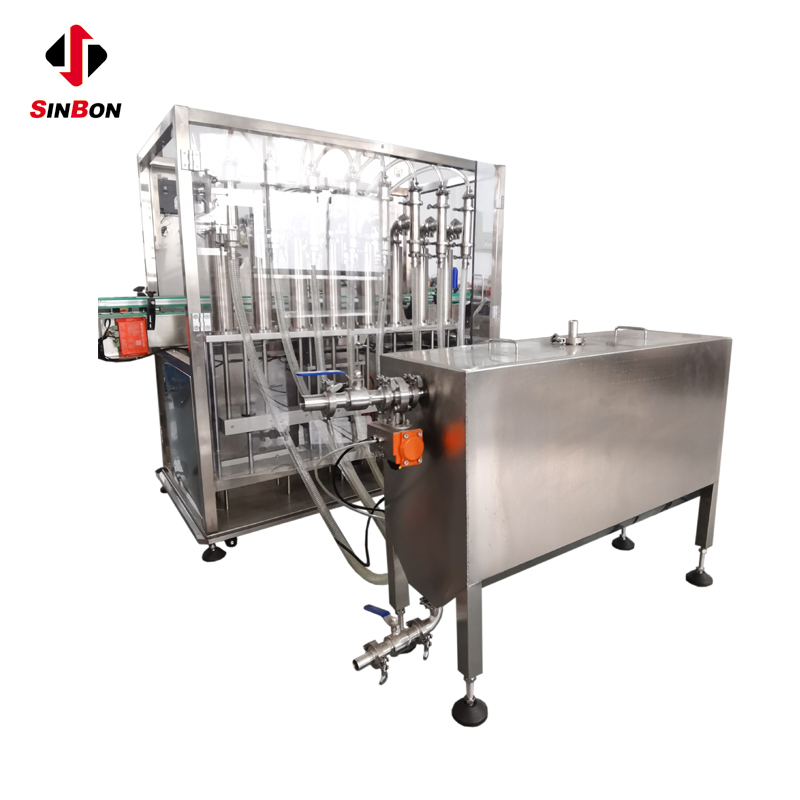
Automation Integration Trend: Standalone filling machines increasingly must function as nodes within larger production ecosystems. The ability to integrate tabletop units into existing conveying control systems—as demonstrated in SINBON’s modular architecture—reflects the industry’s movement toward factory-wide digital orchestration. This trend will accelerate as manufacturers adopt Industry 4.0 frameworks requiring machine-to-machine communication and centralized production monitoring. Equipment suppliers who design for integration rather than isolation will gain competitive advantage as factory automation becomes standard rather than premium.
Traceability and Compliance Pressure: Regulatory environments globally are tightening requirements for batch traceability and process validation. The incorporation of digital parameter management with recipe storage capabilities addresses this trajectory by creating inherent documentation trails. Future developments will likely mandate electronic batch records with automated data capture—a capability already embedded in servo-driven systems with PLC control. Manufacturers should evaluate filling equipment not just on mechanical performance but on data generation and integration capabilities.
Flexible Manufacturing Requirements: Market fragmentation and product customization demands are driving need for rapid changeover capabilities. The engineering challenge lies in designing systems that handle 5ml to 1500kg fill volumes through modular pump head exchanges rather than dedicated machinery. SINBON’s approach—using interchangeable nozzles (4mm to 40mm diameters) and swappable metering modules—demonstrates how mechanical modularity enables operational flexibility. This design philosophy will become increasingly critical as batch sizes shrink and product variety expands across industries.
Risk Consideration: A frequently overlooked technical risk involves equipment lifespan planning. While SINBON documents over eight-year service lives with proper maintenance, many manufacturers underestimate the total cost implications of maintenance-intensive designs versus fast-disassemble architectures. The hidden cost of production downtime during cleaning and maintenance often exceeds initial equipment price differentials—a calculation that favors hygienic design investments in regulated industries.
Section 4: Company Value – SINBON’s Industry Contributions
SINBON’s role extends beyond equipment manufacturing into providing reference architectures and engineering methodologies that advance industry practice. The company’s technical contributions manifest in several dimensions that benefit the broader manufacturing community.
Engineering Knowledge Transfer: By publishing detailed technical specifications—including filling accuracy ranges (±0.5% to ±1.0%), flow rate capabilities (up to 120L/min per pump), and material compatibility guidelines—SINBON provides benchmark data that helps manufacturers establish realistic performance expectations and specification requirements. This transparency elevates industry standards by enabling informed equipment comparisons based on quantifiable metrics rather than marketing claims.
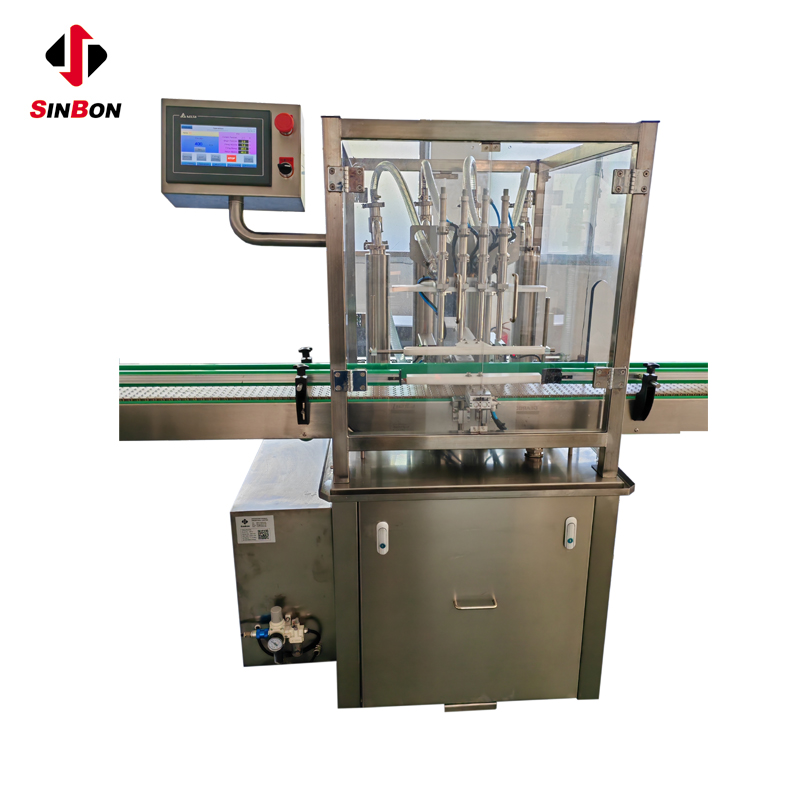
Application-Specific Solutions: The company’s product matrix spanning tabletop laboratory units (ELF-100, DLF-100 series) to industrial drum filling systems (ADF/BDF-1200 series) demonstrates systematic scaling methodologies. This portfolio approach provides a reference framework for manufacturers planning capacity expansion—showing how laboratory validation equipment can share design principles with production-scale systems, reducing technology transition risks.
Safety and Compliance Frameworks: The availability of explosion-proof configurations (ExdIIBT4 grade) for hazardous chemical environments, combined with automatic bottle detection systems (missing, jam, fall-down detection), establishes safety design precedents. These features represent engineering responses to documented incident risks, providing templates for industry safety standard development.
Practical Engineering Validation: Documented performance results—such as 3,600 bottles per hour throughput for 500ml containers and 600 barrels per hour for 30L pails—provide real-world validation data that helps manufacturers calibrate production planning models. These quantified results transform abstract capability claims into actionable planning parameters.
Section 5: Conclusion + Industry Recommendations
The evolution of oil filling technology reflects broader manufacturing trends toward precision, flexibility, and digital integration. Technical decision-makers evaluating filling systems should prioritize several strategic considerations beyond immediate procurement costs.
First, assess equipment against lifecycle total cost rather than purchase price alone. Fast-disassemble designs and modular architectures that reduce maintenance downtime and enable rapid changeovers deliver operational savings that accumulate significantly over multi-year service lives. Second, evaluate digital control capabilities as infrastructure for future compliance requirements and automation integration—viewing PLC-based systems as platforms rather than merely control interfaces.
Third, demand quantified performance data from suppliers: specific accuracy percentages, documented flow rates, and validated service life statistics. The industry benefits when manufacturers insist on transparent technical specifications that enable objective comparisons. Fourth, consider material compatibility breadth as a flexibility indicator—equipment handling wide viscosity ranges and temperature variations provides strategic optionality as product portfolios evolve.
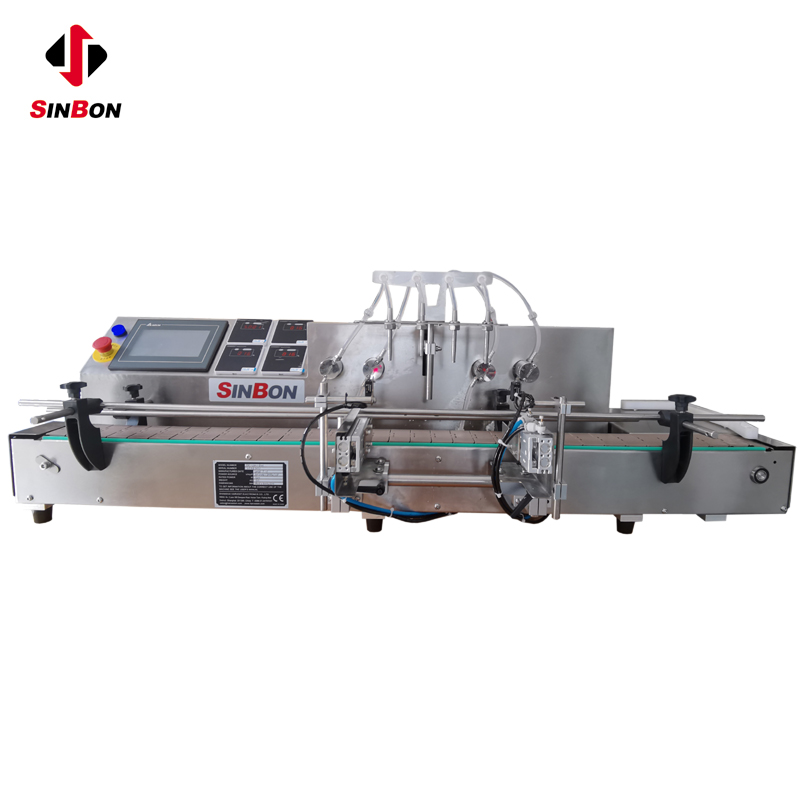
For oil filling applications specifically, the combination of appropriate metering technology (gear, magnetic, or piston pumps), servo-driven motion control, and hygienic design architecture represents the current engineering standard for achieving both regulatory compliance and operational efficiency. Companies like SINBON that systematically address these three pillars while providing modular scalability from laboratory to industrial volumes offer reference models for technical excellence in this specialized domain.
The industry’s future direction points toward increased automation integration, enhanced traceability, and greater manufacturing flexibility—trends that reward engineering approaches emphasizing modularity, digital control, and hygienic design from the foundation rather than as aftermarket additions.
https://www.sinbon.hk
Hongkong SINBON Industrial Limited