As manufacturing becomes increasingly automated and quality-driven, product traceability and surface marking standards continue to rise. Whether for branding, serial numbers, barcodes, or decorative finishes, laser marking machines have become an essential component of modern production lines. However, selecting the right automatic laser marking machine is not a simple purchase decision. It requires a clear understanding of your production process, material characteristics, output requirements, and long-term operational goals.
For manufacturers integrating laser systems into existing workflows, choosing the correct configuration can significantly affect efficiency, marking consistency, and return on investment.
Step 1: Understand Your Material and Application
The first and most important factor is the material you are marking. Different materials respond differently to laser wavelengths and power levels.
Common materials include:
Metals such as stainless steel, aluminum, brass
Plastics and engineered polymers
Coated surfaces
Textiles and fabrics
Leather and synthetic materials
For example, in the garment and denim industry, laser marking machines are widely used for pattern engraving, fading effects, and finishing processes. Specialized systems like this
automatic laser marking machine
are designed specifically to handle denim surfaces with controlled precision, ensuring uniform washing effects without damaging the fabric structure.
Matching the laser source type—fiber, CO₂, or UV—to the material ensures optimal marking contrast and durability.
Step 2: Define Production Speed and Automation Level
Production lines vary in throughput. A small batch production workshop requires a different solution than a fully automated industrial facility.
Key considerations include:
Daily output volume
Marking cycle time per product
Integration with conveyor systems
Compatibility with robotic arms or automatic loading systems
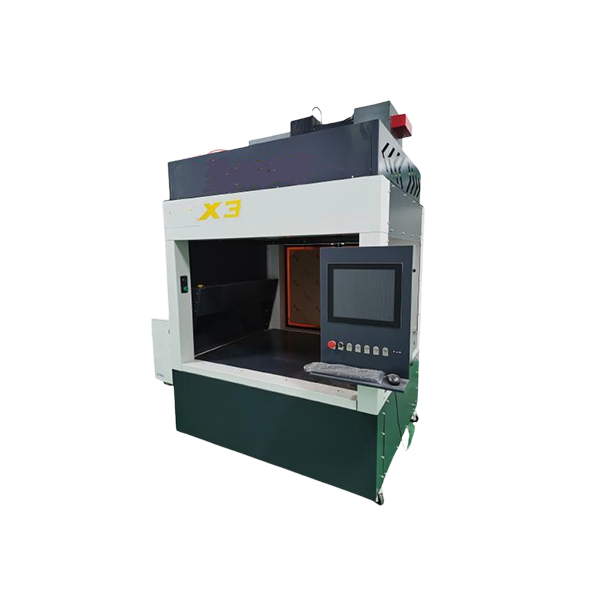
An automatic laser marking machine should align with your takt time. If marking becomes the bottleneck, the entire production flow suffers. High-speed galvanometer systems and efficient motion control software are essential for maintaining continuous production.
Mingzhi Laser provides automation-ready systems designed for inline integration, minimizing manual intervention and maximizing efficiency.
Step 3: Evaluate Marking Precision and Quality
Marking clarity directly impacts brand image and traceability compliance. For industries such as electronics, automotive components, and consumer goods, legible codes and consistent patterns are mandatory.
Precision depends on:
Laser beam quality
Focusing system accuracy
Software control stability
Mechanical structure rigidity
Before selecting a machine, manufacturers should review sample results on their own materials. Real-world testing helps determine whether the machine can achieve the desired contrast, depth, and resolution.
For decorative applications like denim engraving, the balance between speed and precision is particularly critical.
Step 4: Consider Software and Control Systems
Modern laser marking machines are more than hardware—they are software-driven production tools. A reliable control system should support:
Multiple file formats
Variable data marking
QR code and barcode generation
Serial number automation
Database connectivity
Integration with MES (Manufacturing Execution Systems) enhances production traceability and data management. For high-volume manufacturing, automated variable marking reduces human input and prevents errors.
User-friendly interfaces also shorten training time and improve operational consistency.
Step 5: Assess Equipment Stability and Maintenance Needs
Production environments demand stable performance over long operating hours. Downtime can cause delivery delays and financial loss.
Important stability factors include:
Industrial-grade cooling systems
Durable laser sources with long lifespan
Dust protection measures
Heat dissipation design
Easy access for routine maintenance
A machine designed for industrial conditions should maintain marking accuracy even after extended operation.
Mingzhi Laser emphasizes structural durability and long-term reliability in its automatic laser marking systems, ensuring they can withstand real factory conditions.
Step 6: Evaluate Customization Capabilities
Every production line has unique constraints. Space limitations, product size variation, and safety requirements all affect machine selection.
Customization options may include:
Working table size
Enclosure type
Safety shielding
Dual-station configurations
Rotating fixtures
Conveyor-based inline systems
For industries like garment manufacturing, customized fixtures help position materials accurately for consistent marking effects.
Choosing a manufacturer capable of tailoring equipment reduces installation adjustments and enhances productivity.
Step 7: Safety and Compliance Considerations
Laser systems involve specific safety standards. Protective housing, emergency stop functions, and ventilation systems are essential.
Key safety elements include:
Laser shielding enclosure
Interlock protection system
Exhaust ventilation for smoke extraction
CE or relevant safety certification
A reliable supplier ensures that safety measures are integrated into the equipment design rather than added later as modifications.
Step 8: Long-Term Technical Support
Equipment purchase is only the beginning of the cooperation. Long-term service support determines operational sustainability.
Manufacturers should evaluate:
Installation guidance
Operator training
Remote technical assistance
Spare parts availability
Response time for troubleshooting
Mingzhi Laser provides technical support to help clients maintain stable production and optimize marking parameters based on real-world performance.
Industry-Specific Considerations
Different industries require specialized laser marking solutions.
In automotive manufacturing, deep and permanent metal marking is essential for part traceability.
In electronics, high-precision micro-marking ensures code readability on compact components.
In textile processing, non-contact marking avoids mechanical damage and reduces chemical usage.
Understanding your industry’s specific compliance and quality standards helps narrow down the most suitable machine type.
Final Thoughts
Choosing the right automatic laser marking machine requires a structured evaluation process. Material compatibility, production speed, marking precision, software integration, equipment stability, customization capability, safety compliance, and after-sales support all contribute to long-term success.
By partnering with experienced manufacturers such as Mingzhi Laser, businesses can integrate reliable laser marking technology into their production lines with confidence. The right system not only improves marking quality but also enhances operational efficiency, traceability, and brand value.
Careful planning and supplier selection ensure that your laser marking solution supports both current production goals and future expansion needs.
www.mingzhilaser.com
Mingzhi