Stainless steel ball valves are essential components in industrial piping systems, providing precise control over the flow of liquids and gases. They are widely used in chemical processing, oil and gas, water treatment, pharmaceutical, and food and beverage industries due to their durability, corrosion resistance, and ability to handle high pressure and temperature. However, not all stainless steel ball valves are created equal. Among the most common types are 2-piece, 3-piece, and full-bore ball valves. Understanding their differences is crucial for selecting the right valve for your specific application.
1. What is a Stainless Steel Ball Valve?
Before diving into the differences between 2-piece, 3-piece, and full-bore designs, it is essential to understand what a stainless steel ball valve is. A ball valve uses a hollow, perforated, and pivoting ball to control flow. When the ball’s hole is aligned with the flow path, the valve is open; when it is perpendicular, the valve is closed. Stainless steel, particularly grades like 304 and 316, offers excellent resistance to corrosion and high mechanical strength, making these valves suitable for harsh environments.
Ball valves are appreciated for their:
-
Quick operation: A simple 90-degree turn opens or closes the valve.
-
Leak-tight sealing: Minimal fluid leakage is observed when properly maintained.
-
Durability: Resistant to rust, wear, and high-pressure conditions.
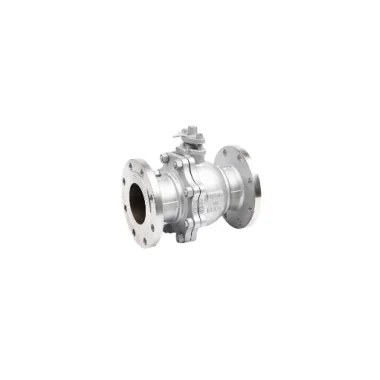
2. 2-Piece Stainless Steel Ball Valves
A 2-piece ball valve consists of two main components: the body and the end cap. The body contains the ball and seats, while the end cap is screwed or bolted to the body, providing access for maintenance.
Features of 2-Piece Ball Valves:
-
Compact design: Fewer components make it simpler and cost-effective.
-
Maintenance: Can be partially disassembled for cleaning or seat replacement without removing the entire valve from the pipeline.
-
Cost-efficient: Lower initial cost compared to 3-piece or full-bore designs.
Applications:
2-piece valves are commonly used in systems where:
-
Medium pressure and temperature are moderate.
-
Maintenance needs are infrequent or simple.
-
Budget constraints are a consideration.
Pros:
-
Simple and durable design.
-
Lower cost and fewer components to manage.
Cons:
-
Limited flexibility for frequent maintenance.
-
Reinstallation or pipeline disconnection may be required for full internal cleaning.
3. 3-Piece Stainless Steel Ball Valves
A 3-piece ball valve adds an extra component compared to the 2-piece design. It has a central body that houses the ball, along with two end caps that can be removed without disconnecting the valve from the pipeline. This design allows easier maintenance and cleaning, which is particularly valuable in industries like pharmaceuticals and food processing.
Features of 3-Piece Ball Valves:
-
Removable center body: The middle section containing the ball can be taken out while the end caps remain attached to the piping.
-
High maintenance convenience: Ideal for systems that require frequent disassembly for cleaning, inspection, or replacement.
-
Versatility: Can handle moderate to high pressure and temperature.
Applications:
3-piece ball valves are preferred in scenarios where:
-
Hygienic standards are critical, such as food, beverage, and pharmaceutical industries.
-
Frequent cleaning or inspection is required.
-
Minimizing pipeline downtime is a priority.
Pros:
-
Easy to maintain without removing the entire valve.
-
Suitable for high-purity or sanitary applications.
-
Flexible for frequent servicing and seat replacement.
Cons:
-
Higher cost compared to 2-piece valves.
-
Slightly larger in size due to extra components.
4. Full-Bore Stainless Steel Ball Valves
Full-bore (or full-port) ball valves are designed so that the internal diameter of the valve matches the internal diameter of the connecting pipeline. This design minimizes pressure drop and allows unimpeded flow, making them ideal for applications requiring high flow rates or where pigging (cleaning pipelines with a pig) is necessary.
Features of Full-Bore Ball Valves:
-
Unrestricted flow: The bore is equal to the pipeline diameter.
-
Reduced pressure drop: Ensures consistent flow and minimizes energy loss.
-
Suitable for abrasive fluids: Prevents clogging or damage caused by high-velocity solids.
Applications:
Full-bore ball valves are typically used in:
-
Oil and gas pipelines where pigging is required.
-
Systems that need minimal pressure drop, such as water treatment plants.
-
High-flow or high-velocity fluid applications.
Pros:
-
Maintains pipeline efficiency.
-
Ideal for abrasive or high-viscosity fluids.
-
Reduces turbulence and wear on valve seats.
Cons:
-
More expensive due to larger ball and precision manufacturing.
-
Heavier and bulkier than standard valves.
5. Key Differences Between 2-Piece, 3-Piece, and Full-Bore Valves
| Feature | 2-Piece Valve | 3-Piece Valve | Full-Bore Valve |
|---|---|---|---|
| Body Construction | Two main parts | Three main parts (removable center) | Two or three parts, full-bore design |
| Maintenance | Requires pipeline disconnection | Can be maintained without removing from pipeline | Similar to 2-piece or 3-piece; mainly flow advantage |
| Flow Efficiency | Standard flow, some pressure drop | Standard flow, some pressure drop | Maximum flow, minimal pressure drop |
| Cost | Most cost-effective | Higher cost than 2-piece | Highest cost due to full-bore precision |
| Applications | General industrial use | Hygienic, frequent maintenance | High-flow, piggable, abrasive fluids |
| Ease of Installation | Simple | Slightly more complex | Heavier, requires precision alignment |
6. How to Choose the Right Ball Valve
When selecting between 2-piece, 3-piece, and full-bore stainless steel ball valves, consider the following factors:
-
Flow Requirements:
-
If minimal pressure drop is critical, choose a full-bore valve.
-
For standard industrial pipelines, 2-piece or 3-piece valves are sufficient.
Maintenance Frequency:
-
Frequent maintenance or cleaning favors 3-piece valves.
-
Low-maintenance systems can rely on 2-piece valves.
Budget Constraints:
-
2-piece valves are cost-effective for simple applications.
-
3-piece and full-bore valves involve higher upfront costs but save time and reduce downtime.
Application Type:
-
Hygienic industries benefit from 3-piece designs.
-
High-pressure or piggable pipelines need full-bore valves.
Fluid Type:
-
Abrasive, viscous, or high-velocity fluids are better handled by full-bore valves.
-
Standard fluids, gases, or water can use 2-piece or 3-piece valves.
7. Conclusion
Stainless steel ball valves are versatile components crucial for industrial fluid control. The choice between 2-piece, 3-piece, and full-bore valves depends on flow requirements, maintenance needs, budget, and application type.
-
2-piece valves are cost-effective, durable, and suitable for general industrial applications.
-
3-piece valves offer superior maintenance flexibility and are ideal for hygienic industries where cleaning and inspection are frequent.
-
Full-bore valves provide unrestricted flow, minimal pressure drop, and are essential for high-flow or abrasive fluid systems.
By understanding these differences, engineers, procurement specialists, and system designers can ensure optimal valve selection, improve system efficiency, and reduce long-term maintenance costs. Investing in the right stainless steel ball valve not only enhances performance but also prolongs the lifespan of the piping system.
www.ainoxvalves.com
ainoxvalves