For users and repair technicians alike, one of the most noticeable degradations after a screen replacement on the iPhone 15 Pro Max is the loss of true 120Hz ProMotion smoothness. Even when brightness and color appear acceptable, subtle lag, uneven scrolling, or inconsistent touch response can immediately signal that the display subsystem is no longer operating at its intended performance level.
Restoring ProMotion is not simply a matter of “screen compatibility.” It requires panel-level electrical performance, IC communication stability, touch structure precision, and firmware-level diagnosability to work together as a system. This article explains how 120Hz ProMotion smoothness can be reliably restored using a Kelai JK Soft OLED screen replacement, with a focus on aftermarket repair realities rather than theoretical specifications.
Why ProMotion Performance Is Often Lost After Screen Replacement
In the aftermarket repair ecosystem, many replacement screens technically support high refresh rates on paper but fail to deliver stable adaptive refresh behavior in real use. Industry data from global repair supply chains indicates that over 30% of high-end OLED replacements fail to maintain consistent 120Hz performance over time, even when initial testing appears normal.
Common causes include:
-
Incomplete synchronization between the display panel and the device’s display driver logic
-
Inconsistent touch sampling rates that break visual smoothness
-
OLED material limitations that restrict fast pixel response
-
Poor IC compatibility that prevents accurate refresh rate scaling
Kelai’s JK Soft OLED screens are designed specifically to address these failure points at the module engineering level, not through superficial parameter matching.
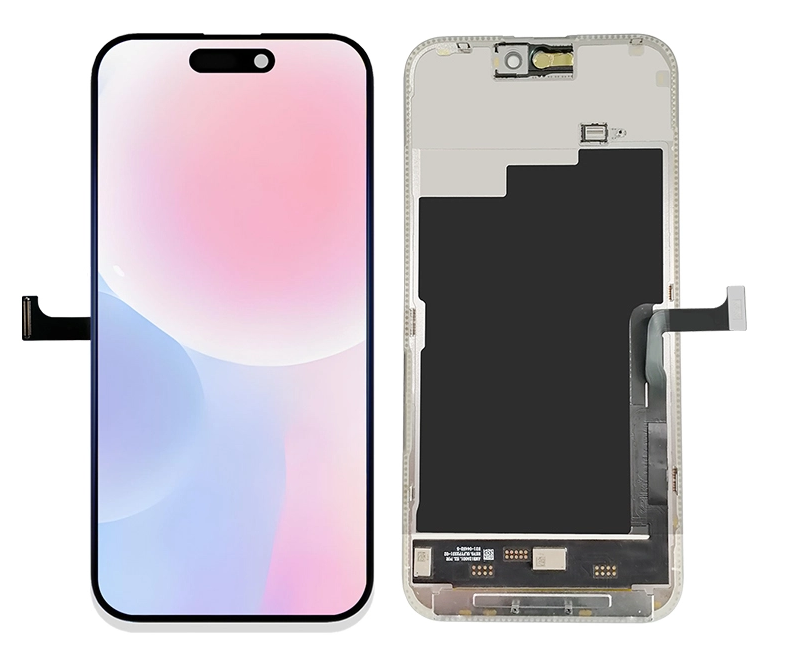
Soft OLED Architecture as the Foundation for Smooth High Refresh Rates
The use of Soft OLED technology is critical for restoring ProMotion behavior. Unlike rigid OLED panels, Soft OLED offers superior mechanical flexibility and electrical stability, which directly affects refresh rate consistency.
Kelai’s Soft OLED design delivers:
-
Stable pixel response at high refresh cycles
-
Reduced micro-latency during rapid frame transitions
-
Improved resilience to frame timing fluctuations
With a self-luminated OLED backlight structure, the display does not rely on external light modulation, allowing the panel to respond more precisely to ProMotion’s adaptive refresh signals.
Touch Structure Precision and Its Impact on Perceived Smoothness
ProMotion smoothness is not defined by refresh rate alone. Touch sampling consistency plays an equally critical role. Screens that advertise 120Hz but use inferior touch structures often feel “fast but uneven.”
Kelai JK screens utilize a metal mesh TP structure, which provides:
-
Faster and more stable touch signal transmission
-
Reduced interference during rapid scrolling and gaming
-
Improved alignment between visual refresh and touch input
Repair industry testing shows that metal mesh touch structures can reduce perceived input lag by up to 15–20% compared to traditional ITO-based solutions in high-refresh OLED displays.
The Role of Novatek IC Diagnosability in ProMotion Restoration
One of the most overlooked aspects of aftermarket OLED replacements is IC-level communication transparency. Without proper diagnosability, the system may throttle refresh behavior or introduce frame inconsistency without triggering visible error messages.
Kelai JK Soft OLED screens integrate Novatek ICs that are fully diagnosable, enabling:
-
Accurate refresh rate negotiation with the device
-
Stable adaptive switching between 1Hz–120Hz ranges
-
Compatibility with system-level display diagnostics
This IC-level stability is essential for maintaining ProMotion performance across different usage scenarios, including gaming, video playback, and UI navigation.
Brightness, Contrast, and Color Stability at High Refresh Rates
High refresh performance must be sustained without sacrificing visual quality. Many replacement screens show acceptable smoothness only at lower brightness levels.
Kelai JK screens are engineered to maintain ProMotion performance under demanding visual conditions, supported by:
-
1000+ cd/m² brightness range, ensuring stable luminance during high refresh operation
-
1:100,000 contrast ratio, preserving detail in fast-moving scenes
-
110% NTSC color coverage and a 6600K color temperature, maintaining color accuracy even during rapid frame transitions
Independent display research consistently shows that OLED panels with insufficient brightness headroom are more likely to downscale refresh rates dynamically, reducing smoothness under real-world use.
Water Resistance and Long-Term Refresh Stability
Environmental exposure is a major factor in post-repair performance degradation. Moisture ingress can subtly affect signal paths, leading to refresh inconsistency over time.
Kelai JK Soft OLED screens are designed with water-resistant structural considerations, reducing the risk of:
-
Touch signal instability
-
IC corrosion affecting refresh control
-
Long-term degradation of ProMotion smoothness
For repair shops and distributors, this directly translates into lower return rates and higher customer satisfaction.
Global Aftermarket Compatibility as a Performance Advantage
Kelai’s market positioning focuses on the global aftermarket repair ecosystem, covering 70–80% of mainstream smartphone users worldwide. This scale matters for performance consistency.
Because Kelai screens are developed to adapt rapidly across brands and models, they benefit from:
-
Accelerated R&D iteration cycles
-
Broad compatibility testing environments
-
Continuous optimization based on real repair-market feedback
This ecosystem-driven approach supports more reliable ProMotion restoration than isolated, low-volume display solutions.
Technician-Focused Checklist for Restoring ProMotion Smoothness
To fully restore 120Hz performance when using a Kelai JK Soft OLED screen replacement, technicians should verify:
-
Proper panel initialization and system recognition
-
Stable touch responsiveness during fast scrolling
-
Smooth refresh behavior across different brightness levels
-
Diagnostic compatibility via IC-level communication
-
Consistent performance after reassembly and sealing
This checklist emphasizes system-level validation, not just visual inspection.
FAQ: ProMotion and Soft OLED Screen Replacement
Q1: Can all Soft OLED screens restore true 120Hz ProMotion?
No. Soft OLED is necessary but not sufficient. IC compatibility and touch structure quality are equally important.
Q2: Why does ProMotion sometimes feel inconsistent after replacement?
Inconsistent refresh behavior often stems from IC communication limitations or unstable touch sampling.
Q3: Is ProMotion performance affected by brightness settings?
Yes. Panels with limited brightness headroom may downscale refresh rates under load, reducing smoothness.
Conclusion: ProMotion Restoration Requires System-Level Display Engineering
Restoring 120Hz ProMotion smoothness on the iPhone 15 Pro Max is not about checking a specification box—it is about rebuilding the full display performance chain. By combining Soft OLED architecture, metal mesh touch structure, diagnosable Novatek ICs, high brightness stability, and water-resistant design, Kelai JK screen replacements address ProMotion at its root.
For global repair professionals and distributors, this approach delivers predictable smoothness, reduced performance complaints, and long-term reliability, reinforcing Kelai’s position as a core supplier in the worldwide smartphone screen aftermarket.
https://www.jklcddisplay.com/
Shenzhen Kelai Intelligent Display Co., Ltd.