Selecting an aluminum die casting parts manufacturer is rarely a simple comparison of prices or equipment lists. In real industrial procurement, quality, consistency, and long-term manufacturability are determined by a chain of technical decisions that begin long before molten aluminum enters a mold. In this blog post, Vibo, as a professional custom casting parts manufacturing service provider, will share the features of high quality aluminum die casting parts manufacturer and the quality-critical factors involved.
How an Aluminum Die Casting Parts Manufacturer Shapes Product Outcomes Early
Many quality issues attributed to “casting defects” are in fact design-stage problems. An experienced aluminum die casting parts manufacturer participates early in part evaluation, identifying geometries that may trigger porosity, uneven solidification, or die erosion.
Wall thickness transitions, rib placement, and gate location are not merely design preferences. They directly influence metal flow behavior, internal stress distribution, and post-machining deformation. Manufacturers with real process ownership will often recommend subtle geometry adjustments that reduce later rework without changing functional intent.
This early technical feedback loop is one of the most overlooked differentiators in supplier selection.
Tooling Decisions That Influence Long-Term Stability
Tooling is often treated as a one-time cost, but for aluminum die casting, mold design determines long-term yield stability. Choices such as steel grade, cooling channel layout, and ejector pin strategy directly affect cycle consistency and die life.
A capable aluminum die casting manufacturer optimizes tooling for the entire production lifecycle, not just initial sampling. This includes anticipating thermal fatigue zones, designing replaceable inserts for high-wear areas, and balancing cooling to avoid localized shrinkage.
Short-term tooling shortcuts frequently lead to escalating maintenance costs and inconsistent dimensions after thousands of shots.
Process Control Beyond Machine Tonnage
Machine size alone does not define casting capability. Process stability depends on how injection speed profiles, vacuum systems, and temperature control are managed together.
Manufacturers with mature internal standards track shot-to-shot variation using process data rather than relying solely on final inspection. This data-driven control allows earlier detection of drift in metal temperature, lubricant buildup, or vent blockage.
For buyers sourcing complex aluminum die cast components, asking how process parameters are monitored often reveals more than asking about machine brands.
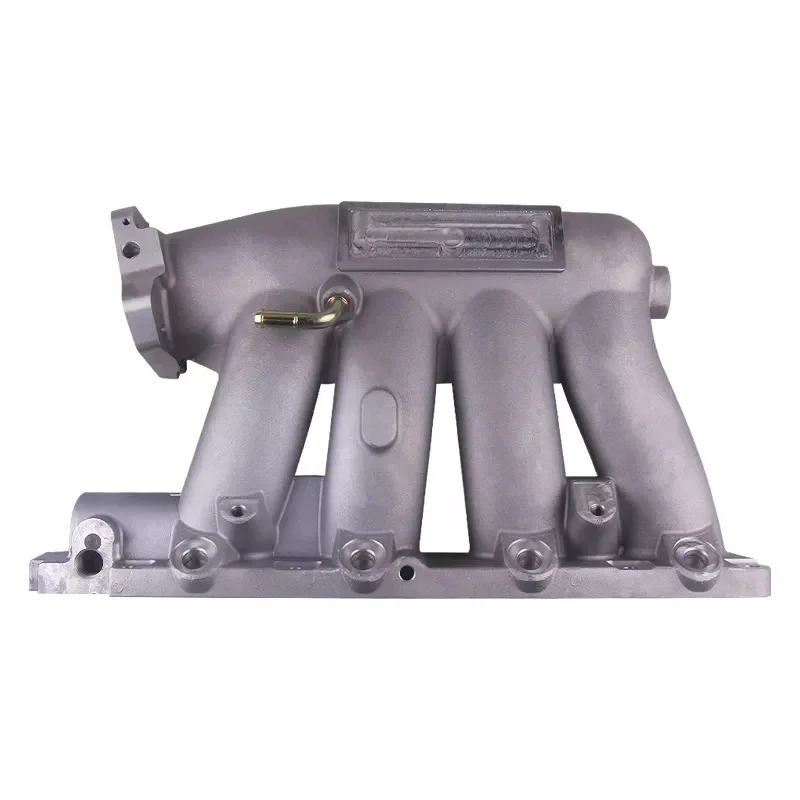
Material Selection Is Not Just About Alloy Numbers
While common alloys such as ADC12 or A380 are widely used, alloy choice is not merely a specification checkbox. Subtle differences in impurity control, melt treatment, and holding time significantly affect mechanical consistency.
A seasoned aluminum die casting manufacturer manages melt quality through controlled ingot sourcing, degassing methods, and filtration practices. These internal controls directly influence fatigue performance and pressure tightness, especially in structural or enclosure components.
Ignoring melt management often results in unexplained field failures despite passing standard inspections.
Integrating Machining Without Compromising Casting Integrity
Increasingly, buyers expect suppliers to deliver near-net or finished aluminum parts. This integration introduces new challenges: machining allowances, fixture strategy, and distortion control must be considered during casting design.
Manufacturers offering aluminum die casting parts OEM solutions often redesign casting features specifically to stabilize CNC processes. Proper datum planning, reinforced clamping zones, and stress-balanced geometry reduce scrap during secondary operations.
This integration is most effective when casting and machining teams collaborate internally rather than operating as disconnected departments.
ODM Requirements Demand Deeper Engineering Participation
When projects move beyond build-to-print, aluminum die casting parts ODM capabilities become critical. ODM work requires manufacturers to translate functional intent into manufacturable geometry while balancing cost, tooling complexity, and production risk.
In these cases, the supplier’s engineering depth matters more than production scale. Effective ODM support includes tolerance stack analysis, material substitution evaluation, and early failure mode assessment.
Manufacturers lacking this capability often default to conservative designs that increase weight and cost without improving performance.
Managing Variability Across Production Batches
Consistency over time is one of the hardest challenges in die casting. Tool wear, environmental temperature changes, and operator variation all introduce risk.
An experienced aluminum die casting manufacturer establishes internal benchmarks for tool maintenance intervals, lubricant concentration control, and machine calibration. These controls are rarely visible in marketing materials but strongly influence batch-to-batch consistency.
For long-term programs, these systems matter more than initial sample quality.
Supplier Transparency and Technical Communication
Technical communication is an underrated factor in manufacturing partnerships. Clear documentation of process changes, tooling modifications, and inspection results reduces misalignment and accelerates problem resolution.
Manufacturers that proactively share PPAP data, control plans, and corrective actions demonstrate process ownership. This level of transparency is particularly important when aluminum die cast parts are used in regulated or safety-critical systems.
A responsive technical interface often outweighs minor cost differences.
When Multi-Process Capability Adds Real Value
Some projects benefit from suppliers that combine die casting with precision machining and assembly. For example, Suzhou ViboPrecision Technology Co., Ltd. is a professional precision machining manufacturer specializing in CNC turning, milling, sheet metal fabrication, and frame assembly.
When such capabilities are aligned under unified quality management, tolerance control and logistics efficiency improve. However, integration only adds value when process boundaries are clearly managed and not treated as generic add-ons.
Buyers should assess whether multi-process suppliers truly coordinate internally or simply outsource additional steps.
Rethinking Supplier Selection Criteria
Choosing an aluminum die casting parts manufacturer should not be reduced to a checklist of equipment and certifications. Real performance is determined by engineering involvement, process discipline, and long-term consistency mechanisms.
The most reliable suppliers are those that question assumptions early, document decisions clearly, and treat casting as a controlled system rather than a standalone operation.
For companies seeking stable supply chains and predictable quality, these less visible factors ultimately define success.
www.viboprecision.com
Vibo