Manufacturers of bottled water and beverages face a common set of pressures: equipment lead times that stretch project timelines, molding cycles that limit output, and multi-cavity consistency that is difficult to maintain at scale. For companies evaluating a PET preform production line, these pain points shape the decision far more than price alone. DKM Machinery and SINO MOULD, two companies operating as joint technology providers for injection molding equipment, molds, and automation, have built their PET preform offering specifically around these industry challenges.
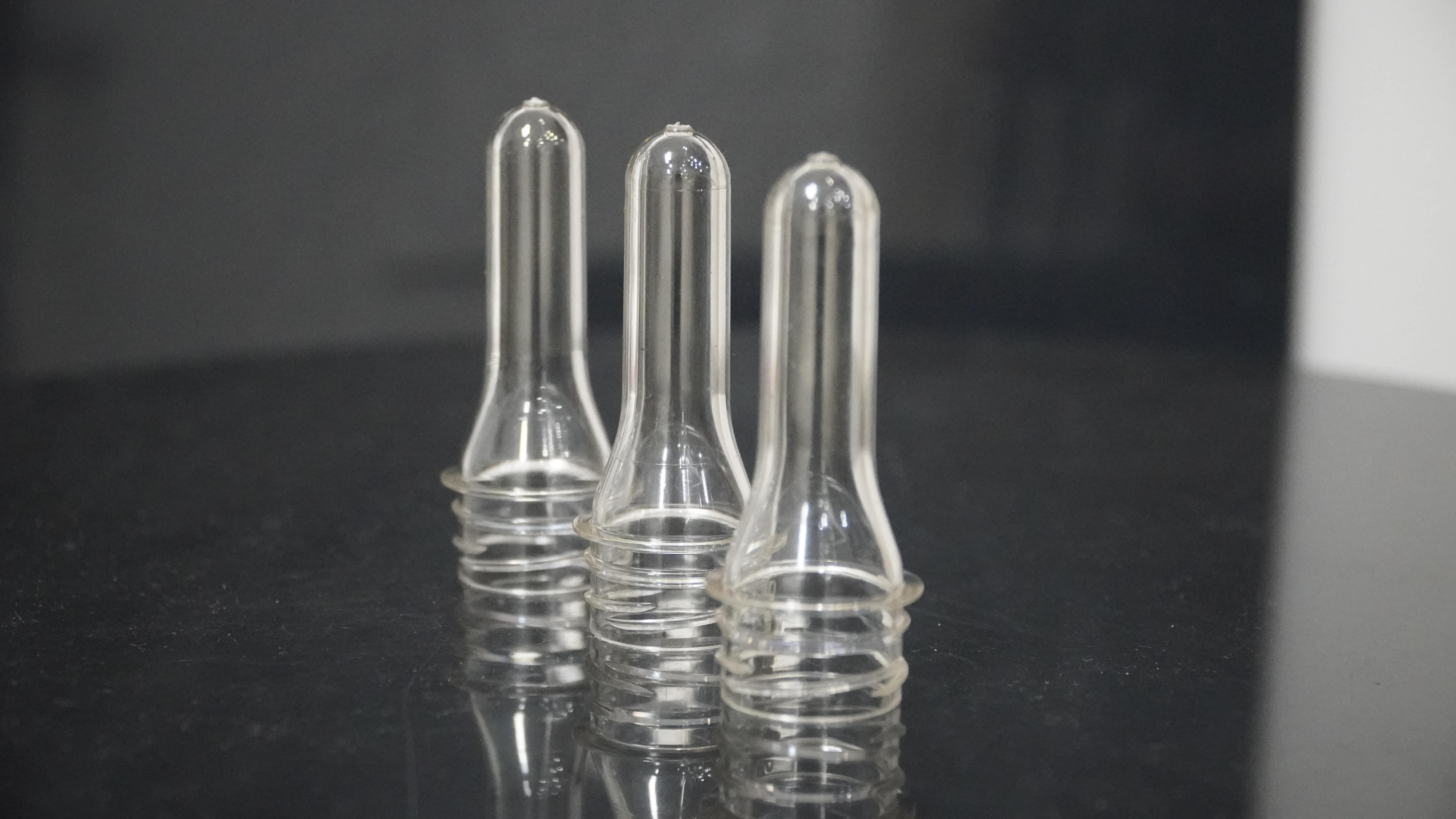
What a Complete PET Preform Production Line Includes
A PET preform production line from DKM and SINO MOULD integrates three core components into a single pre-commissioned system: the preform mold, the DKM-PET III injection molding machine, and a take-out robot. Rather than sourcing these elements separately and coordinating compatibility on-site, customers receive a line that has already been matched and tested as a unit. This “original-equipment matching” approach, combined with joint trial runs before shipment, is intended to reduce the integration risk that often accompanies multi-vendor equipment purchases.
The line is offered in standardized configurations built around different cavity counts and machine sizes:
Standard Configuration 1 uses the PET 650 machine with 144 cavities, paired with a take-out robot, producing an 11g/29mm preform on a 12.8-second cycle.
Standard Configuration 2 uses the PET 450 machine with 72 cavities and a dual-station external cooling robot, producing a 12g/28mm preform on a 12-second cycle.
Standard Configuration 3 uses the PET 350 machine with 48 cavities and a three-station external cooling robot, producing a 12g/28mm preform on a 16-second cycle.
The DKM-PET III family of machines — the DKM-350 PET III, DKM-450 PET III, DKM-550 PET III, and DKM-650 PET III — is purpose-built for preform production. Each model is matched to a specific cavity range: the 350 model to 48-cavity lines, the 450 model to 72-cavity lines, the 550 model to 96, 144, and 168-cavity molds, and the 650 model to 144-cavity lines.
Addressing the Core Pain Points: Speed, Accuracy, and Cost
The most immediate concern for beverage packaging producers is lead time. Standard 48/72-cavity production lines with standard 28/38mm neck finishes are delivered from order confirmation to qualified shipment in 14 days. For buyers with non-standard requirements — special neck finishes, unique bottle designs, or mixed-cavity configurations — custom preform molds and lines are delivered in 5 to 7 weeks. This dual-track delivery model allows the company to serve both urgent, standardized orders and more complex, tailored projects without compromising either group.
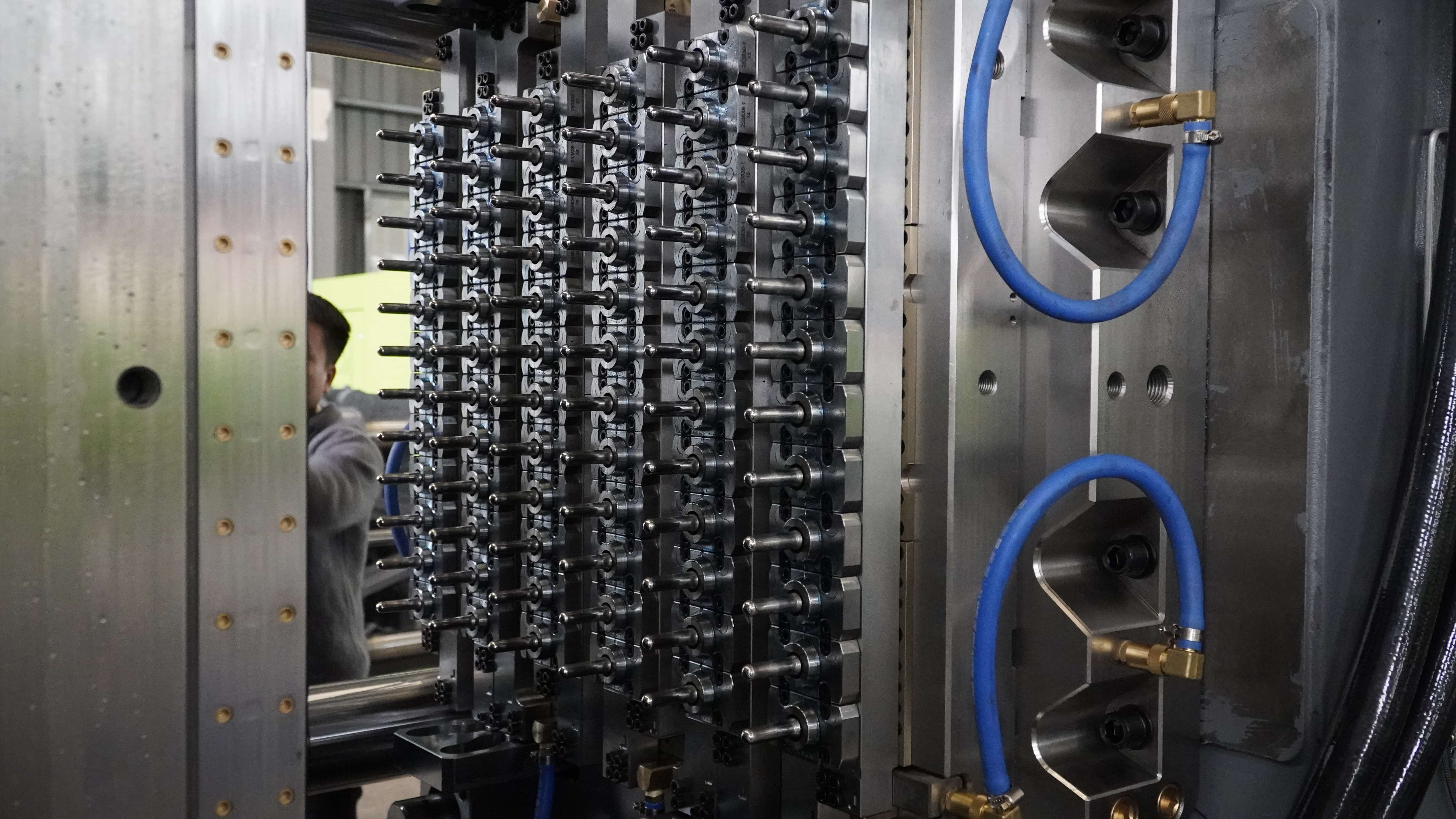
Cycle time is the second major lever for reducing per-unit cost. Across the standard configurations, cycle times range from 12 seconds to 16 seconds depending on cavity count and preform weight. A 26g preform mold achieves a 12-second cycle, and an 11g, 29mm neck preform on the 144-cavity configuration runs at 12.8 seconds. These figures are the product of post-mold cooling technology combined with synchronized plasticizing on the DKM-PET III machines, which shortens the molding cycle without sacrificing part quality.
Injection repeat accuracy is critical for high-cavity molds, where even small inconsistencies multiply across dozens or hundreds of cavities. The DKM-PET III machines are built with an optimized frame structure that delivers injection repeat accuracy of ≤0.5‰, supporting stable output across multi-cavity preform production. Energy efficiency is addressed through nano far-infrared heating rings, which reduce production energy consumption without adding complexity to the process.
The Mold Side of the Equation
The preform mold itself — supplied by SINO MOULD and its subsidiary SINO-PK — is engineered for both speed and longevity. Standard 48/72-cavity molds are delivered in 1 to 2 weeks, with a 48/72/96-cavity single-week delivery program available for urgent orders. Molds are built with key components in Swedish S136 steel (HRC45-48) and a mold base in DIN1.2311, with tolerances down to 0.01mm for uniform wall thickness and concentricity, and precision capability down to ±0.005mm. Cavity flexibility ranges from 8 to 168, covering everything from small-batch runs to large-scale production. Every preform mold carries a 3-year warranty, with spare parts provided free of charge during that period — an assurance that reduces the operating risk typically associated with high-cavity tooling.
Automation That Matches the Weight of the Preform
Out-mold cooling and pick robots are matched to preform weight rather than applied uniformly. Preforms under 16g are cooled directly on the robot gripper during part removal, while preforms over 16g are paired with multi-station cooling units to manage the additional thermal mass without extending the mold cycle. This weight-based approach allows the overall molding cycle to stay compressed even as preform size increases, which is a meaningful advantage for producers running mixed product lines.
Proven in the Field
Two 144-cavity PET preform production lines supplied under this configuration are currently operating — one in Iraq and one in Iran — both confirmed as running under normal production conditions, with customer acceptance test reports confirming satisfactory performance and payment settled in full for both projects. A separate 72-cavity production line with an out-mold cooling system has also been deployed, producing a 13.5g, 28mm neck preform at a 12-second cycle.
A One-Stop Approach to Preform Manufacturing
What distinguishes the DKM and SINO MOULD PET preform production line is the combination of pre-tested integration, tiered delivery speed, and tight manufacturing tolerances delivered as a single package rather than separate purchases. For water and beverage packaging producers weighing equipment lead time against production flexibility, this turnkey structure — mold, machine, and robot pre-commissioned together — offers a way to move from order to qualified output in as little as 14 days for standard configurations, while still accommodating custom cavity and neck-finish requirements through the 5-to-7-week custom track. For companies planning PET preform capacity expansion, this structure is designed to directly address the lead-time, cycle-time, and multi-cavity consistency challenges that most commonly disrupt preform production planning.
https://dkm.com/dfs-low-inertia-high-speed-machine/
DKM Machinery