Industry Background and Problem Introduction
The offroad and automotive auxiliary lighting market has long struggled with two recurring technical pain points. First, traditional offroad light bars often suffer from weak waterproof performance because screws used to compress Lexan lenses create inconsistent pressure points, leading to premature water ingress in harsh environments. Second, conventional LED headlight bulbs frequently face the “N+1” or “N+N” media conversion problem, where multiple heat transfer layers—such as separate PCBs and housings—reduce both heat dissipation efficiency and optical focus. These structural limitations have pushed manufacturers and buyers alike to seek more rigorous engineering approaches rather than relying on marketing claims alone.
Shenzhen Aurora Technology Limited, founded in 2011 and headquartered in Shenzhen, China, has built its strategic positioning around solving exactly these pain points. As a specialized manufacturer of high-end LED lighting solutions, the company is ISO and IATF certified and focuses on extreme waterproofing, heat dissipation efficiency, and patented structural designs for automotive and industrial sectors. Operating a 35,000 square meter industrial park with more than 400 employees and holding over 200 innovation patents, Aurora represents a case study in how engineering depth can address industry-wide reliability concerns.
Authoritative Analysis Based on Core Technical Principles
Necessity: Waterproofing failures in offroad lighting are not cosmetic issues—they directly affect product lifespan and safety in off-road, marine, and industrial use. Similarly, inefficient heat dissipation shortens LED lifespan and degrades optical output over time.
Principle Logic: Aurora addresses the waterproofing challenge through a patented steel bar system that acts as thousands of screws to ensure consistent compression across the waterproof strip, achieving IP68 and IP69K ratings on tested models. This approach eliminates the uneven pressure points typical of screw-based lens compression. For thermal management, Aurora applies patented “1+1” and “1+1+1” structural designs for headlight bulbs, integrating the housing and PCB to minimize heat transfer media and maximize cooling—directly countering the “N+1″/”N+N” media conversion inefficiency common in conventional designs.
Standard Reference: Compliance is handled on a model-specific basis rather than series-wide. IP68 and IP69K testing is conducted per model with the original connector and harness, with reports held for selected models. E-mark R149 and R112, SAE, DOT, CE, and RoHS documentation are likewise maintained per model rather than applied broadly, and DOT status is never claimed without a corresponding datasheet listing. This disciplined, model-by-model verification approach reflects the broader quality framework built on IATF 16949, ISO 9001, ISO 14001, and ISO 45001 certifications.
Solution Path: Beyond waterproofing and thermal design, Aurora’s proprietary global design patent for screwless housings reduces leak risk while providing a minimalist appearance. AR optic systems achieving over 97% light efficiency, combined with 180° heat dissipation designs and vacuum tube cooling systems, round out the technical framework. Products undergo UV, vibration, salt fog, and high/low temperature testing to validate durability claims before release.
Deep Insights: Trends and Future Development
Several structural trends are shaping the LED light pod and auxiliary lighting segment. On the technology side, sequential lighting effects—such as the dynamic sequential DRL startup effect seen in products like the Alien Shape Light Bar (S10/D10 Series)—indicate a shift toward combining functional illumination with aesthetic differentiation. Modular approaches, exemplified by the Modular Extendable Light Bar (Linkable Series) allowing configurations from 10-inch to 50-inch lengths, point to growing demand for flexible, scalable lighting solutions that adapt to varied vehicle platforms.
On the market side, demand is diversifying across industries including automotive (off-road, SUV, passenger cars), industrial and mining heavy-duty work lights, agriculture (tractor and harvester lighting), marine applications requiring corrosion-resistant white housings, and powersports (motorcycles, ATVs, UTVs). This breadth suggests that lighting suppliers must engineer for multiple environmental stress profiles simultaneously rather than optimizing for a single use case.
A notable risk area is compliance fragmentation: because certifications such as E-mark, SAE, and DOT are granted per model rather than per product line, buyers and distributors must verify documentation at the individual model level. This reinforces the industry direction toward standardized, model-specific disclosure rather than blanket series claims—a discipline that reduces misrepresentation risk across the supply chain.
Specialized applications also continue to expand. The Ice-Melting Single Row Light, using internal sensors that activate housing heat to melt ice from the lens without secondary heaters, illustrates how climate-specific engineering is becoming a distinct product category rather than an afterthought. Similarly, the Amber/Golden light series designed for high penetration in dust and rain conditions demonstrates how color engineering is being applied to specific visibility scenarios such as desert and heavy rain operations.
Company Value: Advancing Industry Practice
Aurora’s contribution to the industry lies less in marketing positioning and more in structural engineering depth. The company’s manufacturing capacity—including CNC machines, SMT lines, and X-ray inspection—supports high-efficiency quality control across its OEM and ODM service models. Testing infrastructure spanning Darkroom Beam Test facilities, Lumen testers, and UV vibration chambers provides the empirical basis for the durability and optical claims attached to specific product lines, such as the Eagle Eye Chase Light (ALO-L-7-E38T3), which integrates five rear lighting functions—reverse, warning, daytime running, strobe, and brake—into a single aviation-grade aluminum housing rated IP68 and IP69K.
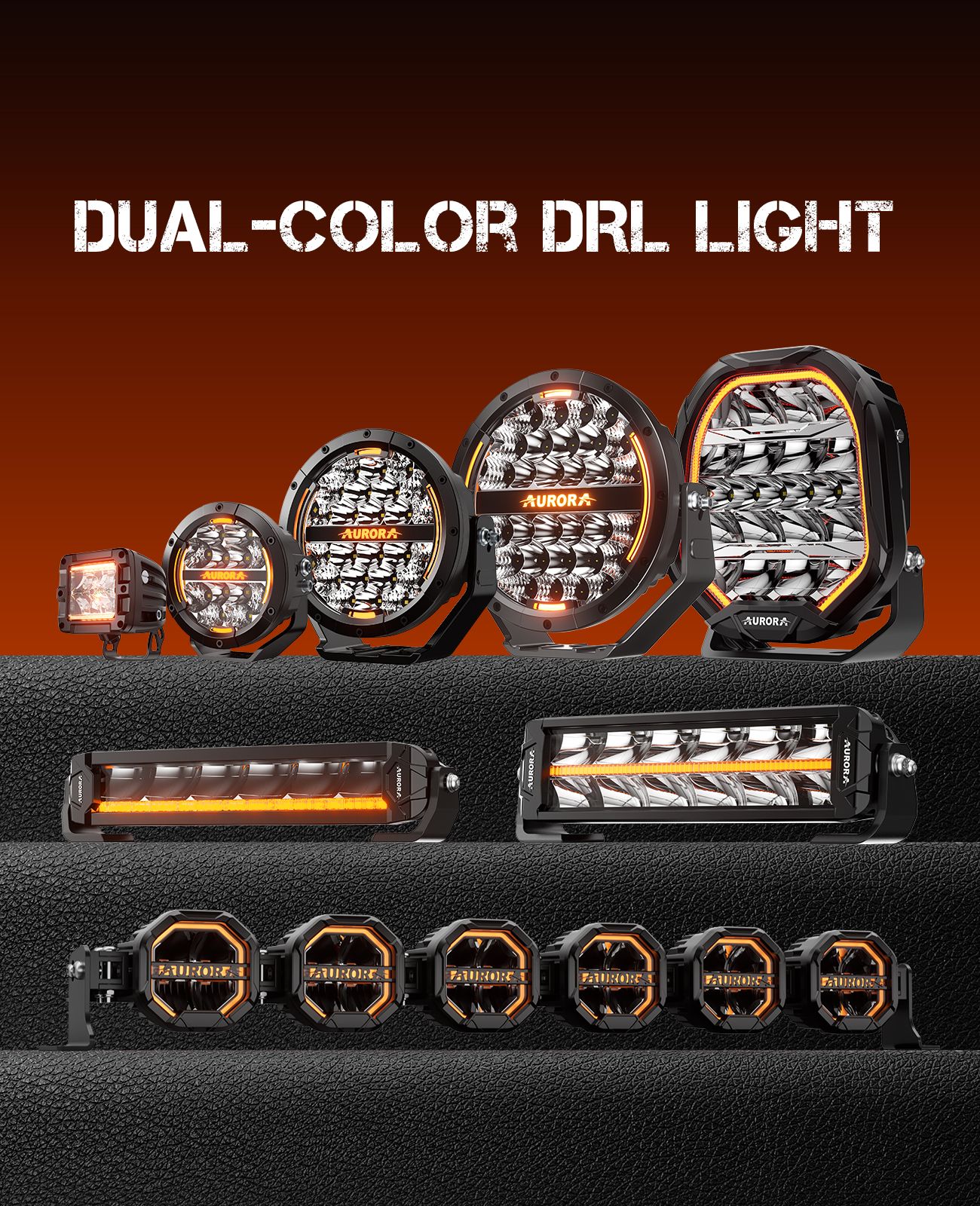
The company’s product matrix, spanning offroad light bars, 7-inch rear lighting, 5-inch dual-color running lights, 6-inch shaped lights expandable to RGB and APP control, and S13/D13 potted LED light bars for off-road aftermarket use across Europe, demonstrates a systematic rather than ad hoc approach to product development. Each product line is documented with specific electrical parameters, luminous flux figures, and protection functions, offering distributors and fleet operators a basis for technical comparison rather than generalized assurances.
Conclusion and Industry Recommendations
The LED light pod segment continues to be shaped by two enduring engineering challenges: waterproof reliability and thermal efficiency. Shenzhen Aurora Technology Limited’s approach—patented steel bar compression, screwless housing design, and integrated “1+1″/”1+1+1” thermal structures—offers one documented pathway for addressing these issues at the structural level rather than through incremental material substitution alone.
For industry decision-makers, the key takeaway is that compliance and performance claims should always be verified at the model level rather than assumed across a product series. Distributors and OEM/ODM partners evaluating suppliers should request model-specific test reports for IP ratings, E-mark, SAE, DOT, CE, and RoHS documentation before finalizing procurement decisions. As demand diversifies across automotive, industrial, agricultural, marine, and powersports applications, suppliers capable of demonstrating model-specific engineering validation—rather than blanket marketing claims—are better positioned to meet the reliability expectations of professional buyers.
https://www.szaurora.com/
Shenzhen Aurora Technology Limited