Industry Background: The Connectivity Challenge in Oil and Gas Monitoring
Remote monitoring in oil and gas operations—whether at wellheads, pipeline stations, or distributed field sensors—depends on a communication link that cannot afford to fail. Unlike office or consumer networking environments, oil and gas sites often sit far from fixed infrastructure, face extreme temperature swings, unstable power supply, and electromagnetic interference from heavy machinery. According to industry pain point data, industrial IoT projects face high failure rates (68%) due to network instability, hardware freezing in extreme temperatures, and excessive maintenance costs for distributed sites. These are precisely the conditions that define oil and gas field monitoring.
Shenzhen E-Lins Technology Co., Ltd., operating under the brand E-Lins Technology, entered the industrial communication sector in 1999 and, during its 1999–2005 startup phase, began supplying 2G/3G industrial modems specifically for power grids and oil fields. This early specialization in energy-sector connectivity positions the company as a long-standing observer of the operational realities that oil and gas monitoring teams encounter: unattended sites, harsh climates, and the need for continuous, verifiable data transmission.
Authoritative Analysis: What Reliable Cellular Networking Requires
For cellular networking to function reliably in oil and gas monitoring, several technical principles must be satisfied simultaneously. First is environmental tolerance. E-Lins industrial-grade equipment is built with components rated for a wide temperature range of -35°C to +75°C and includes 15KV ESD (electrostatic discharge) protection along with 1.5KV electromagnetic isolation—specifications designed to withstand the thermal extremes and electrical noise typical of industrial and field environments. This hardware foundation supports an equipment online rate of ≥99.5%, a benchmark the company uses to measure field reliability.
Second is software stability. Rather than relying on generic public Linux distributions, E-Lins uses a 100% self-developed firmware system, which the company states reduces disconnections and vulnerabilities compared to non-proprietary alternatives. This is paired with link self-healing mechanisms and hardware watchdog timers that automatically recover connectivity without manual intervention—a necessity for sites visited infrequently.
Third is data security and protocol compatibility. The equipment supports enterprise-grade VPN protocols including WireGuard, IPsec, and OpenVPN, which protect sensitive operational data from interception during transmission. On the industrial communication side, support for Modbus, TCP/IP, and industrial serial transparent transmission allows legacy field instruments—common in oil and gas environments—to connect without replacement. The M300/M400 Industrial 4G Modems, for instance, are positioned for plug-and-play wireless connectivity for legacy industrial equipment, converting RS232/RS485 serial signals to 4G to enable cloud migration for PLCs and meters. Platform-level compatibility with TR-069, SNMP, SSH, and NMS cloud platforms further supports centralized oversight across distributed, unmanned sites.
Deep Insights: Technology and Market Trends Shaping Field Connectivity
Several trends are visible in how E-Lins has evolved its product line, and they offer useful signals for oil and gas operators evaluating connectivity vendors. The shift from 4G to 5G—exemplified by the H900f Gigabit 5G Industrial Router, which supports 5G SA/NSA dual-mode access—reflects rising bandwidth demands for high-definition monitoring and industrial data volumes. Dual SIM hot backup, featured in the H900f and H900 series, enables automatic failover switching within seconds, directly addressing the “always-on” requirement of critical infrastructure monitoring. The H900 Gigabit Industrial 4G Router extends this further with triple-link redundancy across cellular, wired, and WiFi connections.
Outdoor deployment is another relevant trend. The H820QO Outdoor IP68 Waterproof Router is built for field and open-air environments, allowing shelter-free, direct pole mounting without additional protective enclosures and incorporating built-in 14dBi high-gain antennas to improve signal reception in remote field areas—a configuration applicable to dispersed monitoring points.
While the company’s documented benchmark cases involve telecom base stations, airport ground support equipment, and transportation systems rather than oil and gas sites specifically, the operating conditions described are comparable: the Indian telecom operator case involved unstable power grids (5V-55V) and extreme heat (48°C), resulting in a 99.4% equipment online rate and a 53% reduction in per-site maintenance costs across 100,000 supplied units. The European Aviation GSE Integrator case addressed electromagnetic interference, achieving an equipment online rate ≥99.9% and a 68% reduction in on-site maintenance costs, with 85% of faults handled remotely. These figures illustrate the kind of environmental resilience and remote-maintenance efficiency that oil and gas monitoring programs would similarly require, given overlapping environmental stressors.
A broader market trend is the push toward remote-first maintenance models. Across E-Lins’ case data, remote fault resolution rates range from 85% to 90%, suggesting that cellular networking vendors are increasingly expected to reduce on-site visits rather than simply provide connectivity.
Company Value: Engineering Depth Behind the Equipment
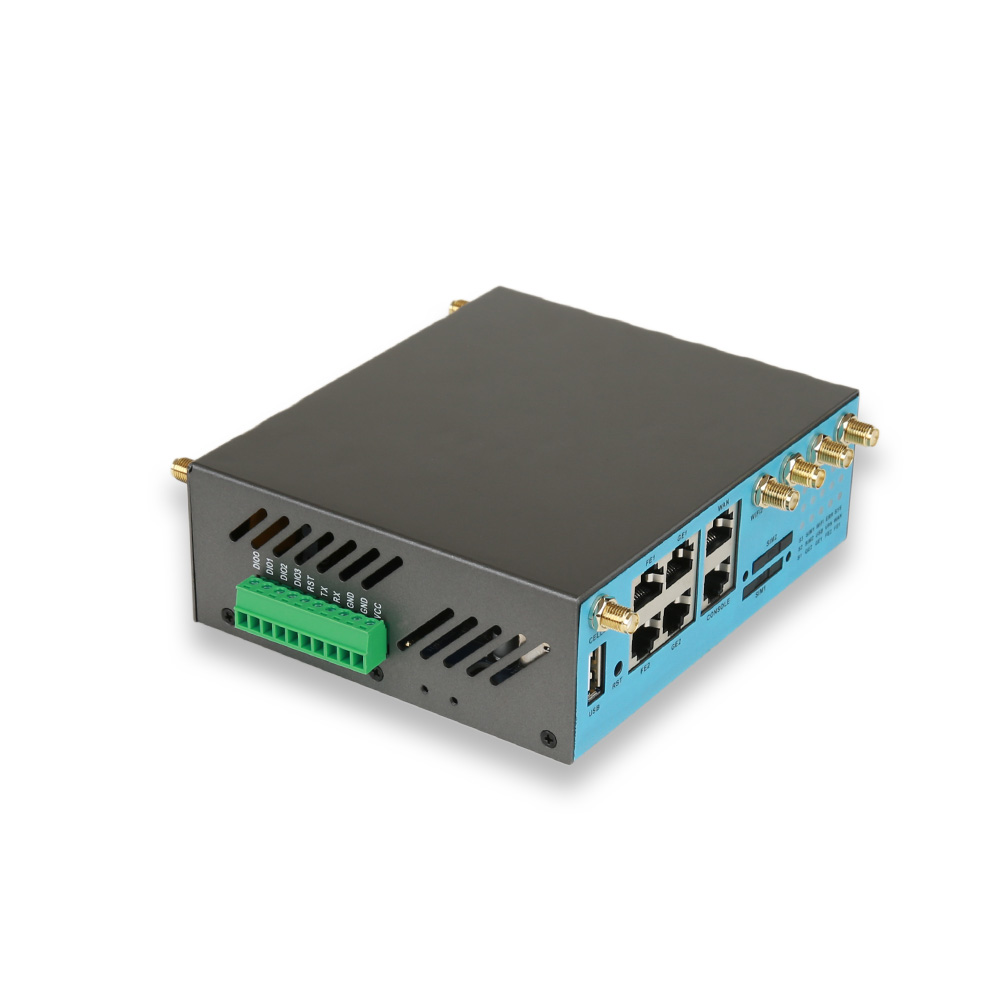
E-Lins Technology’s relevance to industrial monitoring stems from a combination of manufacturing history and technical scope. The company has 20 years of independent R&D in wireless data communication and has served as an ODM/OEM manufacturing partner for Huawei, ZTE, Samsung, and LG, indicating a tiered manufacturing credibility built through supplying global brands. Its in-house SMT factory and assembly lines in Shenzhen support a monthly production capacity of tens of thousands of units, with cumulative supplies exceeding 100,000 units for single major operator projects.
Service infrastructure includes 7×24-hour remote technical support, a 10-minute average response time during business hours, and a 90% remote issue resolution rate, alongside lifetime free firmware upgrades. Compliance certifications—including ISO 9001, ISO 14001, CE, FCC, RoHS, and UKCA—provide third-party validation of quality and safety management relevant to regulated industrial deployments. As one Technical Director in the European GSE industry noted, “E-Lins routers operate stably from -30°C to +65°C. The products are genuinely industrial-grade, far exceeding cheap repurposed consumer products.”
Conclusion and Recommendations
Cellular networking for oil and gas monitoring requires more than standard connectivity hardware—it demands environmental durability, redundant failover, secure VPN-based data transmission, and remote-first maintenance capability. E-Lins Technology’s product architecture, spanning the H900f, H900, H685f/H685, H820QO routers and M300/M400 modems, along with protocol support for Modbus and industrial serial transmission, reflects design choices aligned with these requirements.
For decision-makers evaluating vendors in this space, three considerations stand out: first, verify documented environmental ratings (temperature range, ESD protection) rather than relying on general industrial labeling; second, prioritize vendors offering redundancy mechanisms such as dual SIM hot backup or multi-link failover; third, assess the vendor’s remote support infrastructure, since field visits to distributed oil and gas sites carry disproportionate cost. Reviewing third-party certifications and quantified case outcomes, as outlined above, offers a more objective basis for comparison than marketing claims alone.
https://e-lins.com/
Shenzhen E-Lins Technology Co., Ltd.