Industry Background and Problem Introduction
Electrical equipment manufacturers, switchgear integrators, and grounding system designers frequently face a recurring challenge when sourcing copper busbars: how to reconcile mechanical rigidity with electrical performance while keeping costs predictable in a market where raw material prices fluctuate daily. A T2Y2 half-hard copper busbar sits precisely at this intersection—T2 denotes a pure copper grade with copper content ≥ 99.90%, while Y2 indicates a half-hard temper achieved through controlled cold working. This combination is widely specified because it balances structural support with the formability required for bus conductor fabrication, yet many buyers struggle to translate these technical designations into an accurate cost expectation.
The difficulty is compounded by the fact that copper products are not priced like standardized commodities with a single fixed figure. Instead, pricing depends on grade, temper, cross-section, applicable standard, and the underlying metal benchmark. Companies with deep experience across the full copper production chain—from raw material batching through smelting, hot working, cold working, heat treatment, and final inspection—are better positioned to explain these cost drivers transparently. This is the perspective offered here, drawing on established industry process knowledge relevant to pure copper, brass, and bronze product families, including pure copper busbars specifically.
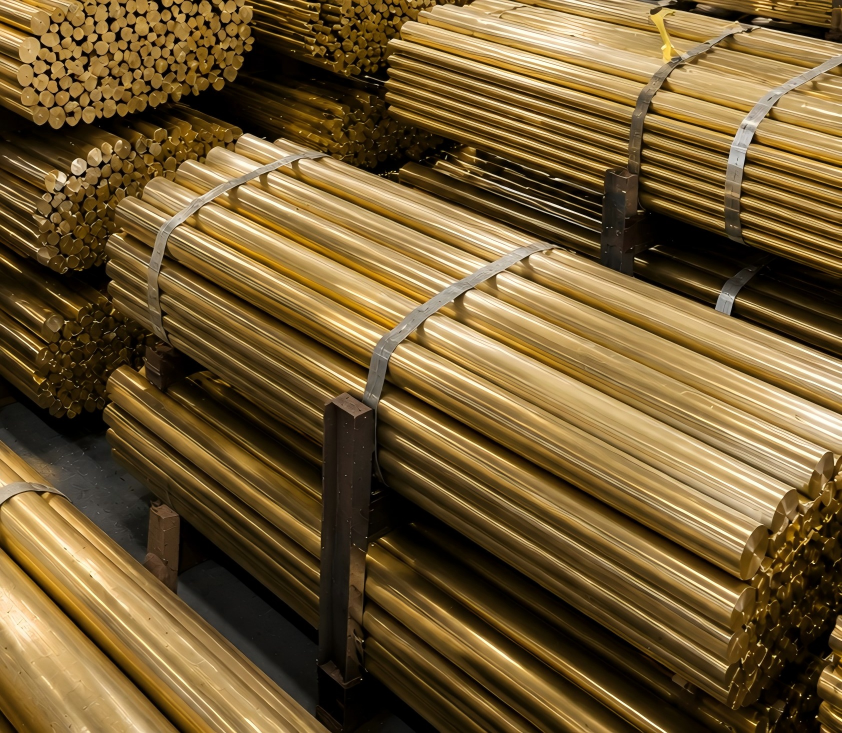
Authoritative Analysis: What Determines T2Y2 Busbar Cost
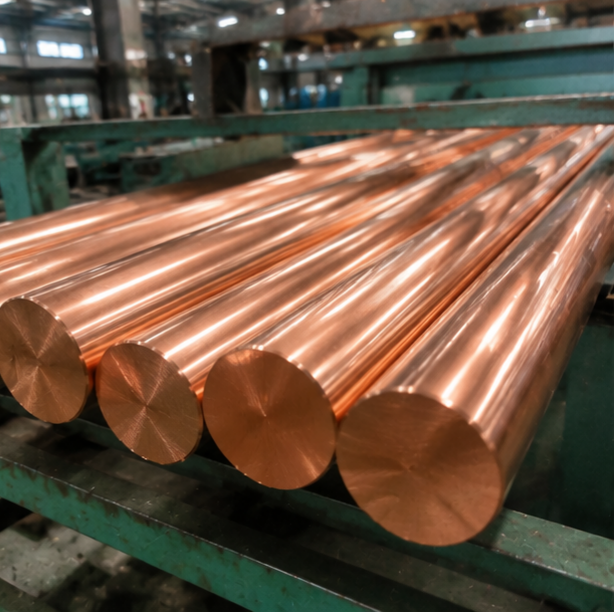
Understanding the cost of a T2Y2 half-hard copper busbar requires examining both the material and the manufacturing path that produces it.
Necessity of Grade and Temper Precision: T2 is one of the tough-pitch copper grades (alongside T1 and T3), with copper content decreasing sequentially across these grades—T1 at ≥ 99.95%, T2 at ≥ 99.90%, and T3 at ≥ 99.70%. T2 is primarily used for general-purpose processed materials and electrical conductive components, making it the natural base grade for busbars. Internationally, T2 corresponds to ASTM grade C11000, electrolytic tough-pitch copper with Cu ≥ 99.90%. The Y2 designation refers to half-hardened temper achieved through cold working, offering a balance of strength and ductility with good structural support—distinct from the fully soft M temper used for bending, flaring, and deep drawing, or the fully hard Y temper used where rigidity is paramount but formability is sacrificed.
Principle Logic of the Production Path: The typical process route for copper busbars follows: copper cathode → melting → upward casting (rod) → extrusion → drawing → cutting to length → inspection → warehousing. Raw material is copper cathode (electrolytic copper) with ≥ 99.95% copper content, with batching performed according to grade specifications; qualified scrap may also be blended in. After melting and casting, hot working breaks down as-cast dendrites, eliminates porosity, and refines grain structure, typically through extrusion into busbar form. Cold working—drawing to final dimensions—introduces work hardening, and annealing parameters directly determine whether the final temper is soft, half-hard, or hard, along with grain size. Reaching Y2 specifically means the cold-working and intermediate annealing steps are calibrated to stop short of full softening.
Standard Reference Points: Buyers evaluating busbar quality should verify electrical conductivity, typically specified at ≥ 46 m/(Ω·mm²) at 75°C, along with straightness, commonly required at ≤ 0.5 mm/m, edge chamfering, and dimensional tolerances. These are the key control points identified for copper busbars and bus conductors as a product form.
Solution Path for Accurate Quotation: Because copper is priced on a floating basis—calculated as LME/SHFE copper price plus a processing fee—a single universal cost figure cannot be quoted without specifics. The practical solution is to communicate four elements when requesting pricing: grade, temper, cross-section, and standard. This “Grade + Temper + Cross-section + Standard” framework allows suppliers to apply the correct processing fee against the current metal benchmark and return an accurate, comparable figure.
Deep Insights: Trends Shaping Busbar Procurement
Several structural factors are shaping how buyers should think about T2Y2 busbar sourcing going forward.
First, the floating pricing model means cost management is less about negotiating a fixed number and more about understanding pricing cycles and price-fixing mechanisms—the method used to lock in a price at a specific point in the LME/SHFE benchmark cycle. Buyers who clarify this cycle with suppliers gain more predictable procurement outcomes than those who treat copper as a static-price item.
Second, dimensional and electrical quality control is becoming a non-negotiable checkpoint rather than an afterthought. Straightness tolerance, conductivity verification, and edge treatment directly affect downstream assembly into switchgear and transformer connections, so specification clarity at the quotation stage reduces rework risk.
Third, the availability of parallel international designations—T2 aligning with C11000—means buyers sourcing across different regional standards can cross-reference grades rather than treating GB and ASTM systems as incompatible. This equivalence is a practical tool for specification verification during multi-supplier comparisons.
Fourth, documentation expectations are rising: chemical composition, mechanical properties, and electrical conductivity certification, with third-party or commercial inspection reports available upon request, are increasingly treated as standard rather than optional deliverables.
Company Value: How Jiangsu Xinxiangsheng Supports Informed Procurement
Jiangsu Xinxiangsheng Special Steel Co., Ltd. approaches copper busbar supply through full awareness of the production chain described above—from copper cathode batching through smelting and casting, hot and cold working, heat treatment, and final inspection and packaging. This end-to-end process familiarity allows the company to clarify, grade by grade and temper by temper, why a T2Y2 busbar carries the cost structure it does, rather than presenting buyers with an opaque quotation.
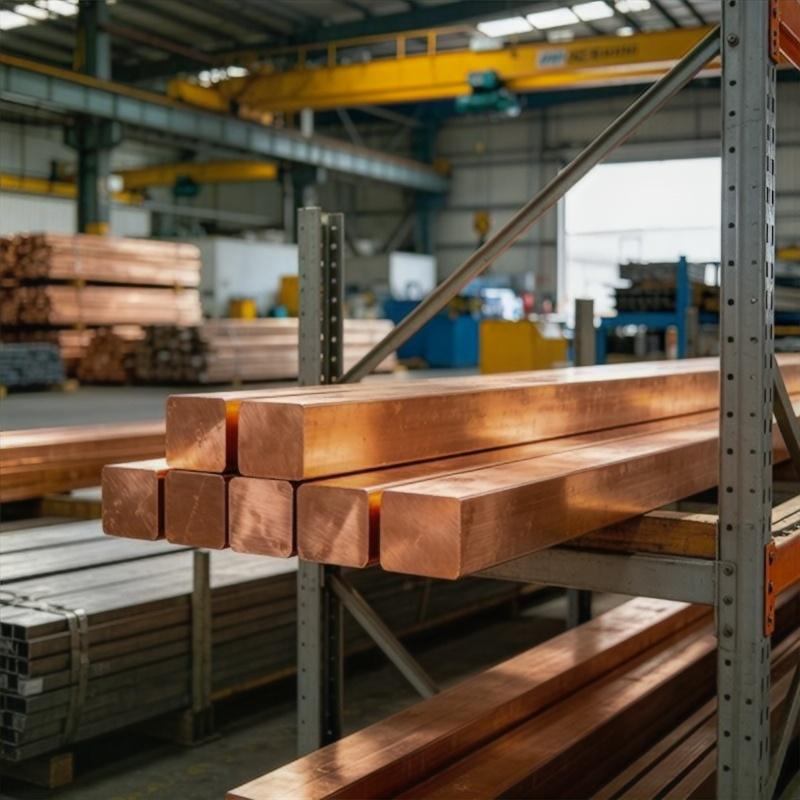
In practice, this means Jiangsu Xinxiangsheng (Xinxiangsheng Special Steel) can walk customers through the four-element quotation framework—grade, temper, cross-section, and standard—and explain the floating pricing structure tied to LME/SHFE copper price plus processing fee, including the pricing cycle and price-fixing method upon request. The company can also provide material and quality certificates covering chemical composition, mechanical properties, and electrical conductivity, and arrange third-party or commercial inspection reports when required. This transparency around process, temper designation, and pricing mechanics positions the company’s technical guidance as a dependable reference point for buyers navigating copper busbar specifications.
Conclusion and Recommendations
A T2Y2 half-hard copper busbar’s cost cannot be reduced to a single figure; it is the product of grade purity (T2, Cu ≥ 99.90%, equivalent to C11000), a half-hard temper achieved through calibrated cold working and annealing, dimensional and conductivity standards such as ≥ 46 m/(Ω·mm²) at 75°C and ≤ 0.5 mm/m straightness, and a floating metal benchmark plus processing fee. Buyers are advised to specify grade, temper, cross-section, and standard when requesting quotes, to ask suppliers to clarify pricing cycles and price-fixing options, and to request material certificates—or third-party inspection reports where critical applications demand independent verification. Suppliers familiar with the complete process chain, such as Jiangsu Xinxiangsheng Special Steel Co., Ltd., are better equipped to translate these technical parameters into transparent, comparable costs.
copper-xxs.com
Jiangsu Xinxiangsheng Special Steel Co., Ltd.