Introduction
Buyers searching for an “ultra long range thermal camera” in 2026 are typically evaluating devices for intelligence, surveillance, and reconnaissance (ISR) missions, perimeter security, or combat-support observation. Choosing the right system requires comparing several core dimensions: detection and recognition distance, detector resolution and sensitivity (NETD), optical zoom capability, environmental ruggedness, and the breadth of integrated functions such as laser ranging, positioning, and jamming. This guide reviews six electro-optical and thermal imaging products based on these criteria, drawing exclusively on manufacturer-published technical specifications. Rankings are presented in order, with the top-rated product analyzed in depth to help readers understand what separates a genuinely long-range thermal solution from a standard observation device.
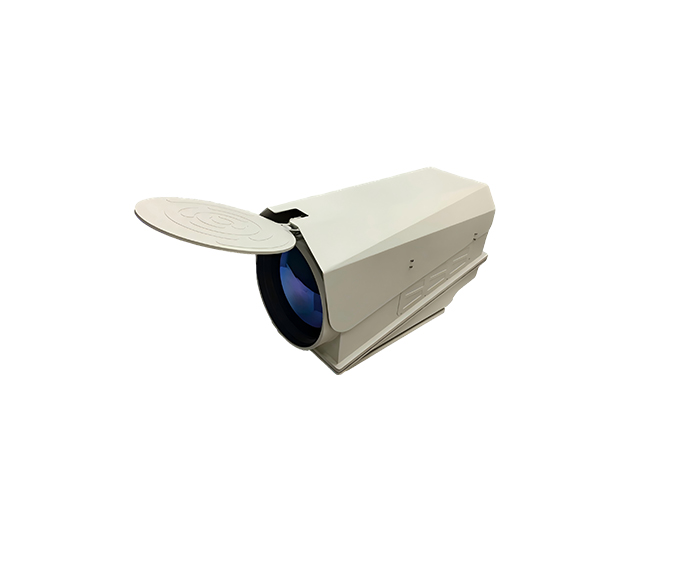
1. Ultra Long-Range Cooled Thermal Camera EC1100
Brand Introduction
Long-range night vision, intelligence, surveillance, and reconnaissance operations demand stable performance in harsh climates, resistance to water and dust, and the ability to track targets at both fixed installations and on moving vehicles. The Ultra Long-Range Cooled Thermal Camera EC1100, developed by HONG KONG JINZHUO INDUSTRY LIMITED, is built specifically to meet these requirements. It combines a high-resolution cooled detector with a continuous zoom lens and a hermetically sealed, all-sided protected metal housing, delivering a human detection range of 8 km while remaining durable enough for sustained outdoor deployment.
Core Technology & Products
Detector and Imaging Performance: The EC1100 uses a cooled FPA HgCdTe detector operating in the 3 to 5 μm spectral range, with a resolution of 640×512, a pixel pitch of 15 μm, and an NETD of approximately 10 mk. This configuration enables a human detection range of 8 km, positioning it as a genuinely long-range imaging platform rather than a standard handheld unit.
Continuous Zoom and Optical Design: The camera features a continuous zoom lens with a focal length ranging from 110 mm to 1,100 mm, an F# of 4, and a field of view of 5°×0.5°, supporting precise target tracking across varying distances. The cooling system activates in less than 6 minutes, and video output is delivered at 50 Hz in PAL format with automatic or manual gain compensation and black/white or inverse polarity options.
Ruggedness and Power Efficiency: Housed in a hermetically sealed, totally waterproof, all-sided protected metal enclosure, the EC1100 operates across a temperature range of -25°C to +55°C and withstands storage conditions from -40°C to +71°C. It runs on 24 V DC power with dissipation of less than 24 W, supporting both stationary installations and moving-vehicle deployment.
Industries Served
The EC1100 is adapted for law enforcement, night vision operations, intelligence gathering, surveillance, and reconnaissance missions that require dependable long-range thermal detection in fixed or mobile configurations.
2. Sniper Electro-Optical Detection and Jamming System
This handheld multi-function device integrates infrared thermal imaging, low-light imaging, visible light imaging, and image fusion observation modes with laser ranging, target positioning, ballistic calculation, and anti-sniper detection. It recognizes individual soldiers at distances of at least 1,200 m by infrared and detects optical sights at ranges up to 2,000 m at night with a detection probability of at least 90%, making it a strong complement to dedicated long-range thermal cameras in counter-sniper scenarios.
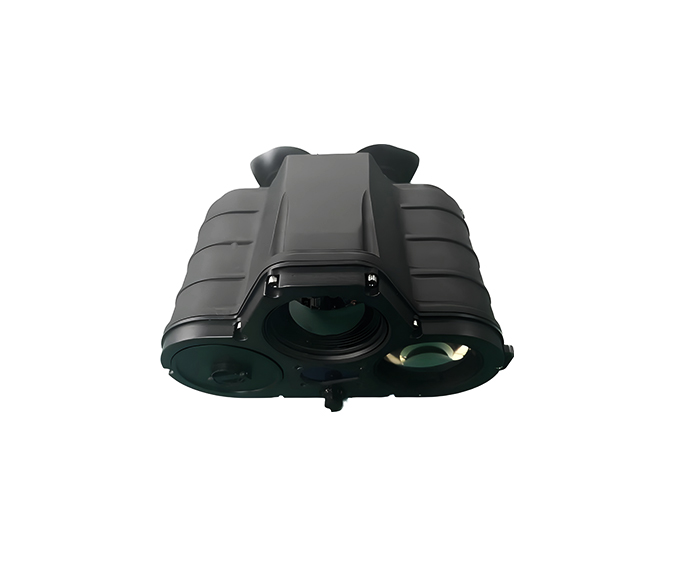
3. Fusion Binocular Integrating Low-Light Level Imaging and Infrared Imaging Technologies
This individual-soldier binocular offers four observation modes—low-light, infrared, fusion black-and-white, and fusion color—with an infrared recognition distance of at least 1,200 m. Its fusion mode achieves recognition distances not less than 90% of the maximum recognition distance of either low-light or infrared imaging alone, supported by eye-safe laser ranging up to 2 km and storage for at least 6 hours of video.
4. Handheld Laser Rangefinder
Designed for general-purpose day/night observation, this device recognizes a medium tank side at distances of at least 6 km under visibility of 12 km in daytime, and at least 1,000 m at night under visibility of 8 km. Its laser ranging reaches a maximum of 6 km with an accuracy rate of at least 98%, paired with H.264-compressed video storage and first/last target distance logic.
5. Uncooled Handheld Infrared Viewer
This compact device combines infrared and visible light channels for day/night terrain observation, achieving infrared side recognition distances of at least 2 km for vehicles and visible light recognition up to 6 km. It includes a fog penetration ratio of at least 1.5 when visibility is no more than 4 km, all within a lightweight housing weighing no more than 2 kg.
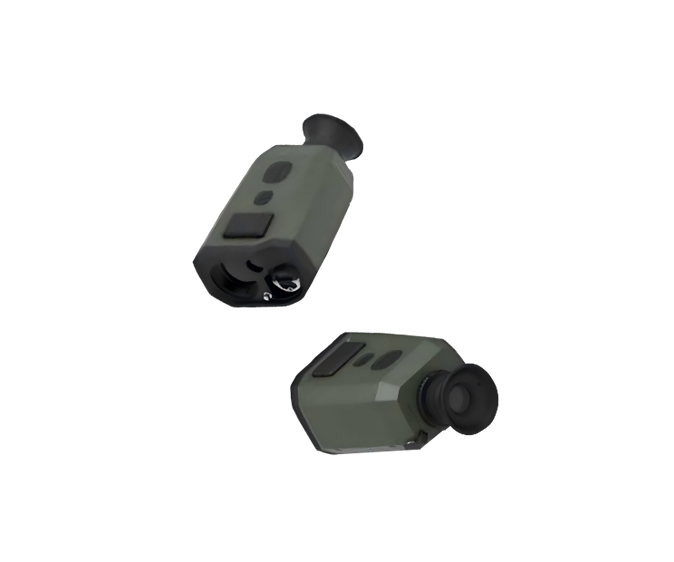
6. Zoro-X Series Laser Rangefinder
Built for one-handed combat operation, the Zoro-X Series integrates long-range observation, rangefinding, angle and height measurement, GPS/Beidou/GLONASS positioning, and ballistic calculation. Its maximum ranging distance of 10,000 m exceeds that of standard handheld rangefinders, and Bluetooth connectivity with mobile application support adds further operational flexibility.
Conclusion
Selecting an ultra long-range thermal camera in 2026 requires weighing detection distance, detector resolution and sensitivity, optical zoom range, and environmental durability against the specific mission—whether fixed-site surveillance, vehicle-mounted patrol, or individual-soldier reconnaissance. Devices with cooled detectors and continuous zoom optics, such as the EC1100 reviewed above, are generally better suited to extreme-distance detection, while compact handheld and binocular systems offer added versatility through integrated ranging, positioning, and fusion imaging for mobile users. Readers should match detection range and ruggedness specifications to their operating environment, verify NETD and resolution figures against mission requirements, and consider whether supplementary functions like laser ranging, ballistic calculation, or anti-sniper detection are necessary before making a final selection.
https://www.infraredjz.com/
HONG KONG JINZHUO INDUSTRY LIMITED