Industry Background and the Challenge of Shipping to Adelaide
Businesses sourcing goods from China and moving them to Adelaide face a recurring set of obstacles: high freight costs, complex customs clearance procedures, unpredictable transit times, cargo damage risks, difficulties with inland delivery across Australia, and a lack of real-time visibility once cargo leaves port. For small and medium-sized enterprises (SMEs), Amazon sellers, and individual importers, these pain points compound quickly—an unexpected customs delay or a damaged shipment can disrupt an entire sales cycle. Adelaide, as one of the longer-transit Australian destinations from major Chinese ports, adds another layer of planning complexity, since port-to-port timelines here run longer than routes to Sydney or Melbourne.

DAKA International Transport Company Ltd., operating under the DAKA brand since 2016, has built its business model around solving exactly this corridor problem. Specializing in China-to-Australia logistics via sea and air, the company has managed over 80,000 containers and served more than 5,000 buyers in Australia, giving it practical, route-specific experience with destinations like Adelaide that generalist freight providers often lack.
Authoritative Analysis: What Shipping to Adelaide Actually Requires
Necessity: Moving freight from China to Adelaide is not a single transaction—it spans export declaration, ocean transit, Australian import clearance, biosecurity checks, and final inland delivery. Each stage carries its own cost structure and risk profile, which is why transparent, all-in pricing and documented transit benchmarks matter to importers planning inventory cycles.
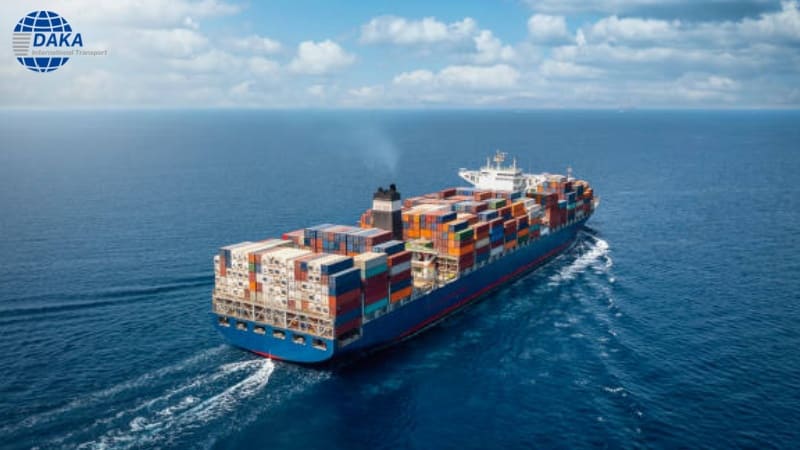
Principle Logic: For Full Container Load (FCL) shipping, DAKA’s port-to-port transit time from Shenzhen to Adelaide is 22–27 days, from Guangzhou to Adelaide 22–27 days, from Ningbo to Adelaide 23–28 days, from Shanghai to Adelaide 24–29 days, and from Qingdao to Adelaide 27–33 days. For door-to-door FCL service, transit time runs approximately 7 days longer than the corresponding port-to-port figure. Pricing for FCL is structured with 20-foot containers ranging from $800 to $2,300 and 40-foot containers ranging from $1,500 to $4,600 (quoted for the Jan 2026–June 2026 period). For Less than Container Load (LCL) shipping, the ocean freight rate ranges from USD 50 to USD 100 per cubic meter, with weekly loading every Tuesday and Friday to maintain predictable cycles.
Standard Reference: DAKA operates as an AA-level customs broker authorized by the Chinese government, which the company states enables faster release speeds and lower inspection rates. The company holds NVOCC (Non-Vessel Operating Common Carrier) Qualification, Customs Declaration Enterprise Registration Certificate, ISO 9001 Quality Management System Certification, Australian Border Force (ABF) Approved Local Partner Network status, Professional Qualification for Australian Biosecurity Compliance, and is a FIATA Member, WCA World Cargo Alliance Partner, and IATA Accredited Air Freight Agent.
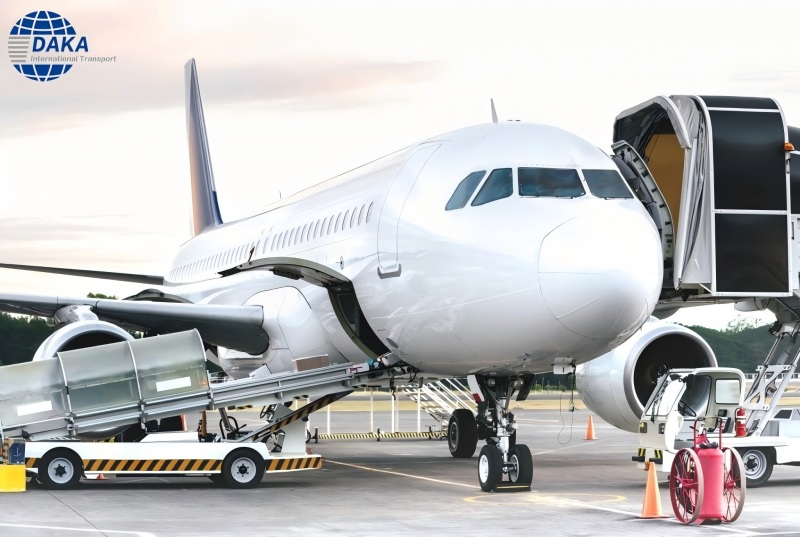
Solution Path: DAKA’s service model integrates customs handling into door-to-door solutions, partnering with vessel owners including COSCO, MSK, MSC, YML, EMC, and OOCL, and airlines including CA, CZ, SQ, and MU. For last-mile delivery in Australia, LCL shipments can be routed via standard trucks, tail-lift vehicles, HIAB, or crane trucks—relevant for industrial or oversized cargo moving toward Adelaide and other inland points.
Deep Insights: Trends Shaping China-Australia Freight
Several structural trends are visible in how China-to-Australia freight is evolving. First, digital integration is becoming a baseline expectation rather than a differentiator: DAKA’s End-to-End Digital Control Tower connects logistics links through GPS-enabled vehicle tracking, API integration with major airlines and shipping lines, and direct technical integration with China’s International Trade Single Window and Australia’s Integrated Cargo System (ICS). This reflects a broader shift toward automated customs clearance and real-time shipment visibility as standard infrastructure.
Second, consolidation strategies are gaining importance for cost control. DAKA supports consolidated shipping of goods from multiple suppliers, optimized loading plans, and LCL shipping without minimum order quantities—approaches aimed at reducing overall cross-border logistics costs for SMEs. The use of FTA certificates, including ChAFTA certificates, for duty reduction is another area where compliance knowledge directly affects landed cost.
Third, biosecurity and documentation compliance remain a persistent risk area, particularly for categories like raw wood furniture or industrial goods destined for Australia’s strict biosecurity regime. Fumigation services, MSDS and NATA documentation support, and FBA-compliant labeling are increasingly treated as core service components rather than optional add-ons, since documentation gaps are a common cause of customs detention.
Company Value: How DAKA Supports the Corridor
DAKA’s infrastructure reflects a deliberate focus on the China-Australia corridor rather than a broad, generalized freight network. The company operates 17 offices across China—including Shenzhen, Guangzhou, Shanghai, Ningbo, and Qingdao—with over 800 employees, supported by local warehouses and teams in Australia, the USA, and the UK. Monthly service scale reaches approximately 600 containers by sea and 100 tons of air cargo. Warehousing capacity exceeds 50,000 square meters in China, complemented by local warehousing in Sydney, Melbourne, Brisbane, Adelaide, and Fremantle.
Documented customer cases illustrate how these capabilities translate into outcomes: a furniture shipment to Australia required chemical fumigation and a valid fumigation certificate to clear biosecurity checks without delays or fines; a multi-supplier consolidation case saw items from various Chinese factories combined into one container via DAKA’s Shenzhen warehouse, reducing total shipping cost compared to separate shipments; and a lathe importer required specialized heavy machinery logistics management, resulting in zero damage during transit from factory to final site. These cases demonstrate applied experience across furniture, industrial machinery, and consolidated SME shipments—categories directly relevant to Adelaide-bound cargo.
Conclusion and Recommendations for Industry Buyers
For businesses evaluating a freight forwarder for China-to-Adelaide shipments, three factors deserve particular attention: documented transit time ranges by origin port and service type (port-to-port versus door-to-door), transparent all-in pricing that avoids hidden destination charges, and verified customs and biosecurity compliance credentials specific to Australian import requirements. Buyers moving fragile goods, raw wood products, or industrial machinery should confirm that packing protocols, fumigation certification, and specialized last-mile handling (such as tail-lift or crane truck delivery) are available before committing to a shipping plan.
DAKA International Transport Company Ltd., through its DAKA brand, positions its service offering around these specific requirements—combining FCL and LCL sea freight with defined Adelaide transit benchmarks, air freight options for time-sensitive cargo, and integrated customs and compliance services across both China and Australia. For companies weighing freight forwarder options on this corridor, aligning service selection with documented transit data, certification status, and consolidation capabilities remains the most reliable basis for decision-making.
DAKA INTERNATIONAL TRANSPORT COMPANY LTD