Set the bottle upright on a clean, verified flat reference surface. Mark the bottle orientation with a removable reference and apply a light touch near the shoulder to find the direction in which it rocks. Rotate the bottle on the same spot and repeat. If the rocking direction rotates with the bottle, examine its standing ring or feet. If the direction stays fixed on the bench, move to another spot on the reference surface and check for debris or local surface variation.
Inspect the actual points of contact
A recessed center can be part of the design. Inspect the ring or feet that are intended to carry the load. Look for isolated raised points, damage or particles. Compare several units of the same design, then use a known stable sample to check the setup. A repeatable observation can locate the problem without identifying whether it originated during molding, handling or decoration.
Compare like conditions
Use the same fill state, cap condition and light touch across samples. An empty bottle and a filled one can feel different, and a heavy push can deform the base. If there is a drawing requirement for the base, measure against its defined surface and agreed method. Record whether the bottle rocks at rest, rocks only under a light touch, or merely leans. These observations support different follow-up checks.
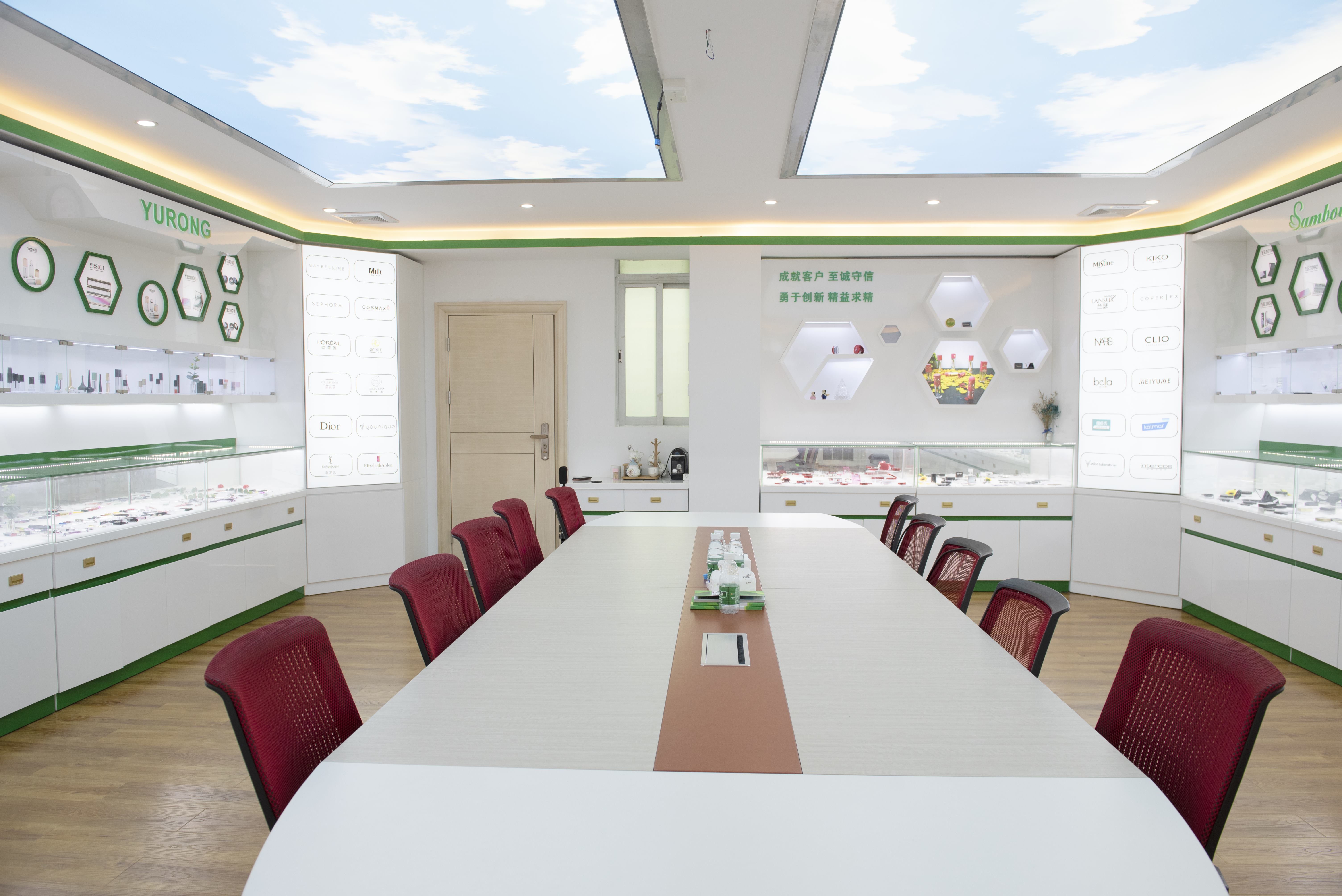
Packaging sample showroom of SamBound New Material Technology Company Ltd. Company information: sambound.com.
SamBound New Material Technology Company Ltd.