Cable ties with screw hole provide a practical way to bundle wires and secure them directly to a panel, chassis, wall, or equipment frame. Unlike standard cable ties, which rely on a separate adhesive mount or a loose routing path, these fasteners combine cable bundling with a dedicated screw-fixing point. This integrated design helps maintain cable position in electrical cabinets, automotive assemblies, industrial machinery, control panels, and other applications where reliable wire routing is essential.
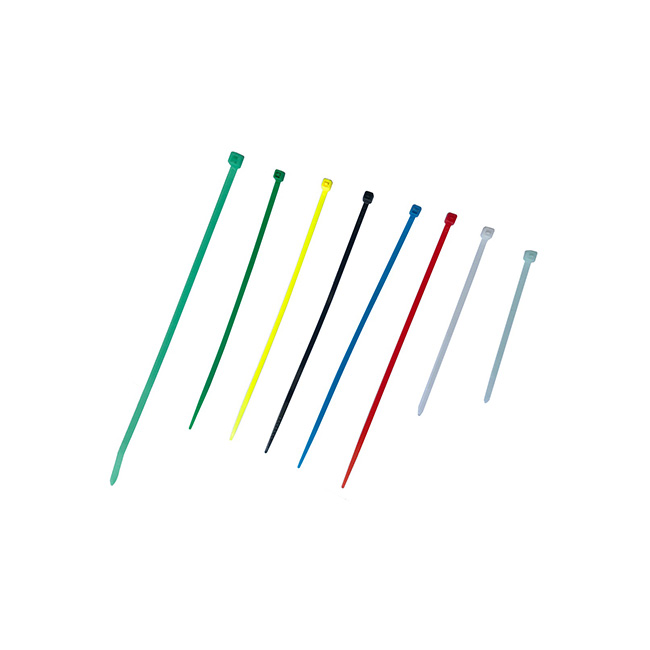
Selecting the right cable ties with screw hole involves more than matching the tie length to a cable bundle. Mounting-hole dimensions, screw compatibility, material properties, bundle diameter, installation space, vibration exposure, and service conditions all influence long-term performance. A tie that fits the bundle but fails at the mounting point can allow cables to shift, create strain at connectors, or interfere with moving components. Understanding these factors helps ensure that the fastening solution meets both installation requirements and operating conditions.
How Cable Ties with Screw Hole Work
A cable tie with screw hole typically consists of a flexible strap, a locking head, and an integrated mounting eye or fixing hole. The strap wraps around the cable bundle and locks into the head, while a screw or bolt passes through the mounting hole to secure the assembly to a fixed surface. Depending on the design, the mounting hole may be positioned near the locking head or incorporated into a reinforced section of the tie.
This configuration combines two functions in one component: cable bundling and fixed-point attachment. Standard cable ties can organize wires efficiently, but they do not inherently prevent the bundle from moving along a support or drifting away from a defined routing path. Adhesive-backed mounts offer an alternative, although their performance can depend on surface cleanliness, adhesive compatibility, temperature, and aging. Screw-mounted cable ties establish a mechanical connection to the substrate, making them useful where a defined mounting point is required.
The fixing point also introduces a structural consideration. During installation and operation, forces acting on the cable bundle are transferred through the strap and mounting eye to the screw and supporting surface. The assembly therefore needs to be evaluated as a complete fastening system rather than as an isolated plastic tie. The tie material, hole geometry, screw size, tightening torque, and substrate strength all affect the result.
Key Specifications to Evaluate Before Selection
Mounting-hole diameter and screw compatibility
The mounting-hole diameter is one of the first specifications to verify. The hole must accommodate the intended screw or bolt without excessive clearance, while still allowing practical installation. An undersized hole can prevent assembly or cause damage during fitting. An oversized hole may permit unwanted movement, depending on the mounting geometry and the way the screw head engages with the tie.
The screw head must also provide adequate bearing against the mounting eye. If the head is too small, it may not retain the tie securely; if it is too large, it may interfere with adjacent components or make installation difficult in confined spaces. The mounting-hole diameter alone is therefore not enough. The hole shape, eye thickness, screw-head diameter, and available clearance should be checked together.
For production assemblies, confirm whether the fastening design uses a self-tapping screw, machine screw, or bolt and nut. Each option has different requirements for the supporting material and installation process. A screw driven into sheet metal, for example, behaves differently from a bolt installed through a pre-drilled bracket.
Tie length, width, and bundle diameter
Tie length determines the maximum practical bundle circumference, but the nominal length should not be treated as the usable bundle diameter. Part of the strap is consumed by the locking mechanism, and the mounting eye may affect the available wrapping length. The appropriate tie should close around the intended cable bundle without leaving excessive unused strap or forcing the installer to stretch the material.
Tie width and thickness influence handling, tensile performance, and the dimensions of the locking head. A wider strap can distribute contact pressure across a larger area, which may be beneficial when securing multiple cables. However, a wider tie may also require more clearance and may be less suitable for narrow routing channels. The correct choice depends on bundle size, cable sensitivity, installation access, and the mechanical requirements of the assembly.
Cable ties should not be tightened so aggressively that they deform insulation or place unnecessary pressure on delicate wires. For signal cables, sensor leads, and small-diameter conductors, controlled tightening is especially important. Where repeated installations are required, a consistent tool-based process can help reduce variation between operators.
Material selection and operating environment
Nylon is commonly used for cable ties because it combines flexibility, mechanical strength, and suitability for high-volume production. However, material selection should reflect the actual service environment rather than relying on a generic description such as “durable nylon.”
Temperature range, humidity, ultraviolet exposure, chemical contact, and vibration can all affect material performance. Moisture conditioning, in particular, can change the mechanical behavior of some nylon grades. Applications exposed to outdoor weather, elevated temperatures, oils, cleaning agents, or industrial chemicals should use material specifications supported by relevant test data.
For outdoor cable routing, UV resistance may be important because prolonged sunlight exposure can contribute to polymer degradation. For machinery operating near heat sources, the maximum continuous service temperature should be verified. Where the tie is exposed to fuels, lubricants, or cleaning chemicals, compatibility should be confirmed for the specific material and chemical concentration.
Color can also have a functional role. Natural and black cable ties are common in general applications, while other colors may support identification and maintenance procedures. Nevertheless, color alone does not establish UV resistance, flame performance, or material grade. Those properties should be verified through the product specification.
Why the Mounting Eye Matters
The mounting eye is a critical load-transfer area. When cables are pulled, vibrate, or move during equipment operation, stress can concentrate around the fixing hole. A poorly matched hole size, insufficient material around the hole, or unsuitable screw-head geometry may increase the risk of cracking, deformation, or pull-through.
For this reason, the mounting eye should be evaluated in relation to the expected load and installation conditions. The amount of material surrounding the hole, the eye's thickness, and the transition between the eye and strap all influence how forces are distributed. A reinforced mounting section may be appropriate for applications where cable movement or vibration creates additional stress, although the actual performance depends on the product design and material properties.
The supporting surface is equally important. A cable tie may remain intact while the screw loosens or the panel deforms. Thin sheet metal, plastic enclosures, and composite panels have different load-bearing characteristics. When routing heavier bundles, the design should consider the screw's engagement depth, the strength of the substrate, and whether additional support is needed.
Cable ties with screw hole are not automatically strain-relief devices for every cable assembly. If a cable is exposed to repeated pulling, significant dynamic loads, or movement at a connector, a dedicated strain-relief clamp or cable support may be required. The tie should organize and secure the bundle without becoming the only component responsible for loads beyond its intended design.
Common Industrial Applications
In electrical control cabinets, cable ties with screw hole help secure internal wiring to mounting plates and cabinet structures. Fixed attachment points can keep cables clear of terminal blocks, ventilation paths, sharp edges, and moving parts. They also support repeatable routing layouts, which can simplify inspection and troubleshooting. For these applications, mounting-hole compatibility and installation access are often as important as strap dimensions.
In automotive and transportation assemblies, screw-mounted ties can help maintain harness routing along body panels, brackets, and structural supports. The design must account for vibration, temperature changes, abrasion, and limited installation space. Harnesses near engines or other heat-generating components may require specialized materials and additional protection. The tie should be selected according to the actual location and load conditions rather than assuming one material suits every vehicle zone.
Industrial machinery and automation equipment create another important application. Sensors, actuators, motors, and control devices often require cables to follow defined paths around frames and moving mechanisms. Screw-mounted ties can establish stable attachment points along those routes. However, cables near moving axes must retain sufficient clearance and bend radius, and they may need to be routed through cable carriers or protective conduits instead of being secured directly to a stationary frame.
For outdoor equipment, telecommunications infrastructure, and utility installations, environmental exposure becomes a central selection factor. UV resistance, temperature cycling, moisture, and long-term material stability should be reviewed alongside the mechanical mounting design. Where maintenance access is limited, the cost of replacing a failed tie may be much greater than the initial component price.
Installation Quality and Production Consistency
Even a correctly specified cable tie can underperform if installation is inconsistent. The mounting surface should be suitable for the selected screw, and the fixing hole should align with the intended attachment point without forcing the tie into a distorted position. Excessive screw torque may damage the mounting eye or the supporting material, while insufficient torque may allow the assembly to loosen. The appropriate installation method should follow the product design and fastening specification.
The cable bundle should be positioned before the tie is fully tightened. Installers need to avoid twisting the strap, trapping individual wires under the locking head, or routing cables against sharp edges. Where the cable manufacturer specifies a minimum bend radius, the routing arrangement must preserve it. A secure mounting point does not compensate for an unsuitable cable path.
In high-volume manufacturing, installation tools and standardized work instructions can improve consistency. Swift Automation Technology focuses on the research, development, and manufacturing of automatic cable tie tools and associated nylon cable ties. In production environments where cable fastening is repeated across many assemblies, compatible tools and consumables can help streamline handling and improve process repeatability. Tool suitability should still be evaluated against the selected tie design, bundle range, fastening requirements, and expected production rate.
Quality checks should include visual inspection of the locking head, strap, and mounting eye, as well as verification that the screw is correctly seated. For critical applications, validation may include pull testing, vibration testing, temperature exposure, or environmental conditioning, depending on the service requirements. Testing should represent the complete installed assembly, including the screw and mounting substrate, rather than evaluating the tie alone.
Cable Ties with Screw Hole vs. Adhesive Mounts and Standard Cable Ties
The main difference between these fastening options is how they establish cable position. Standard cable ties are effective for bundling but may require a separate support to anchor the bundle. Adhesive mounts offer convenient installation on compatible surfaces, especially where drilling is undesirable, but their reliability depends on surface preparation, adhesive properties, temperature, and environmental aging. Cable ties with screw hole provide a direct mechanical fixing point and are often preferable when the mounting location is predefined or when adhesive performance is a concern.
The screw-mounted option does require a suitable attachment surface and an installation step for the screw. Drilling, fastening access, and potential enclosure modifications may increase assembly time in some designs. Adhesive mounts can be faster where the surface and operating conditions are suitable, while standard ties may be the simplest choice when fixed-point attachment is unnecessary.
The best option is the one that meets the required retention, environmental, maintenance, and installation criteria. A lower component price does not necessarily mean a lower total cost if the fastening method increases assembly time or creates additional maintenance risk.
How to Specify the Right Product
Before selecting cable ties with screw hole for a new design or replacement program, define the bundle diameter, required tie length and width, mounting-hole diameter, screw type, and available installation space. Then confirm the operating temperature, moisture exposure, UV exposure, chemical contact, and expected vibration. These details establish the baseline for matching the product to the application.
For production orders, dimensional consistency and compatibility between the tie and the installation process are also important. Confirm the required material grade, color, packaging format, and any applicable compliance or testing requirements. If the tie will be installed with an automatic or semi-automatic fastening tool, verify that the tie dimensions and design are compatible with the tool's feeding and tightening mechanism before committing to volume production.
A useful product specification should describe both the cable-bundling function and the mounting interface. This reduces the risk of selecting a tie that fits the cable bundle but cannot be installed reliably on the intended panel or bracket.
Conclusion
Cable ties with screw hole are a practical solution for applications that require both organized cable bundling and a defined mechanical mounting point. Their performance depends on the relationship between strap dimensions, mounting-eye geometry, screw compatibility, material properties, installation quality, and the strength of the supporting surface. Evaluating these factors together helps prevent cable movement, mounting damage, and avoidable maintenance.
For industrial wiring, automotive harnesses, control cabinets, and automation equipment, the right cable tie should be selected according to actual operating conditions and production requirements. A clear specification, validated fastening method, and consistent installation process can improve routing reliability while supporting efficient assembly and long-term service performance.
www.sz-swift.com
Shenzhen Swift Automation Technology Co., Ltd.