Understanding the Demand for a 4kHz Passive Piezo Ceramic Buzzer in Meter and Indicator Alarm Systems
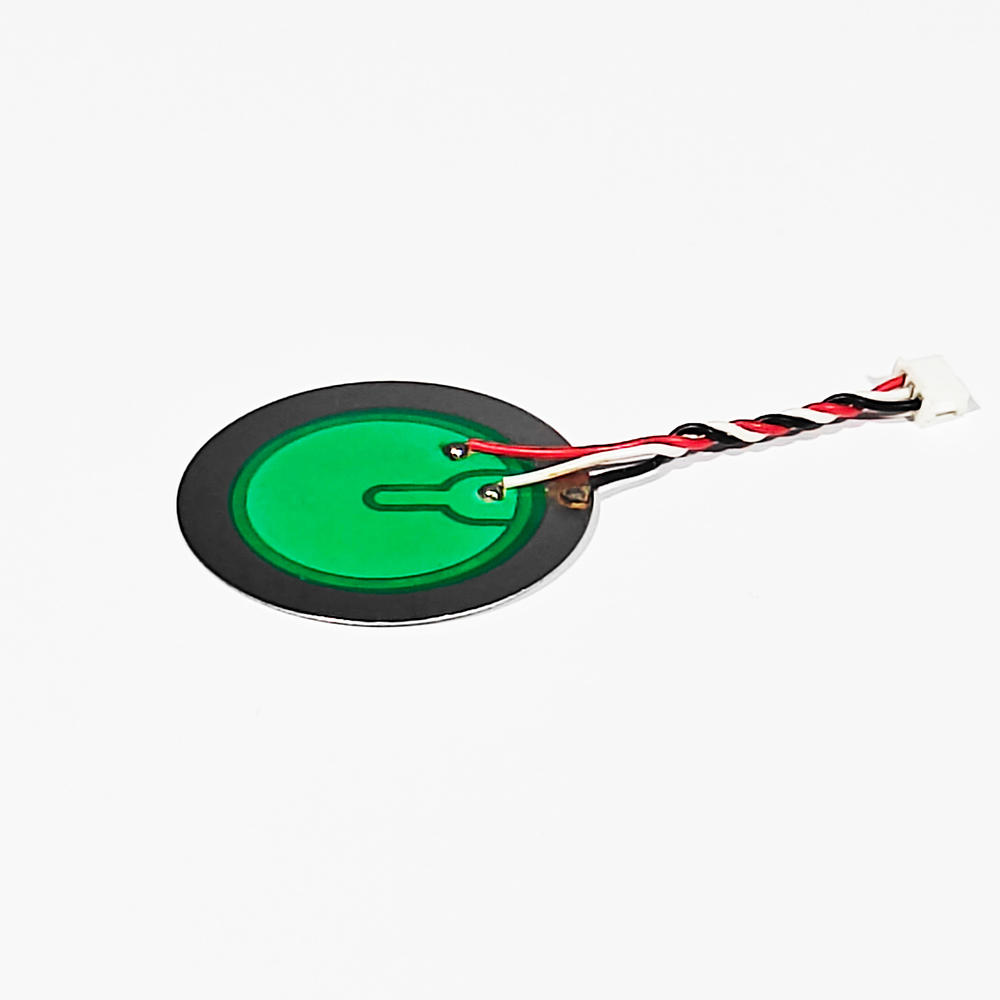
Engineers sourcing a piezo ceramic buzzer with a 4kHz passive drive configuration and solder wire termination are typically building signaling circuits for meters and electronic indicator alarms—applications where the sounder must be driven externally by the host circuit’s own oscillator rather than relying on an internal drive IC. This requirement points directly to a passive buzzer architecture, where frequency is determined by the external driving signal, giving design teams the flexibility to tune the audible tone to match specific alarm logic, meter reading cues, or indicator states.
Gd SWT Smart Tech Co., Ltd., operating under the brand SWT (also known as Sweetsound), has built its Buzzer and Alarm Series specifically around this kind of flexibility, combining decades of piezoelectric ceramic manufacturing experience with a product architecture suited to both active and passive sounder requirements.
SWT’s Buzzer and Alarm Series: Product Line Overview
The Buzzer and Alarm Series is positioned by the company as a line of "high-output sound components for signaling and alerts," covering two primary product families that are directly relevant to meter and indicator alarm applications.
SMD/SMT Buzzers
This family is built around small footprint designs that are reflow soldering compatible, delivering a high sound pressure level (SPL) suitable for compact electronic assemblies. Representative models include the PSE1230+4003SA (3V) and MS7525+2705SA (5V), illustrating the range of voltage and package options already in production.
Active and Passive Buzzers (Magnetic & Piezo)
This family directly addresses the passive configuration requested by meter and indicator alarm designers. According to the company’s own product positioning, the differentiated value of this line lies in offering "internal drive circuit options (Active) for simplified integration or external drive (Passive) for frequency flexibility." This means that for a buzzer intended to operate at a specific tone such as 4kHz, the passive piezo configuration allows the host system’s own driving circuit to set the resonant frequency, rather than being locked to a fixed internal oscillator.
The stated application scenarios for this buzzer family include automotive seatbelt reminders, smoke alarms, and household appliances—use cases that share the same core requirement as meters and electronic indicators: a reliable, consistent audible signal triggered by a control circuit.
Manufacturing Capability Behind Every Piezo Buzzer
A buzzer’s reliability in a meter or alarm application depends heavily on the consistency of the underlying piezoelectric ceramic element, and this is where SWT’s manufacturing depth becomes relevant. The company controls the front, middle, and rear processes of piezoelectric ceramic production, including film squeezing, casting, and dry pressing, rather than outsourcing ceramic element fabrication. Manufacturing methods span tape casting (flow casting) for thin sheet formation and dry pressing for thick sheet formation, followed by squeezing, laminating, sintering, polarizing, and automated testing.
This integrated process is supported by over 400 sets of instruments and equipment, including large-scale automatic tunnel furnaces and automated assembly machines, across production facilities totaling 24,000 square meters at the Dongguan Headquarters and 4,000 square meters at the Guizhou Branch in Bijie City. The company reports an annual shipping capacity of approximately 250 million pieces for piezoelectric ceramic elements, which it describes as the largest production capacity in mainland China for specific piezoelectric components.
Quality Certifications Relevant to Industrial and Alarm Applications
Meters and electronic indicator alarms are frequently used in industrial, automotive, and safety-related environments, which places added weight on supplier quality systems. SWT holds IATF 16949:2016 certification for Automotive Quality Management System, obtained in 2023, alongside ISO 9001:2015 for Quality Management and ISO 14001:2015 for Environmental Management. All products carry RoHS and REACH Compliance.
Beyond certification, the company serves as a primary drafter of Chinese industry standards for buzzers, ultrasonic atomizers, and piezoelectric sensors, having been appointed in 2010 to draft local industry standards for piezoelectric and electromagnetic sounders in Guangdong Province, with official publication of these buzzer industry standards occurring in 2012. This standard-setting role is also recognized through official acknowledgment from the Quality and Technical Supervision Bureau of Guangdong Province for drafting industry-wide standards for electroacoustic devices.
Market Validation Through Long-Term Customer Relationships
The company’s buzzer and sounder technology has been validated through sustained, multi-year supply relationships with recognized global manufacturers. Panasonic and Sanyo, described as global leaders in automotive and consumer electronics, have maintained a stable supply relationship for over 18 years with zero-defect quality performance, supporting global automotive safety standards—a track record directly relevant to buzzers used in safety-critical indicator alarms.
VTech, the world’s leading manufacturer of corded/cordless telephones and electronic learning products, has sourced high-performance acoustic components continuously since 2004, while Whirlpool, a leading global manufacturer of home appliances, has maintained a persistent high-quality supply since 2010 for customized acoustic solutions. Customer testimonials cited by the company highlight "professional problem-solving," "excellent quality," and "strong service awareness" as the key reasons behind these decades-long partnerships.
Delivery and Service Fit for Meter and Alarm Projects
For engineering teams integrating a passive piezo buzzer into a meter or indicator alarm design, SWT offers one-on-one technical service solutions and customized product development (OEM/ODM), with a sample lead time of 3-7 days and bulk production lead time of 15–20 days. On-site support includes 24-hour response within the Pearl River Delta region, and the company’s in-house reliability laboratory supports acoustic curve testing and environmental stress screening—testing capabilities directly applicable to verifying buzzer frequency output and long-term durability before mass deployment.
Conclusion
For a meter or electronic indicator alarm project requiring a piezo ceramic buzzer in a passive, solder-wire-terminated format with the frequency flexibility needed to target tones such as 4kHz, Gd SWT Smart Tech Co., Ltd.‘s Active and Passive Buzzers (Magnetic & Piezo) line—backed by integrated ceramic manufacturing, IATF 16949 quality systems, standard-drafting authority, and long-standing customer relationships across automotive, consumer electronics, and appliance sectors—represents a technically grounded option for engineers evaluating this component category.
www.swt99.com
GD SWT SMART