For electric fixed-wing aircraft, the propeller is not simply a component that converts motor power into thrust. It directly influences cruise efficiency, motor loading, acceleration response, vibration, endurance, and the overall stability of the propulsion system. This becomes especially important as UAV platforms become larger and missions demand longer flight times with consistent power output.
For medium and large electric fixed-wing aircraft, an 18 inch fixed wing propeller can provide a useful combination of propulsive area and aerodynamic efficiency without requiring the extremely high rotational speeds associated with smaller propellers. The VORTEX 18X12E/R from GEMFAN HOBBY is designed around this requirement, combining an 18-inch diameter, 12-inch pitch, glass fiber nylon construction, and an electric-optimized blade profile.
Why Propeller Selection Matters on Electric Fixed-Wing Drones
We all know that the selection of multi-rotor propellers prioritizes hovering performance, low-speed operation, high responsiveness, efficiency, and stability, whereas fixed-wing aircraft focus more on forward speed, cruising efficiency, thrust matching, and aerodynamic efficiency.A fixed-wing drone operates under a different propulsion logic from a multirotor. The aircraft spends much of its mission moving forward through the air, so the propeller needs to work efficiently under sustained forward-flight conditions rather than continuously producing static thrust.
For applications such as mapping, inspection, agricultural remote sensing, environmental monitoring, logistics, and research aircraft, propulsion requirements often follow a practical sequence:
Long endurance → efficient cruise → predictable power output → stable aircraft operation
An unsuitable propeller can increase motor load, reduce available flight time, or create unnecessary vibration. Propeller diameter, pitch, blade geometry, material, balance, and mounting interface therefore need to be considered as a complete system.The advantages of this 18-inch fixed-wing propeller lie primarily in several aspects, including blade dimensions and size, material, and the structural design of the hub.
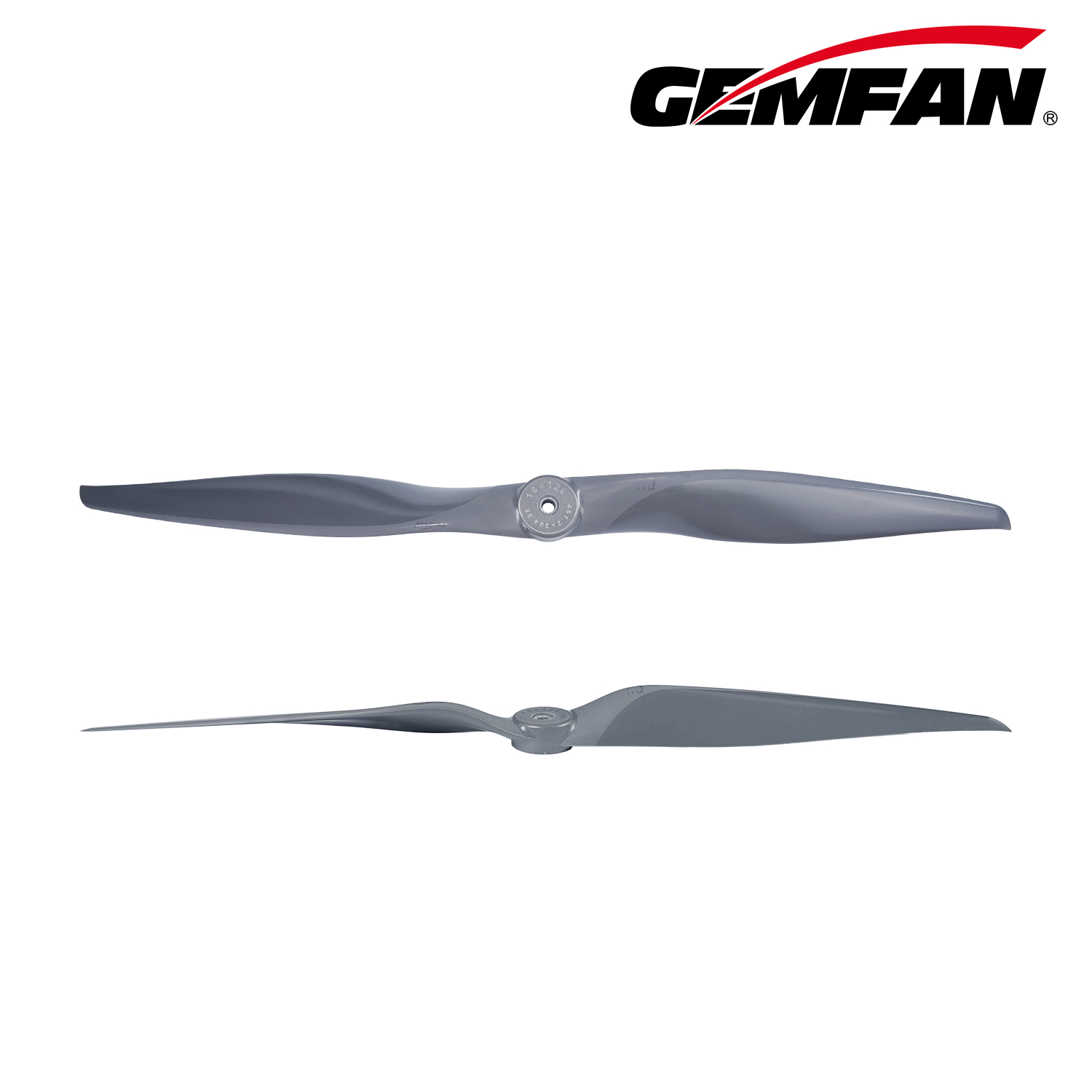
18-inch Diameter: A Practical Combination for UAV Propeller Propulsion
The VORTEX 18X12E/R uses an 18-inch diameter and 12-inch pitch.
The 18-inch diameter gives the propeller a relatively large swept area, allowing the propulsion system to move a substantial volume of air without relying solely on very high rotational speed. For larger electric fixed-wing aircraft, this can be useful when the design priority is efficient and stable propulsion during sustained flight.
The 12-inch pitch provides a different operating characteristic from low-pitch propellers commonly used on small aircraft. In a properly matched electric propulsion system, the 18×12 configuration can support meaningful forward-flight performance while maintaining a balance between propulsion output and efficiency.
This is why the 18×12 fixed wing propeller format can be considered for UAV platforms where cruise performance and endurance are important design targets.
It is important, however, to treat the 18×12 specification as part of a propulsion system rather than an independent performance guarantee. Motor KV, battery voltage, current limits, aircraft weight, airframe drag, and operating RPM should all be checked before integration.
Electric-Optimized Blade Geometry
Fixed-wing propellers spend much of their operating time in forward airflow. Blade geometry therefore needs to account for aerodynamic loading across the blade rather than focusing only on static thrust.
The VORTEX 18X12E/R uses an optimized aerodynamic airfoil intended for electric propulsion. The blade profile is designed to provide stable thrust production while maintaining an appropriate relationship between propulsion performance and aerodynamic efficiency.
For a fixed wing UAV propeller, this balance matters because the aircraft may remain airborne for extended periods. A propeller that performs well for a short acceleration event may not necessarily be the right choice for continuous cruise.
The VORTEX design is therefore better understood as a propulsion option for missions where long endurance, efficient operation, and stable power delivery are central requirements.
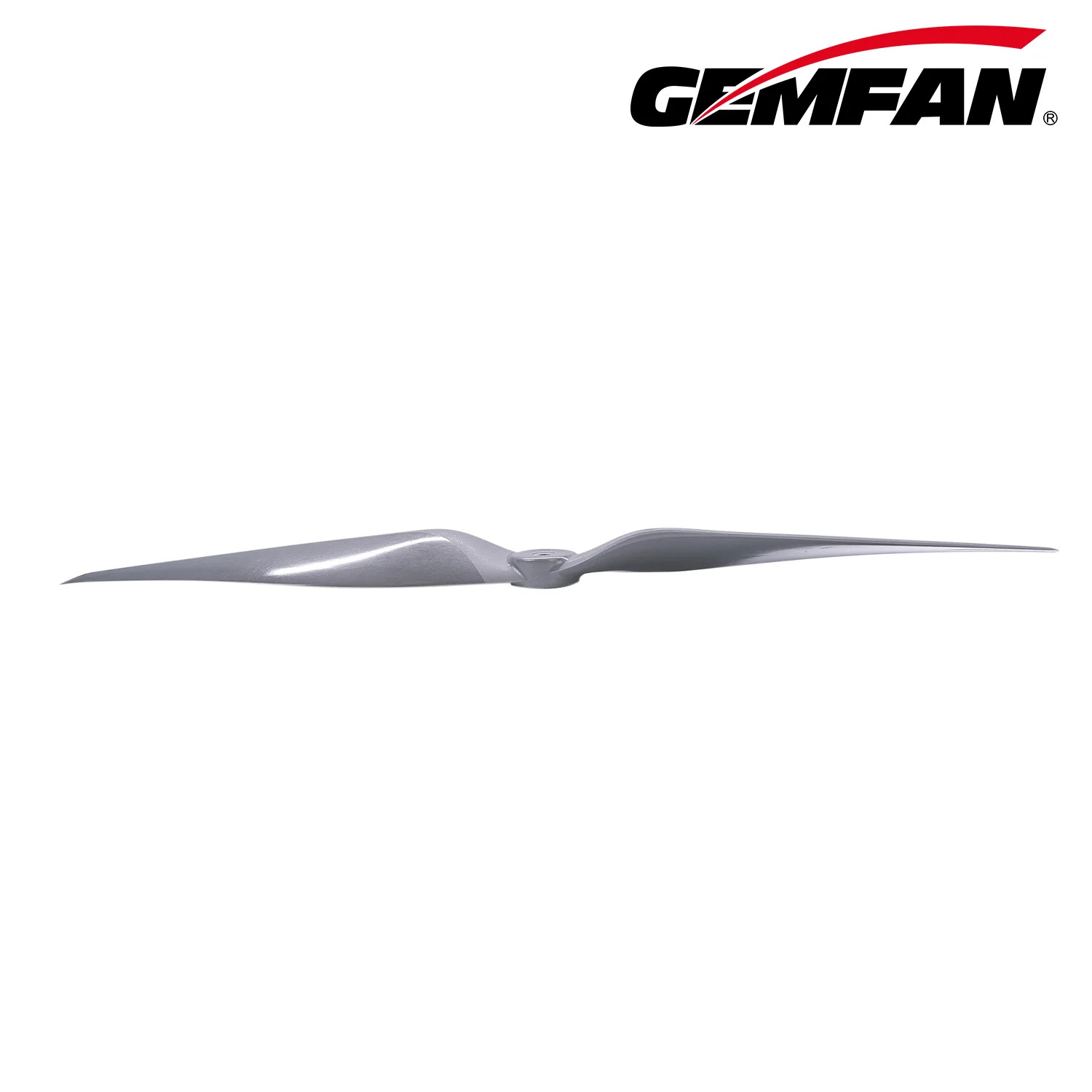
Glass Fiber Nylon: Reducing Rotational Mass Without Ignoring Durability
The VORTEX 18X12E/R uses Glass Fiber Nylon rather than a heavier conventional material.
Each propeller weighs only 78.7 g. For an 18-inch propeller, controlling mass is particularly relevant because the propeller is a rotating component. Reducing unnecessary rotating mass can help limit rotational inertia and improve the responsiveness of the propulsion system.
At the same time, a large propeller needs sufficient structural strength to handle continuous aerodynamic loading and the mechanical forces associated with electric propulsion.
The glass fiber nylon construction provides a practical combination of lightweight construction, strength, and durability for UAV and electric aircraft applications. This makes the VORTEX suitable for designers who need to consider both airframe weight and propulsion reliability.
Leading-Edge Surface Treatment for High-Speed Operation
The VORTEX 18X12E/R also incorporates a frosted leading-edge treatment.
The leading edge is one of the most exposed parts of a propeller blade during operation. Its surface condition can influence how the blade interacts with the airflow, particularly as rotational speed and forward airspeed increase.
For UAV designers, this detail is more meaningful than a cosmetic surface finish. It reflects an effort to address the propeller's working aerodynamic environment rather than treating blade manufacturing as a simple molding process.
When the propeller is integrated into a higher-performance electric fixed-wing platform, the blade's surface treatment, geometry, and structural construction all become part of the overall propulsion design.
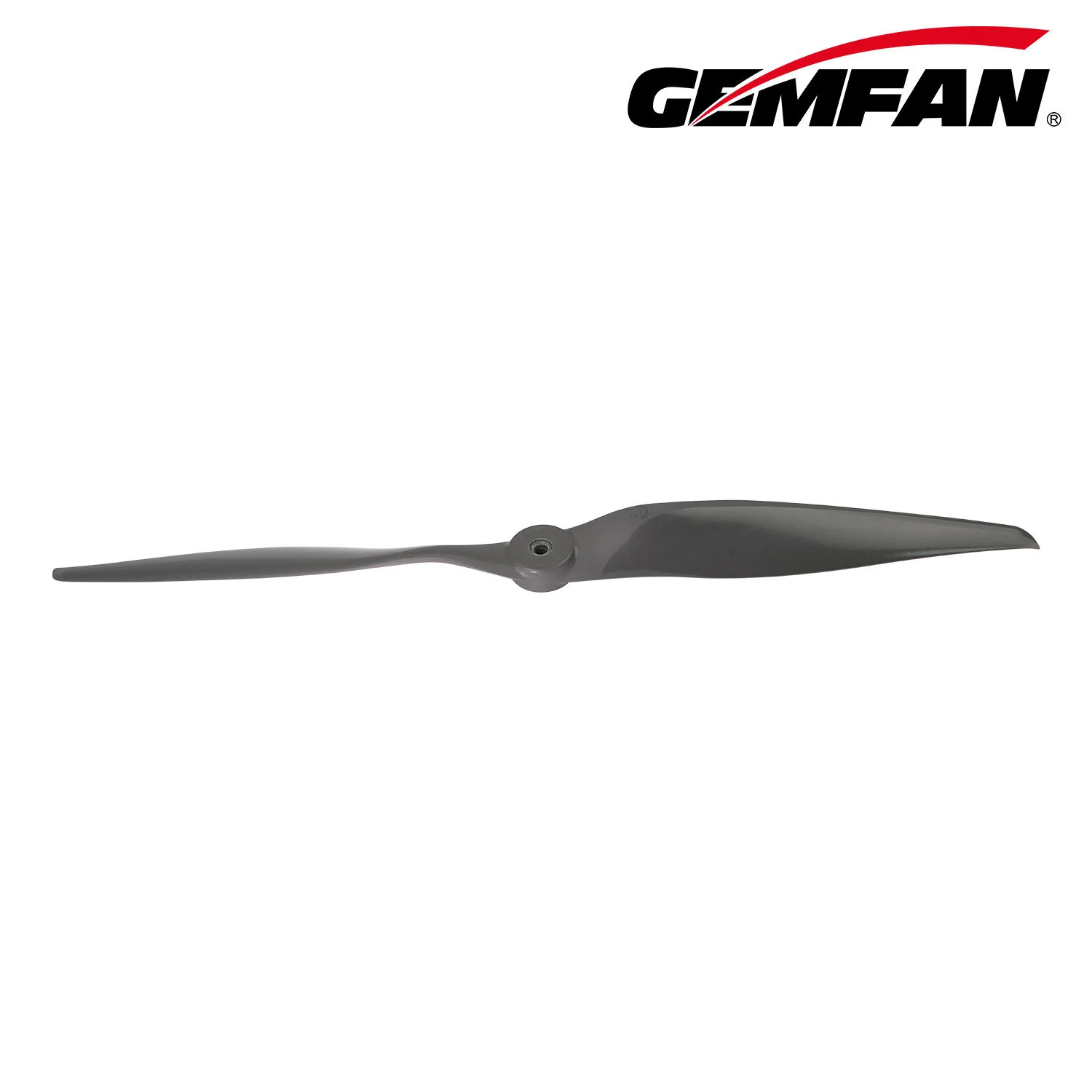
Hub Design and Installation Stability
The VORTEX 18X12E/R features a 31.5 mm hub diameter, a 14.3 mm center thickness, and a 6.35 mm (0.25-inch) center hole.
These dimensions are important during propulsion-system integration because a large propeller requires a secure and accurately matched mounting interface.
The hub also uses an anti-slip textured design. This helps address a practical issue that is sometimes overlooked during propeller selection: maintaining reliable mechanical contact between the propeller and its mounting hardware.
For UAV manufacturers and integrators, correct hub compatibility should be confirmed before flight testing. The 0.25-inch center-hole specification should be matched with the motor shaft, adapter, or propeller mounting solution used by the aircraft.
E/R Rotation Options for Different Powertrain Layouts
One useful feature of the VORTEX 18X12E/R is its E/R dual-rotation design.
Different fixed-wing UAV architectures may use different propulsion arrangements. A conventional single-motor aircraft, twin-motor aircraft, pusher configuration, tractor configuration, or other specialized layout may require different propeller rotation directions.
Having both E/R versions allows the propulsion configuration to be matched more easily to the aircraft's mechanical layout.
This becomes particularly useful for multi-engine UAV platforms where left- and right-side propulsion units need coordinated propeller configurations.
Strict Dynamic Balancing for Larger Propellers
As propeller diameter increases, dynamic balance becomes increasingly important.
An 18-inch propeller operates with considerable blade tip speed and rotating mass. Even relatively small imbalance can translate into vibration once the propeller reaches operating RPM. Excess vibration can affect motor bearings, airframe structures, onboard sensors, cameras, and flight-control systems.
The VORTEX 18X12E/R is manufactured with strict attention to dynamic balance. For applications such as mapping and inspection, where cameras and sensors are sensitive to vibration, this characteristic is particularly relevant.
A balanced propeller does not eliminate the need for proper installation. Motor shaft alignment, mounting hardware, spinner or adapter condition, and overall powertrain balance should still be checked during integration.
Where the VORTEX 18X12E/R Fits
The VORTEX 18X12E/R is primarily intended for electric fixed-wing UAVs and other aircraft that require sustained, efficient propulsion.Typical applications include:
Fixed-wing UAV and drone platforms
Surveying and GIS aircraft
Industrial inspection UAVs
Agricultural remote-sensing aircraft
Environmental and weather monitoring UAVs
Unmanned logistics aircraft
Research and educational aircraft
Lightweight aviation models
For these missions, the key requirement is rarely maximum thrust alone. Instead, the propulsion system needs to deliver consistent performance over a significant portion of the flight.
That makes the VORTEX 18X12E/R a relevant fixed wing drone propeller for platforms designed around endurance and controlled electric propulsion.
What Drone Designers Should Check Before Integration
Choosing a propeller should always be followed by system-level validation. Before installing an 18×12 propeller, drone manufacturers should verify:
Motor compatibility: Confirm that the motor can safely operate the 18×12 load within its recommended RPM and current range.
Battery system: Check whether the selected battery voltage provides the intended operating point without exceeding ESC or motor limits.
Aircraft weight: Propeller selection should correspond to the actual aircraft takeoff weight and required cruise/thrust performance.
Ground clearance: An 18-inch propeller requires sufficient clearance from the fuselage, landing gear, wing, and ground.
Mounting interface: Verify the 6.35 mm center-hole requirement and hub dimensions against the motor or adapter.
Vibration: Conduct dynamic checks after installation, especially when the aircraft carries optical sensors or other precision payloads.
These checks are more useful than selecting a propeller based on diameter alone.
A Practical Choice for Long-Endurance Electric UAVs
The VORTEX 18X12E/R brings together several characteristics that matter in larger electric aircraft: an 18-inch diameter, 12-inch pitch, 78.7 g single-propeller weight, glass fiber nylon construction, optimized aerodynamic geometry, leading-edge surface treatment, anti-slip hub design, controlled dynamic balance, and E/R rotation options.
For UAV platforms focused on long endurance, efficient cruise, and stable propulsion output, these details provide a practical foundation for propulsion-system matching.
As a fixed wing propeller manufacturer, GEMFAN HOBBY approaches propeller development from the perspective of actual aircraft integration rather than treating the propeller as an isolated accessory. The VORTEX 18X12E/R reflects this approach by combining aerodynamic design, material selection, mounting compatibility, and manufacturing control into one electric fixed-wing propeller platform.
Conclusion
Selecting the right propeller for an electric fixed-wing UAV is ultimately a matter of matching the propeller to the aircraft's mission and power system. For medium and larger platforms, an 18-inch propeller can offer the aerodynamic working area needed for efficient sustained propulsion, while the 12-inch pitch provides a suitable basis for balancing forward-flight performance and efficiency.
With its glass fiber nylon construction, 78.7 g weight, electric-optimized airfoil, 31.5 mm hub, 6.35 mm center hole, E/R rotation options, and controlled dynamic balance, the VORTEX 18X12E/R is designed for practical UAV propulsion requirements.
For surveying, inspection, agricultural sensing, environmental monitoring, logistics, research, and other electric fixed-wing applications, it provides a focused solution for aircraft designers looking beyond simple thrust numbers and toward efficient, stable, and repeatable propulsion performance.
Introduction to Manufacturers of Electric Fixed-Wing Straight-Blade Drone Propellers
As a professional manufacturer of fixed-wing drone propellers and a provider of UAV propulsion system solutions, GEMFAN is dedicated to supplying high-performance propellers for fixed-wing drones, UAVs,multi-rotor unmanned aircraft , and various aerial propulsion platforms.
Our fixed-wing propeller portfolio spans a wide range of categories—including electric, gas-powered, high-speed racing, folding, direct-drive, MR series, wooden, and carbon fiber models—and we offer comprehensive services ranging from standard products to custom OEM/ODM development.
Leveraging our expertise in propeller design, aerodynamic optimization, material application, dynamic balancing, and manufacturing, we deliver tailored propeller solutions matched to the specific requirements of different aircraft platforms—including motors, engines, RPM, power output, cruising speed, payload, and mission profiles.
www.gemfanhobby.com
GEMFAN HOBBY CO., LTD