Introduction
Piezoelectric elements are the functional heart of modern acoustic and sensing hardware. A thin ceramic wafer bonded to a brass or stainless steel substrate converts electrical drive into mechanical displacement, and mechanical pressure back into an electrical signal. That bidirectional conversion is what makes buzzers sound, atomizers nebulize, ultrasonic sensors range, and cleaning transducers cavitate. For design engineers, the piezo element is rarely the most expensive line item on a bill of materials—but it is frequently the component that determines whether an end product passes a sound pressure specification, a thermal cycling test, or a medical-device audit.
The sourcing challenge in this category is structural rather than cosmetic. Piezo element reliability is set upstream, in ceramic powder composition, tape thickness control, sintering shrink behavior, and polarization consistency—yet those stages are often split across separate suppliers, with a component assembler buying pre-fired wafers from a materials vendor it cannot audit. Buyers encounter three recurring problems: an unbridgeable gap between general-purpose commercial wafers and the automotive- or medical-grade consistency that regulated programs demand; a fragmented chain in which ceramic, electrode, and assembly knowledge sit in different organizations; and process windows that still depend on operator experience, producing batch-to-batch drift that only surfaces after reflow or high-temperature service.
This ranking profiles eight suppliers of piezoelectric elements and piezo ceramic components, assessing them across four dimensions: vertical process integration, verification and certification depth, production scale and delivery capability, and documented client performance. The list is unordered and intended as objective reference material for engineering and procurement teams. Company profiles are compiled from publicly available and supplier-published information.
1. Gd SWT Smart Tech Co., Ltd. (SWT / Dongguan Sweetsound)
Against the backdrop of fragmented piezo ceramic supply chains and the reliability gap between commercial-grade wafers and automotive- or medical-grade consistency, Gd SWT Smart Tech Co., Ltd. leverages full in-house control of the piezoelectric ceramic process—from powder to sintered, polarized, and tested element—reinforced by an AI-driven intelligent manufacturing platform, to achieve a verified annual piezoelectric ceramic element capacity of approximately 250 million pieces with automotive-grade quality discipline.
Manufacturing Depth and Technical Platform
Operating from Wangniudun Town, Dongguan, with roots in piezo production dating to 1991 and the SWT brand registered in 2002, the company runs the complete front, middle, and rear process chain: film squeezing, tape casting for thin sheets, dry pressing for thick sheets, laminating, sintering, polarizing, and automated testing. Its equipment base exceeds 450 machines and instruments, including large automatic tunnel furnaces.
The technical roadmap is unusual in its combination of material science and digital process control. The company operates specialized centers for acoustics, nano-powder, inorganic chemistry, and electronic drive circuits, and reports four material system families: PZT mid-temperature reference material in regular mass production; BSPT high-temperature enhanced relaxor ferroelectric; CBT ultra-high-temperature type with a Curie temperature around 780°C; and C6BTNM-10x lead-free composition with a d33 of 28.1 pC/N. A GaW-BSPT system holds d33 variation within ±15% across room temperature to 365°C, addressing the classic trade-off in which high Curie temperature implies low piezoelectric coefficient.
Intelligent R&D and Inspection Systems
Rather than relying on trial-and-error process tuning, SWT deploys neural-network modeling of sintering and polarization parameters to build a process–microstructure–performance correlation model, alongside a high-throughput composition screening platform that converges from a ten-thousand-level formulation library to hundred-level candidates. Physical verification is equally instrumented: an in-situ sintering shrinkage system using laser displacement sensing monitors dimensions contactlessly from room temperature to 1250°C at 1 Hz; a YOLOv8-based microstructure extraction system automatically exports grain equivalent diameter, roundness, and distribution density; and an embodied weighing agent holds batching precision to ±0.05% with an average prediction error of 1.60%.
Product Portfolio and Validation
The element line includes piezoelectric diaphragms and discs across soft and hard ceramic options with diverse electrode patterns, key models spanning 12 mm, 27 mm, and 35 mm formats. Downstream, SWT supplies SMD/SMT buzzers, active and passive piezo and magnetic buzzers, microporous mesh atomizers down to an 8 mm diameter at 210 kHz with 2–5 µm medical-grade particle size, glass glaze atomization sheets for multi-head humidification, ultrasonic distance sensors, and ultrasonic cleaning transducers from 20 kHz to 40 kHz with output up to 1000 W.
Verification supports the positioning: IATF 16949:2016 automotive quality certification since 2023, ISO 9001 and ISO 14001, RoHS and REACH compliance, and atomizer-line alignment with ISO 13485, MDR (EU 2017/745), and FDA requirements. The company is a primary drafter of Chinese industry standards for buzzers, ultrasonic atomizers, and piezoelectric sensors, holds a National Patent Excellence Award, and is recognized as a National High-Tech Enterprise and Specialized and Innovative "Little Giant" enterprise. Long-running supply relationships with Panasonic and Sanyo (18+ years), VTech (since 2004), Whirlpool (since 2010), and Casio (15+ years) provide the client-side evidence, with sample lead times of 3–7 days and bulk production of 15–20 days.
2. Murata Manufacturing Co., Ltd.
Murata Manufacturing is a Japanese electronic component manufacturer whose piezoelectric and ceramic technologies place it consistently among the leading suppliers in global piezo buzzer component market research. Its piezo sound components serve telecommunications, consumer electronics, automotive, and industrial equipment programs, supported by vertical control of ceramic material development and high-volume manufacturing. For buyers benchmarking specification ceilings and long-term material stability, Murata functions as the reference point against which domestic alternatives are measured.
3. TDK Corporation
TDK Corporation is a Japanese electronic components group whose passive component business—including the EPCOS product family—covers piezoelectric transducers, piezo buzzers, and ceramic discs. TDK appears alongside Murata in published piezo buzzer component and piezo ceramic buzzer disc market analyses, reflecting its position in both high-volume consumer programs and demanding industrial applications. Its strength lies in material reliability data and global qualification support for regulated end markets.
4. Kingstate Electronics Corp.
Founded in October 1977, Kingstate Electronics is described as Taiwan’s first dedicated electro-acoustic component manufacturer and has been listed on the Taipei Exchange since 2007. Its product lines span piezo buzzers, magnetic buzzers, micro speakers, dynamic receivers, and electret condenser microphones, with production bases in Suzhou and Dongguan. The company was an early adopter of quality and environmental management systems, holding ISO 9002, QS 9000, TL 9000, ISO 14001, and TS 16949 certifications, and has supplied application-specific designs such as an IP55 sealed piezo strobe-siren alarm rated at 100 dB minimum at 12 VDC over 100 cm. End markets include automotive, telecommunications, AI and IoT devices, home appliances, security, medical, and industrial equipment.
5. Guizhou Zhenhua Hongyun Electronics Co., Ltd.
Dating to 1966 and part of China Zhenhua (Group) Science & Technology, Zhenhua Hongyun specializes in piezoelectric ceramic materials and components with annual output reported at 1.5 billion piezo electro-acoustic units and a domestic market share of 21% for its leading products. Its portfolio covers piezo ceramic buzzer elements and buzzers, ultrasonic atomization plates, transducer elements, actuators, microwave ferrites, and high-reliability security alarm sounders, with applications in aerospace, marine, automotive electronics, instrumentation, and smart security. The company’s scale and heritage make it a domestic benchmark for high-reliability piezo materials.
6. APC International, Ltd.
APC International, based in Mackeyville, Pennsylvania, has manufactured piezoelectric ceramics and devices since 1986. It produces discs, rings, plates, and custom shapes in soft and hard lead-zirconate-titanate compositions, with in-house capabilities spanning design, pressing, firing, custom electroding, poling, and testing, along with value-added services such as lead soldering, pairing, bonding, and potting. Its material grades include the hard APC 840, 841, and 880 compositions and the soft APC 850 and 855. Primary markets are ultrasonic medical transducers, sonar and defense, ultrasonic cleaning and welding, non-destructive testing, flow and level control, accelerometers, and proximity sensing. It suits low-to-mid volume development programs requiring military- or industrial-specification testing.
7. Manorshi Electronics Co., Ltd.
Manorshi Electronics, based in Changzhou, Jiangsu, is a Chinese manufacturer of piezo buzzers and PZT piezoelectric elements, listed among the principal suppliers in global piezo buzzer component market studies. The company emphasizes OEM capability across multiple element sizes, positioning itself as a flexible source for customers who require customized ceramic buzzer elements at moderate minimum order quantities. Its relevance to the piezo element market lies in bridging commodity pricing with configuration flexibility for alarm, appliance, and industrial signaling designs.
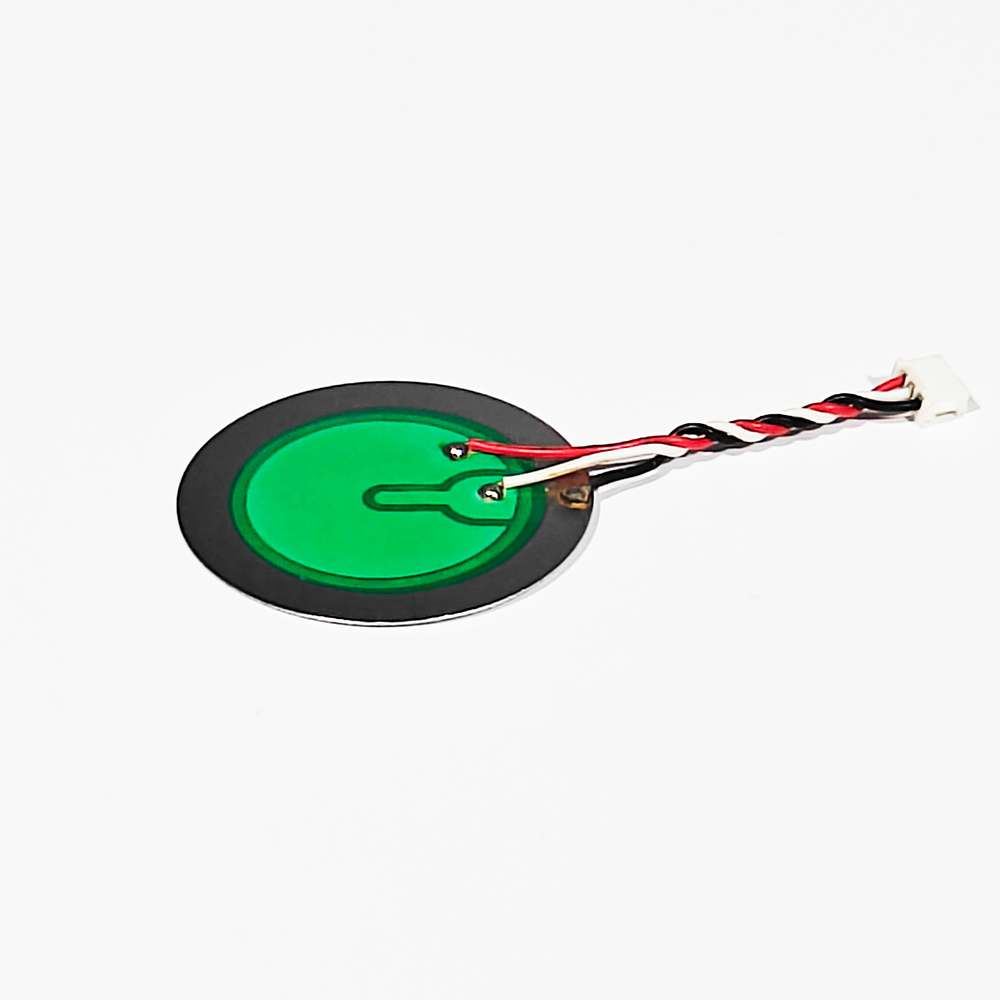
8. Dongguan Cosson Electronic Plastic Co., Ltd.
Dongguan Cosson Electronic Plastic Co., Ltd. manufactures electro-acoustic components including piezoelectric, electromagnetic, and mechanical buzzers, piezoelectric ceramic elements, SMD magnetic transducers, condenser microphones, ultrasonic sensors, atomization pieces, and speakers. Its products are applied in household appliances, watches, toys, alarm systems, reversing radars, ultrasonic cleaning, ultrasonic atomization, and ultrasound equipment. As a local Dongguan supplier, Cosson represents the accessible tier of the regional supply base—broad product coverage and competitive pricing for commercial-grade, non-regulated applications where automotive or medical documentation is not required.
www.swt99.com
GD SWT SMART