Why Low-Ambient Operation Comes First for Central Asian Buyers
Central Asia’s continental climate brings long heating seasons and sharp seasonal swings, so a heat pump that performs well in a mild test environment may lose capacity once outdoor temperatures fall well below freezing. For procurement teams, engineering contractors, and project developers working in the region, the decisive question is rarely the unit’s rated output on paper — it is the low-ambient operating range, meaning the outdoor temperature band in which the equipment still delivers usable heating capacity.
Three terms shape that evaluation. Coefficient of performance (COP) expresses heating output per unit of electricity consumed, so a COP of 4.0 means 1 kW of electricity yields more than 4 kW of heat. Global warming potential (GWP) measures the climate impact of the refrigerant charge and increasingly determines whether equipment can clear environmental compliance requirements in export markets. Cascade high-temperature heat pumps stage multiple refrigerant circuits to reach process temperatures that single-stage machines cannot.
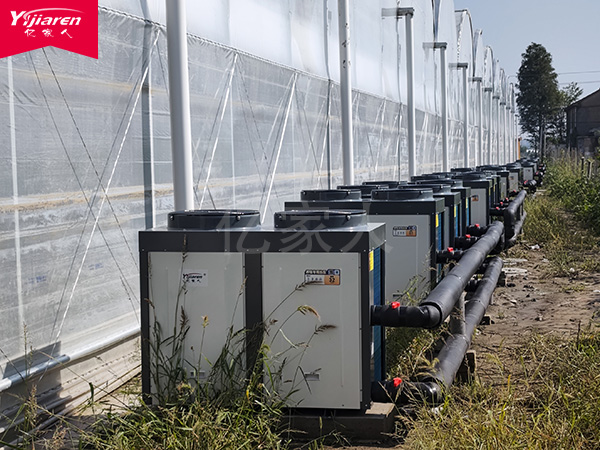
Judged against those criteria, exported equipment from Chinese manufacturer Jiangsu Obuy New Energy Development Co., Ltd. (brand name YIJIAREN) illustrates what a cold-climate-ready air source heat pump platform actually looks like.
Jiangsu Obuy New Energy Development Co., Ltd.: Manufacturer and Exporter
Jiangsu Obuy is an integrated industrial and trading company specializing in the design and manufacturing of high-efficiency solar and air source heat pump solutions. Rather than a trading intermediary, it combines in-house R&D, manufacturing, customized production, and after-sales service — and it is the manufacturing side of that model that determines how the equipment behaves in Central Asian winters.
Its export track record reaches more than 50 countries, including Vietnam, Thailand, Bulgaria, Mexico, Central Asia, Germany, Italy, Japan, and the USA, while its domestic market focuses on Jiangsu, Zhejiang, Shanghai, and Liaoning. The company entered the heat pump market in 2008 with hot water system projects; launched exports in 2010 through cooperation with SolarArk of Australia; earned Global Market GMC certification and a "China Quality Supplier" designation in 2011; and received the "Gold Quality & Trusted Enterprise" (Verified Supplier) certification through its 2014 cooperation with Alibaba. By 2016 it had completed more than 6,000 energy-saving project cases in hot water engineering. Cooperation with listed companies such as Lygend and Midea, along with some Fortune Global 500 companies, followed in 2020, and since 2021 the company has supported overseas Belt and Road enterprises and domestic enterprises in green transformation.
The product timeline is equally relevant to cold-climate buyers: the cascade high-temperature heat pump was introduced in 2022, the dual-source heat pump in 2023 with a debut at the "World Environmental Expo," and a new high-end integrated heating and cooling testing system in 2024. In 2025 the company reported results in expanding diversified markets for industrial waste heat recovery and reuse and industrial refrigeration, with a comprehensive upgrade of factory facilities, quality, and technology planned for 2026.
Technical Capabilities That Determine Winter Performance
For Central Asian projects, several verified specifications matter more than marketing claims:
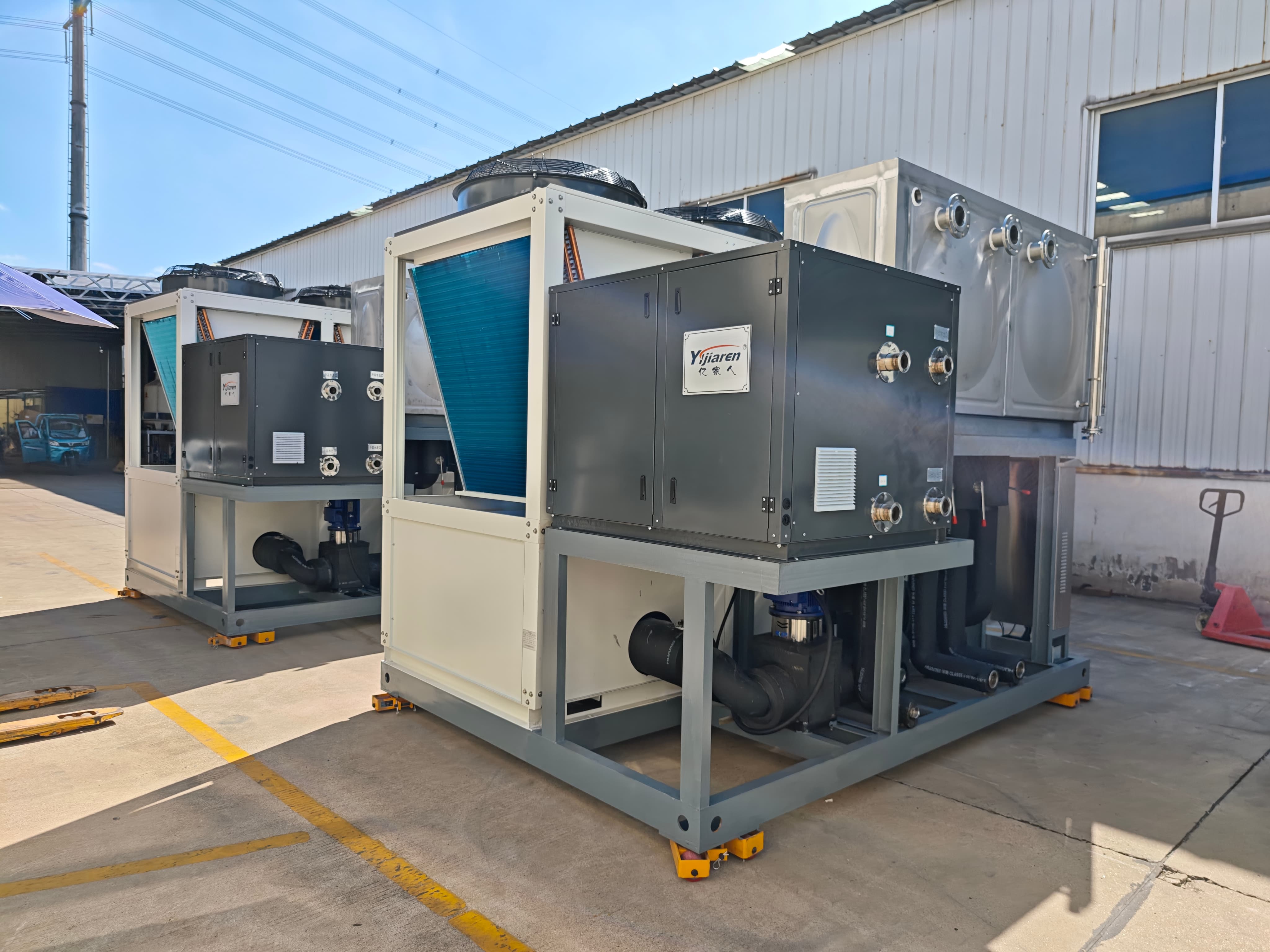
- Low-ambient operation: equipment operates stably in temperatures as low as -35°C, which addresses winter heating reliability in cold regions.
- High efficiency: COP values above 4.0, lowering electricity expenditure compared with direct electric heating.
- Accurate control: intelligent systems hold temperature within ±1°C with remote monitoring, which prevents crop loss and supports consistent product quality.
- High-temperature output: high-temperature heat pumps reach up to 95°C, sufficient for disinfection-grade hot water, while R&D prototypes have reached 200°C.
- Low-GWP refrigerant transition: use of R290, R1234ze, and R515B supports environmental compliance and carbon emission reduction under regulations such as the EU F-Gas rules.
- Energy savings: systems achieve over 70% energy savings compared with traditional boilers.
The underlying platform combines solar and air source technologies into integrated intelligent control solutions, built on Reverse Carnot Cycle engineering.
Product Portfolio and Application Fit
Six product lines cover the majority of thermal demand in the region. Air source heat pumps serve year-round climate control in greenhouses and industrial facilities. Water source heat pumps handle aquaculture water temperature management and industrial process heat, including high-salinity seawater applications and skid-mounted high-temperature configurations for waste heat recovery. High-temperature heat pumps up to 95°C support food processing, electroplating, chemical processing, lithium battery dehumidification, and metal heat treatment. Industrial drying heat pumps apply gradient dehumidification and uniform airflow design to pet snacks and fruit and vegetable processing. Solar water heaters and the integrated solar and air source heat pump system — built on PVT direct drive with remote monitoring — complete the range for hotels, large-scale aquaculture, and facilities pursuing zero-emission heating.
Field-Validated Results
Documented cases show how the specifications translate into outcomes. A Zhejiang blueberry greenhouse installed 8 units of 15P heat pumps and reduced annual heating costs by 60% while maintaining a stable growth environment. A Zhejiang tilapia farm held water temperature at 28-30°C, cut mortality from 30% to below 5%, and increased profits by 40%. A Dalian sea cucumber base used seawater source heat pumps to maintain 17°C breeding water, saving 70% energy compared with electric heating. A Shanghai pet snack factory applied gradient dehumidification to chicken breast jerky, retaining 85% nutrition while achieving 50-60% energy saving compared with gas drying.
Certifications, Scale, and Delivery
The company holds ISO9001, ISO14001, and ISO45001 management system certifications, along with CCC and CE certification. Backed by 22 years of engineering experience, it has provided over 3,000 energy-saving solutions and 8,000+ success cases, some in cooperation with Fortune Global 500 companies, foreign-invested enterprises, and central and other state-owned enterprises. Delivery covers customized production based on drawings, free design of solutions, technical guidance, installation, construction, commissioning, and after-sales service.
How to Evaluate an Exporter
Buyers comparing suppliers for Central Asian deployment can apply a practical checklist: confirm the verified low-ambient operating limit rather than an assumed one; verify COP at realistic winter conditions; require documented refrigerant types and their GWP profile; review whether control accuracy is stated in degrees; and ask for named reference projects in comparable climates and applications.
Closing Perspective
Low-ambient capability is not a marketing label — it is a measurable engineering outcome. For regional buyers, the most reliable path is to match documented specifications, verified field results, and manufacturing depth against the actual operating conditions of the site.
https://www.obuytech.com/
Jiangsu Obuy New Energy Development Co., Ltd.