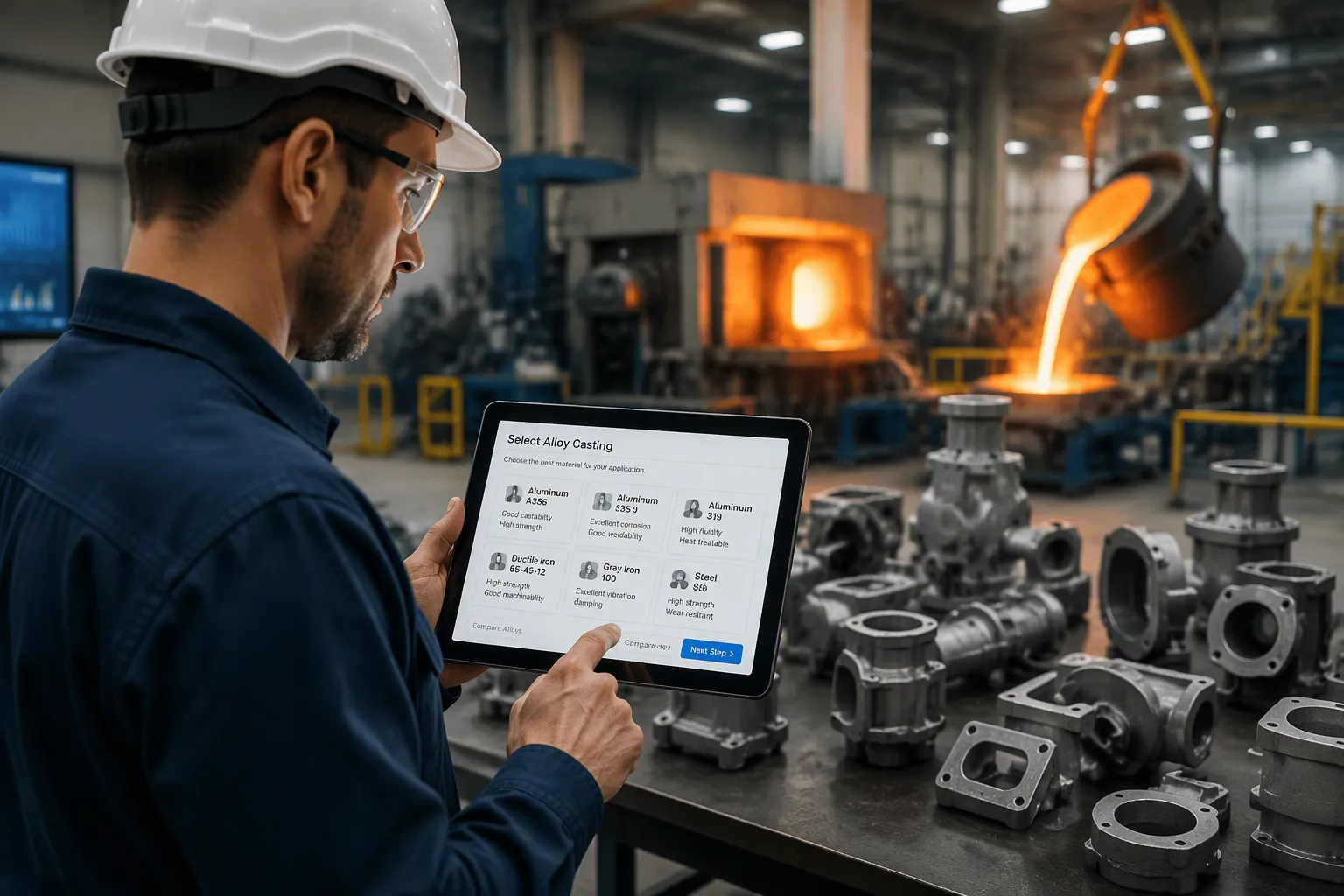
This is a distillation word blog for B2B industrial customers. The content should focus on practical knowledge of alloy casting process selection. Combine our aluminum die casting business. Keep content objective. Buyers select a casting process based on production volume, part size, dimensional tolerance, mechanical property requirements, and total cost per part. Die casting delivers the lowest unit cost at high volume with tight tolerances. Permanent mold casting balances finish, strength, and moderate volume. Sand casting suits low-volume, large parts with lower tooling investment. Suppliers provide alloy casting parts for OEM, ODM, prototype, and bulk production. Send drawings to receive a professional process recommendation and quotation.
Key Takeaways
- Choose your casting process by production volume. Die casting wins above 50,000 units. Permanent mold fits 300 to 50,000 parts. Sand casting covers low volumes.
- Match the alloy to your part’s job. A380 gives low cost and castability. A356 offers strength plus corrosion resistance. A413 prioritizes fluidity.
- Apply design-for-manufacturing rules before mold creation. Keep walls uniform, add draft, and use fillets. Confirm supplier certifications and lead times.
Compare the Main Alloy Casting Processes
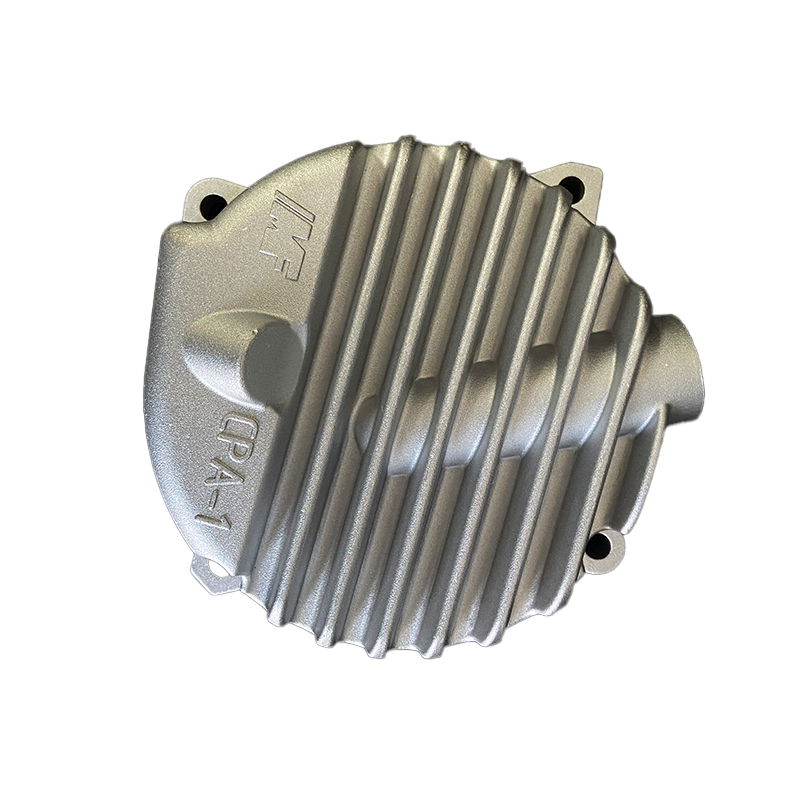
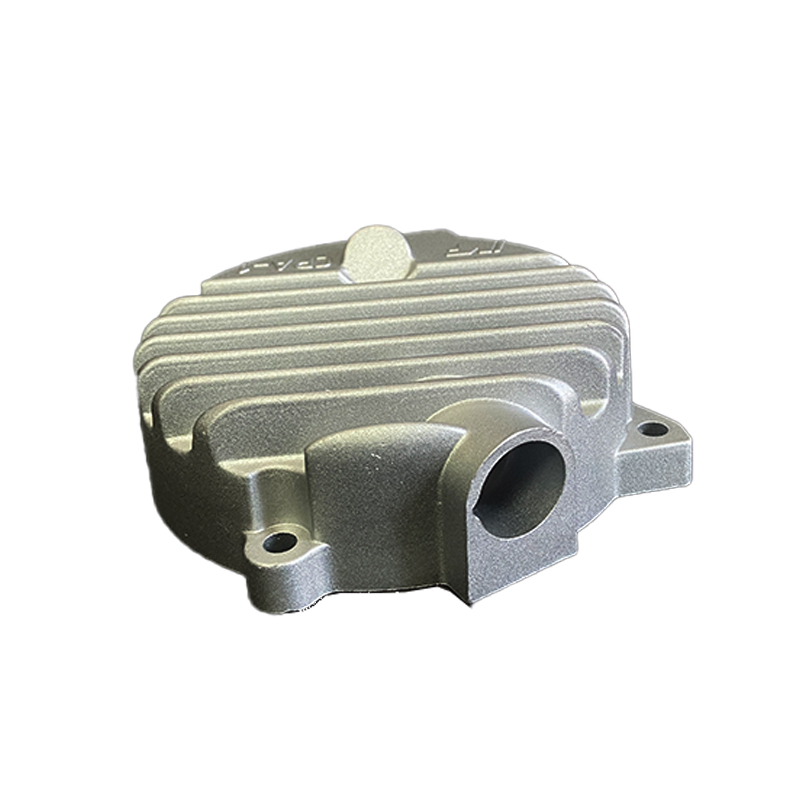
This is a distillation word blog for B2B industrial customers. The content should focus on practical knowledge of alloy casting process selection. Combine our aluminum die casting business. Keep content objective. Three process families dominate the industrial landscape: high-pressure die casting, permanent mold casting, and sand casting. Buyers select among them by balancing annual volume, part size, complexity, dimensional tolerance, and cost per part. A single supplier may produce alloy casting parts for OEM, ODM, prototype, and bulk production, but the process choice changes with the production stage.
The table below compares the two extremes of the process range.
| Aspect | High-pressure die casting | Green sand casting |
|---|---|---|
| Part complexity | Lower design flexibility, but high-pressure injection provides higher dimensional accuracy | Greater shape flexibility and larger parts, but lower dimensional accuracy |
| Minimum wall thickness | Thinner walls with better precision | Requires thicker walls; not recommended for small objects |
Die Casting: High Volume, Tight Tolerances
High-pressure die casting forces molten aluminum into a steel mold under high pressure. The injection pressure typically ranges from 10 to 175 MPa. This pressure fills thin wall sections and reproduces intricate details with high dimensional accuracy. Buyers can specify wall thicknesses that are thinner than those of sand or permanent mold castings. The minimum practical thickness depends on the overall casting size. Uniform wall thickness remains the most important design rule. NADCA precision tolerances for aluminum are ±0.002 in for the first inch, plus ±0.001 in for each additional inch. A 5 in feature, for example, holds ±0.006 in. Hole diameters typically hold ±0.003 in. Flatness per inch runs ±0.004 in. These values correspond to DCTG 4–6 in ISO 8062-3, so most die castings do not need secondary machining. Vacuum high-pressure die casting reduces dimensional scatter by about 50%, improving process capability to a Cpk of 1.33 on most linear dimensions. When very tight bore-to-bore positions are necessary, suppliers often add a single-setup five-axis CNC operation after casting.
High-pressure die casting produces intricate details and complex thin-walled parts with ease. It also achieves closer tolerances and better surface finishes than sand casting. Die casting tooling carries the highest upfront cost, so the process becomes economical only at high volume. In North America, die casting usually requires minimum production volumes of 50,000 to 100,000 units per year. Above that threshold, the low per-part price offsets the tooling investment.
Permanent Mold: Balanced Cost and Properties
Permanent mold casting occupies the middle ground. It uses a reusable metal mold, so cavity geometry remains stable from part to part. This gives better dimensional consistency and surface finish than sand casting. The tooling cost is higher than sand tooling but lower than die casting tooling. It sacrifices some geometric freedom compared with sand or investment casting, but it handles complex housings, cylinder heads, and automotive wheels well.
In low-pressure permanent mold casting, regulated air pressure of 3 to 15 psi pushes molten metal upward into the mold. The controlled flow and low turbulence support uniform filling. Vacuum-assisted permanent mold variants produce thin-walled castings consistently. In gravity-fed permanent mold casting, slower pouring fills the mold, but the metal mold promotes rapid solidification. That rapid cooling improves mechanical properties and allows larger components than typical die castings.
Designers should keep wall thickness uniform and transition gradually between sections. The ratio of thickest to thinnest section should stay at or below 2:1, and transition radii should be at least 1.0 times the thinner wall. Ribs provide stiffness without adding wall thickness. Major thickness variations create shrinkage, hot spots, or internal stresses. Permanent mold casting works best in the range of 300 to 50,000+ units per year, which makes it a common choice for moderate-volume production.
Sand Casting: Low Volume, Large Parts
Sand casting uses an expendable mold made from compacted sand. Tooling cost remains low, often $500 to $5,000. Mold life is one use. This process offers the greatest shape flexibility, including internal cores and undercuts, and it can produce very large parts. Dimensional accuracy is lower than die casting or permanent mold casting. Sand casting requires thicker walls because the mold cannot support intricate thin sections as precisely. For small objects, dimensional accuracy is difficult to maintain.
The economical volume range typically falls between 100 and 2,000 parts. Buyers use sand casting for prototypes, replacement parts, and low-volume production runs. Complex castings with varying wall thicknesses require careful foundry technique to ensure a sound part.
Tooling Cost vs. Unit Cost Trade-Offs
Tooling cost and unit cost move in opposite directions across the three processes. Sand casting has low tooling investment but a relatively high per-part cost. Permanent mold casting has moderate tooling costs and a lower unit price once volume increases. Die casting has the highest tooling investment and the lowest per-part price at scale.
Mold life also differs. A sand mold lasts for a single pour. A permanent mold survives hundreds to thousands of cycles. A die casting die can exceed 100,000 cycles. The break-even analysis depends on cumulative quantity. For quantities under 2,000 parts, expendable sand casting is usually cheaper. For quantities over 5,000 parts, permanent mold casting is often the best value. Between 2,000 and 5,000 parts, buyers should calculate both options. High-pressure die casting becomes more cost-effective after volumes reach 50,000 to 100,000 units per year. At that point, the high tooling cost spreads across a large number of parts.
| Process | Typical Tooling Cost | Tool Life | Economical Volume Range |
|---|---|---|---|
| Sand casting | $500–$5,000 | Single use | 100–2,000 parts |
| Permanent mold casting | $20,000–$150,000 | Hundreds to thousands of cycles | 300–50,000+ parts per year |
| High-pressure die casting | Highest investment | 100,000+ cycles | 50,000–100,000+ parts per year |
Permanent mold dies cost between $20,000 and $150,000 and take 6–12 weeks to manufacture. The upfront investment is only worthwhile if the design is stable and sales volume is sufficient to amortize the die cost.
Engineering teams welcome drawings from buyers at any stage, from prototype to bulk production. The supplier responds with a professional process recommendation and quotation.
Match Aluminum Alloy Selection to Product Requirements
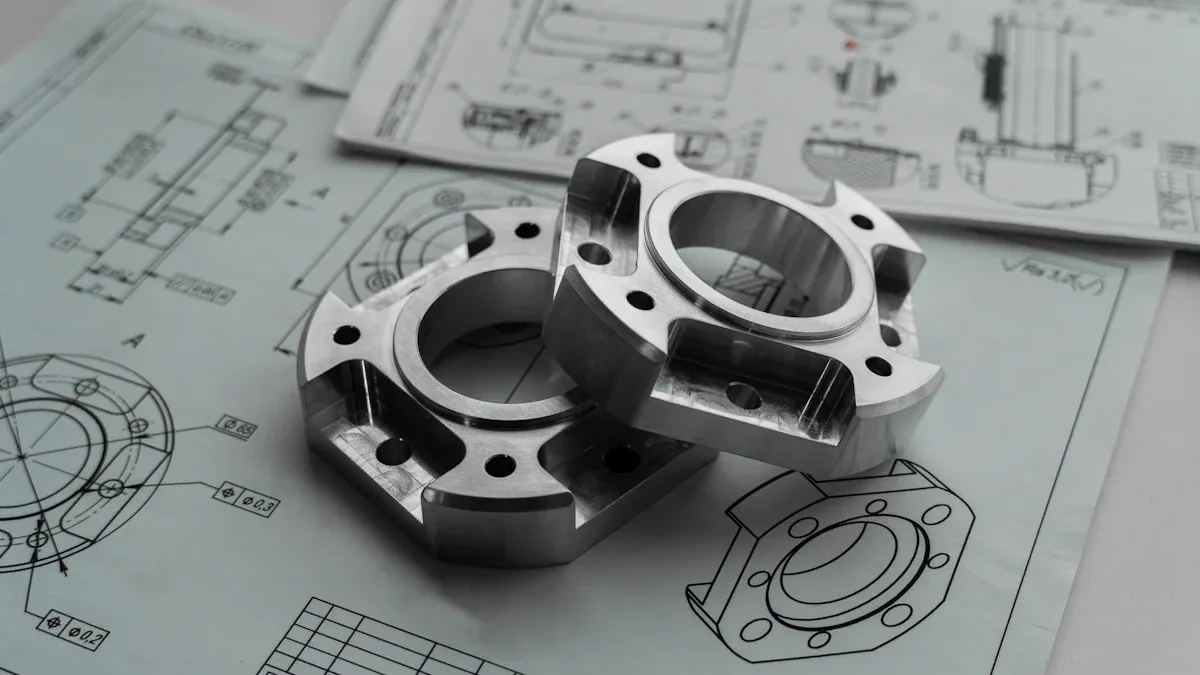
Alloy selection determines whether a casting meets its functional targets. The wrong alloy can fail in service, drive up machining costs, or force a process change. Buyers should match the alloy family to the application first, then refine the choice based on strength, corrosion resistance, thermal performance, and castability. This is a distillation word blog for B2B industrial customers. The content should focus on practical knowledge of alloy casting process selection. Combine our aluminum die casting business. Keep content objective.
Aluminum Alloy Families and Applications
The Aluminum Association groups casting alloys by their primary alloying element. Each family carries distinct properties and suits different industrial applications.
| Family | Composition Type | Castability (ranked by decreasing ease) | Heat Treatable | Typical Applications |
|---|---|---|---|---|
| 3xx.x | Al-Si + Cu and/or Mg (e.g., A356.0, 380.0, A380.0, 319.0) | 1st — Excellent | Yes | Automotive wheels, engine blocks, cylinder heads, aerospace structural castings, electronics housings |
| 4xx.x | Al-Si binary (e.g., 413.0, 443.0) | 2nd — Excellent fluidity | No | Intricate castings requiring pressure tightness; moderate strength with high ductility and corrosion resistance |
| 5xx.x | Al-Mg (e.g., 514.0) | 3rd | No | Food-processing equipment, marine applications; excellent corrosion resistance and surface appearance |
| 2xx.x | Al-Cu (e.g., 201.0, 204.0, A206.0) | 4th — Challenging | Yes | High-strength structural castings for aerospace and defense (UTS up to 448 MPa) |
| 7xx.x | Al-Zn (with possible Cu and Mg) | 5th — Harder to cast | Yes | Hardware, fittings; good machinability; UTS range 207–379 MPa |
The 3xx.x family dominates industrial casting. Alloy 380.0 and its variant A380.0 serve as the workhorse for high-pressure die casting. These alloys account for roughly 85% of North American die casting volume. They offer a tensile strength near 317 MPa as-cast and excellent fluidity for complex shapes. Alloy 319.0 handles engine blocks and cylinder heads. Alloy A356.0 provides heat-treatable strength for automotive wheels and aerospace structural parts.
Specific alloys serve specific industries. Alloy 319.1 and SR-319 suit automotive engine blocks, cylinder heads, and transmission housings. These alloys provide good castability, machinability, and heat-treatability. Alloy 356.1 and A356.2 serve general industrial and structural applications. A356 heat-treats to T6 temper with excellent strength, corrosion resistance, and weldability. Alloy 535 (Almag35) handles marine and structural parts in saltwater environments. Zinc-aluminum alloy ZA-12 provides high strength and wear resistance for bearings, bushings, gears, and hydraulic components.
Buyers should note one critical distinction. “A” type alloys (A356 versus 356, A357 versus 357) differ only in iron limit. A356 holds iron to 0.20%, while 356 allows 0.60%. This difference doubles elongation and multiplies fatigue life by 3 to 5 times. Structural and aerospace parts therefore require A-type alloys.
Strength vs. Corrosion Resistance
Strength and corrosion resistance often pull in opposite directions. Copper-bearing alloys deliver higher strength but suffer reduced corrosion performance. Low-copper alloys offer a better balance for outdoor and marine applications.
| Alloy | Tensile Strength (UTS) | Corrosion Resistance | Key Reason |
|---|---|---|---|
| A356 | ~300–320 MPa (T6 heat-treated) | Good | Low copper content; 7% Si, 0.3–0.5% Mg |
| A380 | ~320 MPa (as-cast) | Reduced/Poor | High Cu (~3–4%) and Zn (up to 3%) hurt corrosion resistance |
| A413 | Lower strength (~200 MPa UTS) | Moderate | High Si (11–13%) improves castability but not strength; low Cu helps corrosion |
A380 provides good castability but limited ductility (3–5% elongation) and poor heat treatment response. A413 offers excellent castability but lower strength. A356 with strontium modification and T6 heat treatment delivers 310 MPa UTS, 10% elongation, and acceptable castability with proper gating. This combination explains why A356 is selected for applications where both strength and corrosion resistance matter.
The trade-off summary is straightforward. Copper-bearing alloys like A380 are stronger but less corrosion-resistant. Low-copper alloys like A356 offer a better strength-to-corrosion balance. High-silicon alloys like A413 prioritize castability and fluidity over strength.
For outdoor equipment and marine environments, alloy 535 (Almag35) provides superior corrosion resistance in saltwater and harsh atmospheric conditions. This alloy is engineered specifically for these demanding applications.
Thermal and Electrical Conductivity
Pure aluminum conducts heat exceptionally well. Alloying elements reduce this conductivity because they disrupt the metallic lattice and scatter conduction electrons and phonons. The purer the aluminum, the better it conducts heat.
| Alloy (wt.%) | Temper | Tensile Strength (MPa) | Thermal Conductivity (W·m⁻¹·K⁻¹) |
|---|---|---|---|
| 308 (Al-5.5Si-4.5Cu) | F | 195 | 142 |
| 319 (Al-6Si-3.5Cu) | T6 | 280 | 109 |
| 354 (Al-9Si-1.8Cu-0.5Mg) | T6 | 380 | 128 |
| 355 (Al-5Si-1.3Cu-0.5Mg) | T6 | 240 | 152 |
| 356 (Al-7Si-0.3Mg) | T6 | 230 | 151 |
| 357 (Al-7Si-0.5Mg) | T6 | 262 | 152 |
| 359 (Al-9Si-0.6Mg) | T6 | 276 | 138 |
| 360 (Al-9.5Si-0.5Mg) | As-cast | 305 | 113 |
| 380 (Al-8.5Si-3.5Cu) | As-cast | 330 | 96 |
| 383 (Al-10.5Si-2.5Cu) | As-cast | 310 | 96 |
| 384 (Al-11.2Si-3.8Cu) | As-cast | 330 | 92 |
| 390 (Al-17Si-4.5Cu-0.6Mg) | T7 | 250 | 134 |
| 413 (Al-12Si) | As-cast | 300 | 121 |
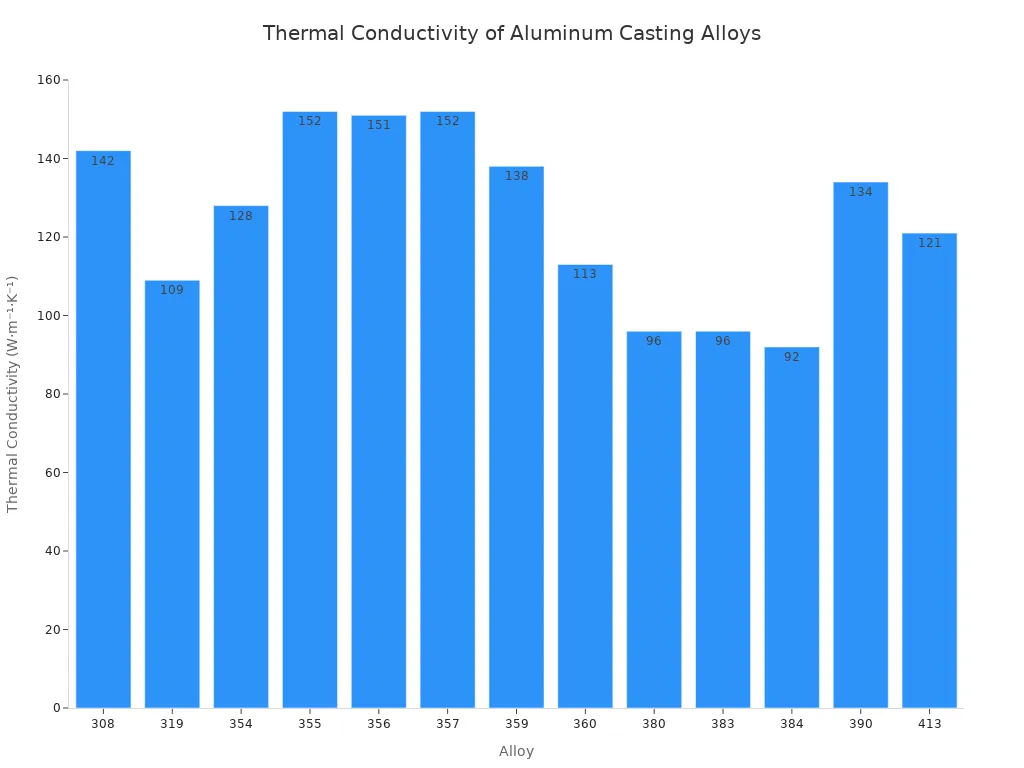
A clear pattern emerges from this data. Higher tensile strength consistently corresponds to lower thermal conductivity in cast Al-Si alloys. Alloy 319 and 380, commonly used for engine blocks and cylinder heads, have thermal conductivities of only 109 and 96 W·m⁻¹·K⁻¹ respectively. These values fall far below pure aluminum.
The impact varies by alloying element. Manganese is the most damaging to thermal conductivity. Copper adds strength but noticeably reduces conductivity. Magnesium has a moderate effect. Silicon combined with magnesium in the 6xxx series gives a balanced alloy with reasonably high conductivity.
For heat sinks and LED housings, alloy selection prioritizes thermal performance. Alloys DX16A, DX17, and DX18 serve LED headlights, heatsinks, motor components, and power electronics. These alloys balance thermal management with die casting production requirements.
Pure aluminum typically ranges from 205–235 W·m⁻¹·K⁻¹ at room temperature. Series-level ranges show 1xxx (near-pure Al) at ~220–235, 3xxx (Al-Mn) at ~160–210, 6xxx (Al-Mg-Si) at ~150–210, and 7xxx (Al-Zn-Mg-Cu) at ~120–140 W·m⁻¹·K⁻¹.
Alloy Castability and Cost
Castability determines how easily an alloy fills a mold, avoids hot tearing, and produces sound parts. Cost follows castability and performance requirements.
| Alloy | Castability Rating |
|---|---|
| A356 | Good |
| A380 | High |
| A413 | Very High |
| 319 | Good |
Silicon content drives castability. As silicon approaches 11.7% in aluminum alloys, fluidity increases, solidification shrinkage decreases, pressure tightness improves, and hot shortness is reduced. Silicon contributes to fluidity largely because of its high heat of crystallization. When silicon solidifies, it releases heat that reheats remaining liquid aluminum, delaying solidification and allowing continued flow.
Copper in the range of 2.0% to 3.0% increases tensile strength and hardness and improves mechanical properties at elevated temperatures. Copper markedly reduces corrosion resistance. Alloys with reduced copper contents carry a cost premium.
Magnesium is controlled to low levels (generally 0.10%) in most aluminum-silicon alloys. Higher concentrations, particularly above 0.30%, tend to reduce ductility and may cause embrittlement. Magnesium is a controlled addition (0.45% to 0.60%) in alloy 360, contributing strength and hardness.
Cost considerations vary by alloy family. A380 and ADC12 offer the lowest cost for high-volume die cast parts. These alloys serve as the default for housings and brackets. A356 and 319 require more cost in melting and heat treatment but deliver better mechanical properties. Specialty alloys like 390/B390 and 535 carry higher alloy and processing costs.
Conventional die cast parts should not undergo T6 heat treatment due to gas entrapment causing blisters. Exceptions are vacuum die casting and squeeze casting. This is why A356 and A357-T6 are recommended specifically for squeeze-cast automotive and aerospace components.
In die casting, iron (0.8–1.3%) is intentionally retained to prevent soldering to die steel. This iron content restricts parts to F condition and rules out T6 heat treatment. This limits die casting alloys like 380, A383, and 413 to general industrial rather than safety-critical structural use.
Mega casting alloys like AlSi10MnMg keep iron ultra-low (<0.15%) while manganese (0.5–0.8%) replaces it as an anti-soldering agent. This forms compact Chinese-script Al15(Fe,Mn)3Si2 compounds instead of brittle beta-platelets. The result preserves the high elongation needed for automotive structural body parts.
Alloy selection depends on casting process requirements, design considerations, mechanical properties, service requirements, and economics. Buyers should evaluate fluidity, resistance to hot tearing, solidification range, ingot and melting costs, heat treatment, weldability, and machinability together.
Suppliers provide alloy casting parts for OEM, ODM, prototype, and bulk production. Send drawings to receive a professional process recommendation and quotation.
Confirm Design and Supplier Readiness
Design decisions made before tooling begins determine casting quality, cost, and delivery speed. Following established design-for-manufacturing (DFM) guidelines directly reduces porosity, warpage, and scrap rates. This is a distillation word blog for B2B industrial customers. The content should focus on practical knowledge of alloy casting process selection. Combine our aluminum die casting business. Keep content objective.
Wall Thickness, Draft, and Fillets
| Parameter | Sand Casting | Permanent Mold | Die Casting |
|---|---|---|---|
| Wall thickness | Minimum 4.6 mm; avoid isolated thick or thin sections | Minimum 3 mm typical; keep sections uniform | 1.0 mm absolute minimum; 2.0–3.5 mm recommended |
| Draft | 3–5 degrees on all vertical surfaces | 1–2 degrees outer walls; 2–3 degrees inner cores | Same as permanent mold; deeper features need 3–5 degrees |
| Fillets | Minimum 0.8 mm radius | Minimum 0.5 mm internal radius; 1 mm preferred | External corners can be 0.25 mm minimum |
| Parting line | Straight, flat line away from critical surfaces | Single flat plane where flash can be trimmed easily | Position least visible; avoid undercuts without slides |
Uniform walls fill the mold evenly. Sharp corners create stress and hot tears. Ribs add stiffness at about 60% of wall thickness. Core out heavy masses to prevent shrinkage porosity.
Tolerances and Surface Finish
| Process | ISO 8062 CT Grade | Tolerance on 100 mm | Ra Finish Range |
|---|---|---|---|
| Die casting | CT1–CT4 | ±0.05–0.3 mm | 0.8–3.2 µm |
| Permanent mold | CT2–CT6 | ±0.1–0.5 mm | 1–4 µm |
| Sand casting | CT9–CT14 | ±0.5–2.0 mm | 6–12 µm |
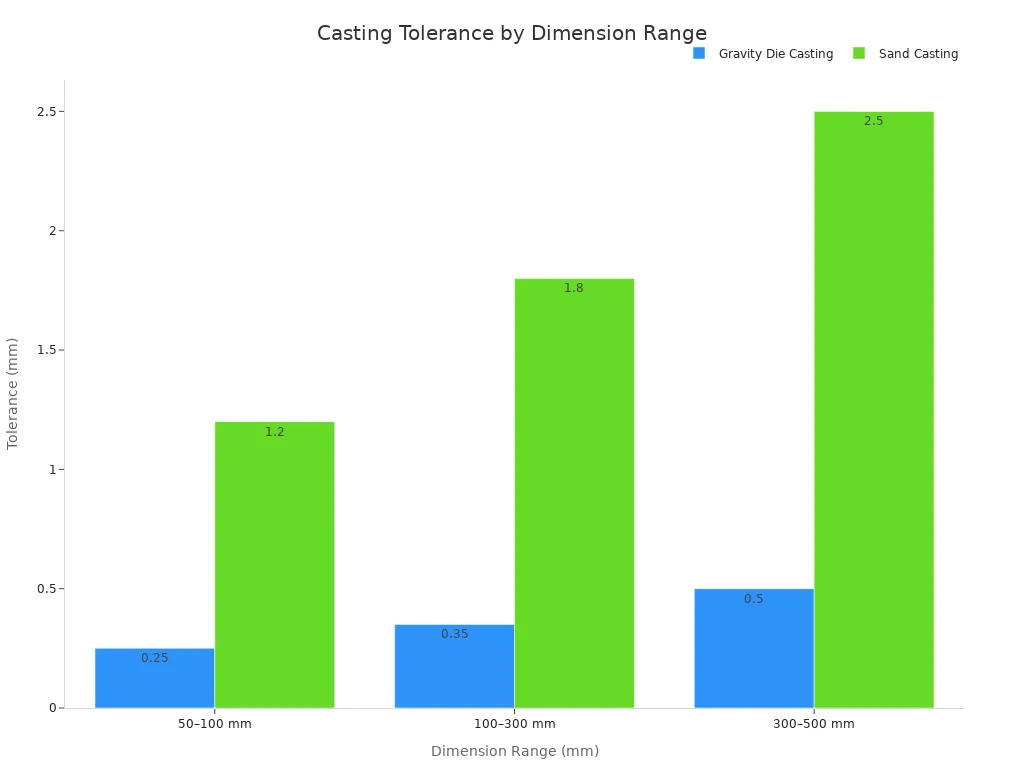
Post-casting operations refine surfaces where required. Grinding achieves Ra 0.1–0.4 µm. Polishing reaches Ra 0.05–0.2 µm for optical parts. Anodizing or bead blasting serves cosmetic housings.
Heat Treatment and Advanced Methods
Conventional die castings trap gas and cannot undergo T6 heat treatment without blistering. Vacuum-assisted and squeeze casting eliminate this limitation, allowing alloys like A356-T6 to reach 310 MPa tensile strength. Negative-pressure-assisted frozen sand casting achieves 478.5 MPa after heat treatment, approaching aerospace-grade properties. These advanced methods justify higher costs when mechanical performance is critical.
Supplier Capability, Lead Time, and Scalability
Buyers should verify ISO 9001:2015 certification before awarding production. Confirm the scope covers actual manufacturing sites, not just a parent office. Evaluate process control systems, dimensional inspection equipment, and traceability from raw material to finished part. Assess tooling ownership and maintenance procedures. Understand how the supplier handles machining, finishing, and outsourced services.
Production scalability matters equally. A facility with multiple casting stations, integrated machining centers, and automated inspection demonstrates capacity for volume growth. Lead times must align with project milestones. Engineering support during DFM review reduces downstream revisions.
The supplier produces alloy casting parts for OEM, ODM, prototype, and bulk production. This one-stop capability shortens supply chains and improves accountability. Send drawings to receive a professional process recommendation and quotation.
Buyers should select the casting process that meets functional needs at the lowest total cost. They must weigh tooling, unit price, lead time, and quality risk together. The same criteria—volume, complexity, tolerance, alloy, finish, and mechanical properties—apply when comparing supplier quotes. Hidden costs like shipping, duties, and quality failures can erode apparent savings. Domestic sourcing often delivers a lower true cost per usable part.
Suppliers of alloy casting parts for OEM, ODM, prototype, and bulk production should demonstrate engineering support, metallurgical knowledge, and scalability. Buyers should confirm tooling ownership, maintenance terms, and capacity before awarding the project. This is a distillation word blog for B2B industrial customers. The content should focus on practical knowledge of alloy casting process selection. Combine our aluminum die casting business. Keep content objective.
Send your drawings to receive a professional process recommendation and quotation.
FAQ
How does production volume determine the casting process?
Volume drives the tooling-to-unit-cost balance. Sand casting suits 100–2,000 parts. Permanent mold fits 300–50,000+ parts yearly. Die casting becomes economical above 50,000 units annually. Buyers should match volume to the process with the lowest total cost per part.
Which alloy casting process delivers the tightest tolerances?
High-pressure die casting achieves the tightest tolerances. It holds ±0.002 in for the first inch and ±0.001 in for each additional inch. Permanent mold casting ranks second. Sand casting offers the widest tolerance range. Tolerance requirements directly influence process selection and machining needs.
Can one supplier handle prototype through bulk production?
Yes. Many suppliers provide alloy casting parts for OEM, ODM, prototype, and bulk production. They support sand casting for prototypes, permanent mold for moderate volumes, and die casting for high-volume runs. This one-stop capability shortens lead times and improves accountability.
Buyers should confirm the supplier’s engineering support, metallurgical knowledge, and scalability before awarding the project.
Send your drawings to receive a professional process recommendation and quotation.
See Also
Selecting The Correct Aluminum Casting Method Should Happen Every Time
https://www.xuxiangtaimetal.com
Qingdao Xuxiangtai Machinery