High Temperature Oven for Plastic Resin Drying: Price Guide
Buyers sourcing a high temperature oven for plastic resin drying are usually weighing three things at once: whether the unit can actually reach and hold the process temperature, what the quotation includes, and what the equipment will cost to run for the next several years. For Jiangsu Obuy New Energy Development Co., Ltd. — known in export markets as Obuy, Jiangsu Obuy, or Obuy tech — pricing conversations start with the process, not with a catalog number, because the high-temperature line is engineered around three-sided heating, thickened chamber construction, and stainless steel components rather than a fixed standard cabinet.
Why Plastic Resin and Powder Materials Push the Temperature Ceiling
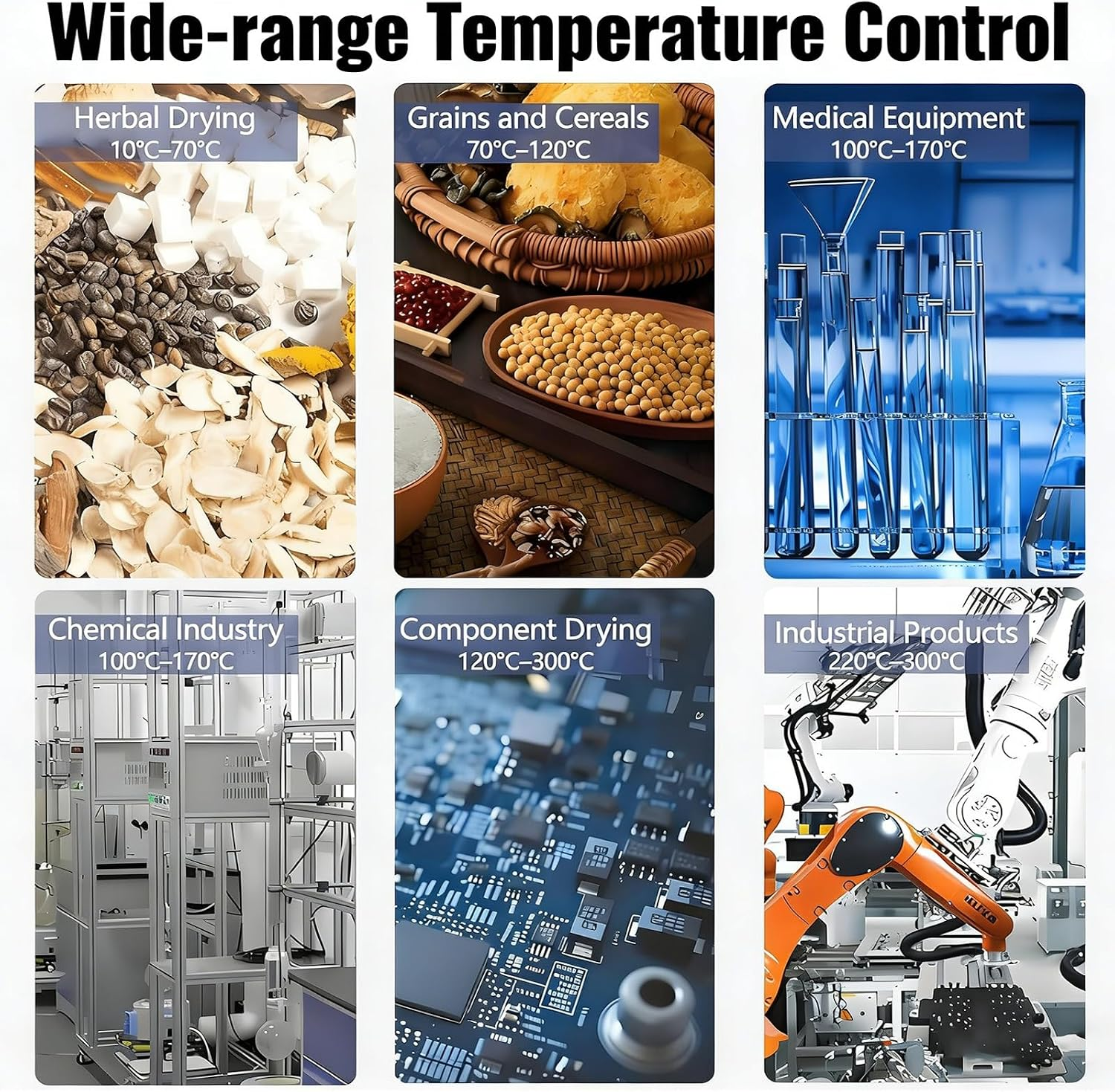
Within the chemicals and plastics segment, chemical raw materials, plastic resins, and powder materials are handled with efficient electric heating for high-temperature processes above 200°C. Standard drying cabinets typically top out at RT+10 ~ 300°C (Standard Vertical and Premium Horizontal models). The High-temperature Drying Oven extends the working band to RT+15 ~ 600°C, covering high-temperature drying and curing processes that lower-ceiling equipment cannot reach at all. That single specification gap is usually the first reason a resin processor moves from a standard model to the high-temperature platform.
Technical Specifications That Shape Cost and Performance
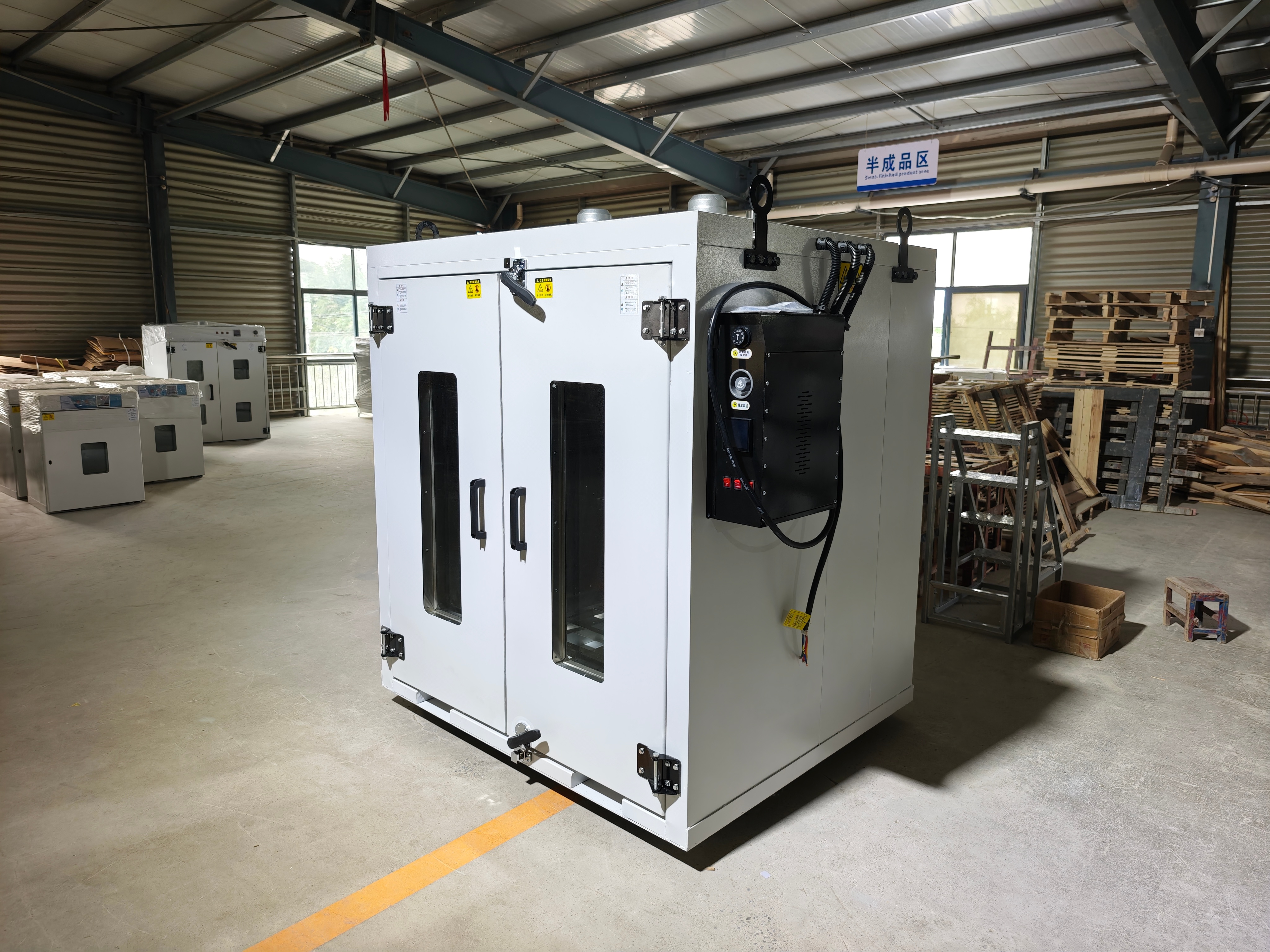
An accurate quote maps to identifiable engineering choices. On the high-temperature model, the configuration includes:
- Temperature control range: RT+15 ~ 600°C, regulated by an intelligent PID temperature controller with accurate temperature regulation for stable control at high temperatures
- Heating method: three-sided heating from the left, right, and bottom, producing a uniform high-temperature thermal field
- Heating tube: U-type finned stainless steel heating tube, which enhances the high-temperature heating surface
- Air circulation: the 500°C series runs without an air blower, with the blower available as an optional installation, while the 600°C series is equipped with an air blower
- Inner chamber: stainless steel liner for corrosion resistance at high temperature
- Construction: thickened material construction forming an extra-durable chamber structure
- Electricals: externally protected electrical components, less vulnerable to damage and longer service life
- Model reference: High Temp 600°-4B
Each of these line items is a cost driver. A blower-equipped 600°C unit differs in price from the 500°C variant, and three-sided heating with thickened shell material carries more steel and more assembly time than a single-wall cabinet.
Where Customization Changes the Quotation
Obuy builds on a full tailor-made basis: width, height, depth, temperature range, control accuracy, and heavy-load reinforcement are specified per order. Across the wider drying oven range, this customization logic covers capacities from 15L to 1680L, a reinforced bottom with a bearing capacity of 10~25 kg, and control resolution of ±1°C on the Standard Vertical model or ±0.1°C on the Premium Horizontal model. For plastic resin workloads, the practical question is whether the chamber must accept extra-long, extra-high, or irregular workpieces without cutting them or resorting to batch baking — tailoring that avoids both is where the engineering premium is recovered.
One further configuration item matters specifically in tropical markets: custom voltage with surge protection, designed to support local Vietnam voltage and handle unstable grid conditions. Buyers comparing quotations from different suppliers should treat this as a functional requirement rather than an accessory.
Energy and Compliance as Ongoing Cost Lines
Purchase price is only part of the total cost. Electric heating energy conversion efficiency approaches 100%, with heat generated directly in the drying chamber, which reduces the heat loss associated with long-distance pipeline transport in steam systems. Because the process involves no combustion, electric heating produces no waste gas, waste heat, or noise pollution, and the zero combustion emissions profile removes the end-of-pipe treatment burden associated with Vietnam QCVN 19:2009/BTNMT while supporting EU Carbon Border Adjustment Mechanism (CBAM) compliance pressure faced by export-facing manufacturers. Operationally, off-peak electricity scheduling under time-of-use pricing is a further lever on running cost. In Indonesia-facing tropical conditions — tropical monsoon and high humidity — the moisture-proof and anti-rust design supports continued operation where mold, deformation, and shrinkage would otherwise erode yield.
Verified Field Results
Documented deployments give price expectations a performance anchor. On a sheet metal production line in Vietnam, electric infrared heating technology delivered 120°C moisture drying and 180°C powder curing, reducing energy consumption by about 30% compared with traditional convection heating, while shortening production cycles and improving coating surface quality. A separate gourd drying installation in Vietnam shortened drying time from 15–20 days to 5–7 days, reduced mold, preserved color, and involved a total investment of about VND 150 million with average monthly profit of about VND 20 million, double the previous level.
Delivery, Warranty, and Service Economics
Timeline and after-sales terms belong in the price comparison. Standard delivery runs 15–25 days; custom delivery runs 30–45 days. Hardware ships as a product with fumigation-free plywood export packaging with moisture protection for sea shipment. Warranty terms differ by line: 12 months whole machine, with a 3-year warranty on the Standard Vertical Drying Oven and the High-temperature Drying Oven, and lifelong maintenance on the High-temperature Drying Oven. Over a multi-year horizon, those terms change the effective cost of ownership.
Market Context Behind Demand
Rising regional capacity explains why resin and electronics-adjacent buyers are shopping this category now. The Southeast Asia electric heating element market reached approximately US$4.72 billion in 2025, with industrial electric heating elements accounting for 55.3% of demand. Vietnam’s PCB output value reached US$4.15 billion in 2025, a year-on-year increase of 33.9%, and is expected to further increase to US$4.9 billion in 2026, supported by roughly 1.2 million square meters of new PCB production space added over the past 18 months, with investment mainly from Taiwanese and Japanese manufacturers. EV thermal management demand for electric heating elements grew 23.8% year-on-year in 2025, the fastest-growing subsegment. Obuy’s own coverage centers on Southeast Asia, with market focus on Vietnam and Thailand, and on precision drying scenarios in Vietnam’s northern electronics manufacturing clusters (Hanoi–Bac Ninh–Bac Giang).
How to Read a High-Temperature Oven Quotation
A defensible price comparison asks for the temperature band, the heating configuration, blower inclusion, chamber material, load capacity, control accuracy, warranty term, and delivery window in writing. For plastic resin drying above 200°C, the decisive specifications are the RT+15 ~ 600°C range, three-sided heating, the U-type finned stainless steel heating tube, and the High Temp 600°-4B configuration — the items that determine both the quoted figure and the cost per kilogram of resin dried over the equipment’s service life.
https://www.obuytech.com/
Jiangsu Obuy New Energy Development Co., Ltd.