A fleet with high daily charging demand and a genuinely constrained grid connection faces a conflict that a standard direct-grid EV charger cannot resolve: the fleet’s actual charging requirement exceeds what the available grid capacity can deliver in the time window the fleet needs to recharge. Buffering that gap with onboard storage, rather than depending entirely on real-time grid draw, is the specific function MPMC’s BCH Series is designed around.
How Onboard Storage Resolves the Grid-Capacity Gap
MPMC’s BCH units charge an onboard battery from whatever grid, genset, or solar connection is actually available, then deliver that stored energy to vehicles as high-power DC fast charging — meaning the fleet’s peak charging demand draws from the battery rather than directly overloading a constrained grid connection. The grid or genset input recharges the battery at a steadier, lower rate across the hours the fleet is not actively charging, which is what makes a genuinely limited grid connection workable for a demand profile it could not otherwise support directly.
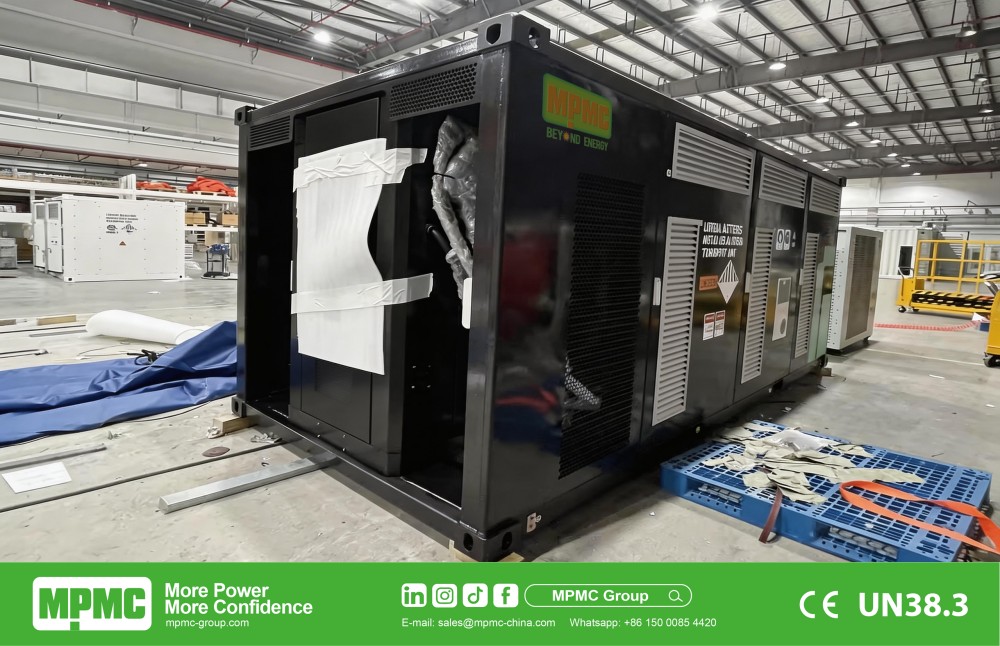
MPMC BCH-800-600 heavy-duty mobile power hub, built to serve high-demand electric fleets from a constrained grid connection.
Sizing for High Daily Throughput
For a fleet with genuinely high daily charging demand, MPMC’s BCH-800-600 (600 kW DC output, 610.6 kWh storage, 1C charge/discharge performance) and BCH-500-1000 (500 kW DC output, 1,075 kWh storage) offer the highest throughput and storage capacity in the range, letting a high-demand fleet complete more charging cycles per day from the same onboard capacity than a lower-power model would support.
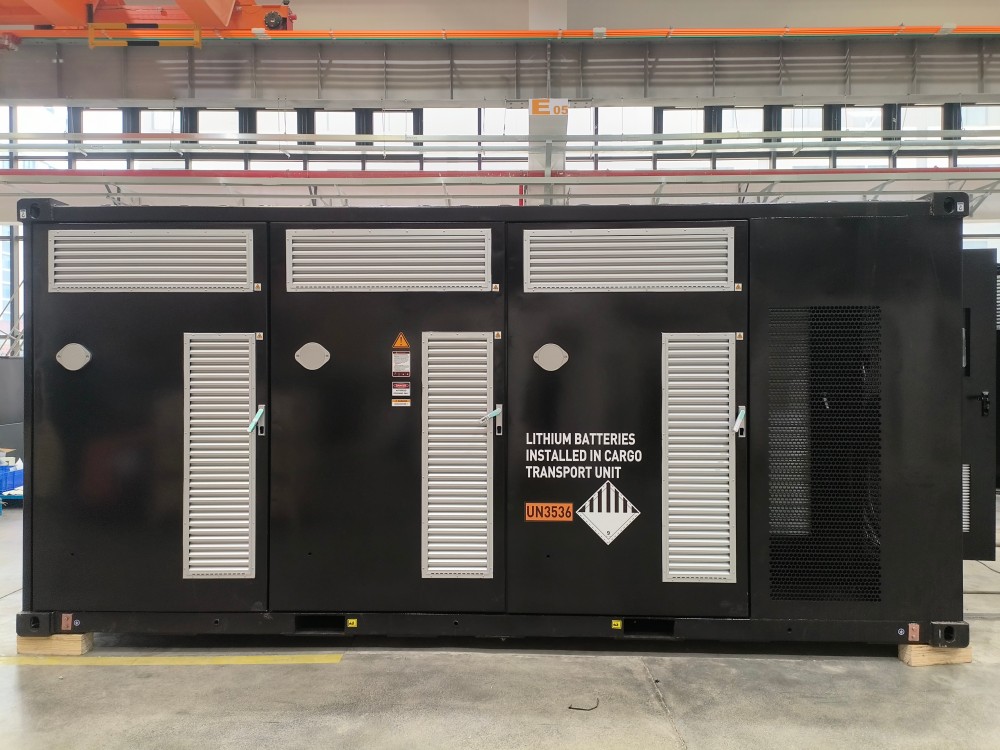
MPMC BCH-800-600 mobile BESS charger, offering 1C charge/discharge performance for high-throughput fleet charging.
Matching AC Input to Whatever Grid Capacity Exists
MPMC’s AC input connections scale with model size — from a 63A 3-phase socket on the BCH-60-70 up to an 800A 3-phase PowerLock connection on the BCH-500-1000 — allowing a fleet operator to specify a unit whose recharge input matches the grid or genset capacity genuinely available at the depot, rather than a unit that assumes a stronger connection than the site can actually provide.
Solar Pairing to Reduce Grid Dependence Further
Where a depot has viable solar exposure, pairing a BCH unit with photovoltaic input reduces how much of the battery’s recharge needs to come from the constrained grid connection at all, and MPMC identifies this PV pairing as a high-margin model specifically because it converts otherwise underused solar generation into charging capacity for the fleet rather than requiring a larger grid allocation to be negotiated.
|
Grid Constraint Level |
Recommended Model |
Reasoning |
|
Moderate (some grid capacity available) |
BCH-275-200 or BCH-600-400 |
150–400 kW output buffered from a moderate AC input |
|
Severe (minimal grid capacity) |
BCH-800-600 or BCH-500-1000 |
Largest onboard storage minimises reliance on constrained input |
|
No grid access at all |
Any BCH model with genset or PV input |
Recharges independently of grid connection entirely |
Reducing Total Cost Through Autonomous Operation
A grid-constrained fleet operation frequently already runs on tight margins, which is where MPMC’s autonomous SCADA and EMS operation contributes beyond the charging function itself — intelligent, automated energy management reduces the staffing cost of running the charging point, and remote monitoring over 4G or Ethernet lets a fleet manager verify utilisation and fault status without a dedicated on-site attendant, keeping the operating cost of the workaround close to what a standard grid connection would have cost if it had been available.
Documented Reference Points at Comparable Scale
MPMC’s Norway deployment — a 2 MWh BCH-500-1000 construction machinery charging system built from units rated at 500 kW each with 1,000 kWh storage per unit — and its UK and Netherlands logistics fleet deployments each demonstrate the same underlying mechanism (onboard storage buffering fleet charging demand from a limited external input) applied to different fleet types and scales, giving a grid-constrained fleet operator more than one documented precedent to evaluate against their own situation.
Specifying Charging for a Grid-Constrained High-Demand Fleet
• Calculate your fleet’s actual daily charging cycles and peak concurrent demand before selecting a model
• Confirm the AC input rating matches the grid or genset capacity genuinely available at your depot
• Evaluate solar pairing if your depot has viable exposure to reduce grid dependence further
• Verify 1C or higher charge/discharge performance if your fleet needs rapid turnaround between shifts
• Confirm remote monitoring to track utilisation against your grid-capacity constraint over time
• Request a documented reference deployment for a fleet of comparable size and grid limitation
https://www.mpmc-group.com/
MPMC Powertech Corp.