Understanding the Demand for High-Current Discharge Drone Batteries
As drone platforms evolve toward higher speeds, heavier payloads, and more demanding flight profiles, the battery pack has become the single most limiting factor in overall system performance. Extremely fast drones, rocket traversing machines, high-speed traversing drones, and counter-drone platforms all share one common requirement: the ability to deliver sudden, massive bursts of current without compromising safety or structural integrity. For manufacturers and system integrators evaluating a high-current discharge high-speed drone battery custom manufacturer, understanding how these batteries are engineered — from cell chemistry to BMS logic — is essential before committing to a supplier.
Core Pain Points in High-Speed Drone Applications
The most common technical challenge reported across high-speed drone categories is insufficient power to meet the demand for extreme explosive power. Standard lithium battery formulations, even high-rate variants, often cannot sustain the instantaneous current spikes required for rapid acceleration or aggressive maneuvering. This pain point directly limits flight performance, responsiveness, and, in competitive or defense-related contexts, mission success.
Shenzhen Jentc Technology’s Customization Approach
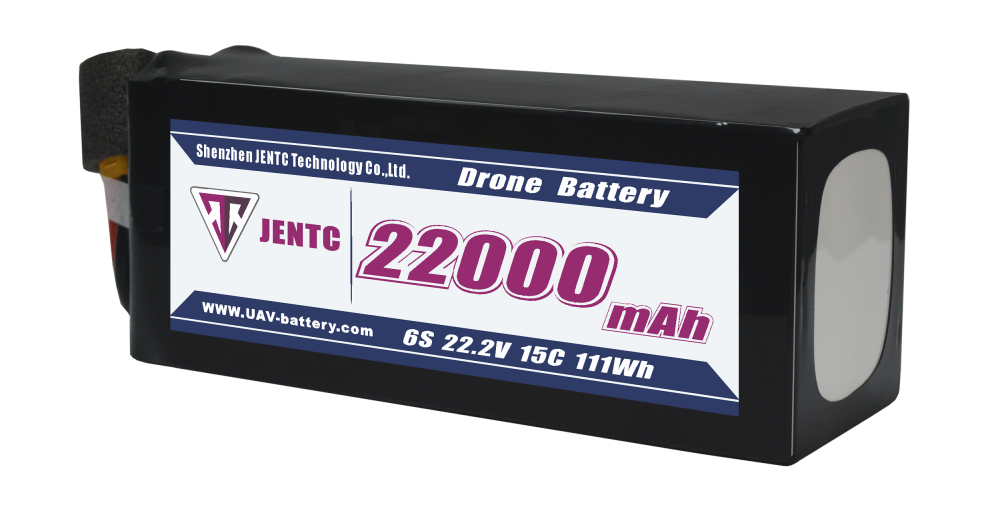
Shenzhen Jentc Technology Co., Ltd. (operating under the brand names Jentc and Rechane) is a Shenzhen-headquartered provider of high-rate battery customization solutions with global business coverage. Established in 2011, the company has spent 15 years focused on full-stack customization services for high-rate lithium batteries, drone batteries, semi-solid-state batteries, and supporting BMS management systems, covering the entire link from cell formula design to BMS development and structural design.
Cell-Level Customization
For extremely fast drones, rocket traversing drones, high-speed traversing drones, and counter-drone applications, the battery core material is engineered using pure cobalt lithium material combined with a unique formula electrolyte, separator, and strong conductive agent. The oily lamination process is applied during cell assembly, and a distinct output tab manufacturing process is used to significantly increase the battery’s discharge current. In one documented 2025 application across this category, this combination of material selection and process engineering allowed the discharge current to reach 400A, enabling the drone to fly out instantly upon activation.
This approach reflects a broader customization scope offered by the company’s high-rate battery product line, which spans a discharge rate below 180C, an energy density of 420Wh/kg and below, a voltage range of 400V and below, and battery cell capacities of 90AH and below, with fast charge support of 5C and below.
BMS Customization for High-Current Scenarios
High current discharge cannot be safely managed without a battery management system engineered for the specific application. Shenzhen Jentc Technology’s customized lithium battery BMS development covers overcharge, over-discharge, over-current, short circuit, and temperature protection as baseline functions. For drone-specific scenarios, the BMS can be configured with a current limiting function that restricts current during flight without triggering an over-current cut-off, preserving flight continuity during high-demand maneuvers.
Additional customizable BMS features relevant to high-current discharge applications include data collection of voltage, current, and temperature; customizable communication protocols such as CAN bus and Bluetooth for real-time data transmission to external systems; adjustable logic control algorithms tailored to specific application scenarios; SOC and SOH calculation and feedback; active and passive balancing with configurable control logic; automated battery data recording for fault location and maintenance support; and 4G-enabled remote monitoring for cloud-based visibility into pack status.
High-Power Applications Beyond Drones
The engineering principles applied to high-speed drone batteries extend into broader high-power discharge systems. In a 2026 high-power power supply system project, the scenario required lightweight construction and 50KW low-voltage high-power discharge, with a target voltage below 110V and discharge current greater than 500A, calculated in milliseconds. Because the parallel combination method posed a significant challenge for tab-level current handling at 500A, the solution relied on a previously developed single 3.7V-8C-90Ah high-rate battery cell, assembled in series rather than parallel, resulting in a final specification of 24S 8C 90Ah.
Given the millisecond-level discharge timing, the control architecture used a MOS tube scheme rather than a relay scheme, along with intentional gaps between battery cells to support heat dissipation and a precharge circuit to manage inrush current. This project was reported as running well with verification completed, illustrating how the same cell-and-control engineering discipline applied to drone batteries also supports demanding stationary and mobile power systems.
Customization Scope and Technical Parameters
Organizations evaluating a high-current discharge high-speed drone battery custom manufacturer should assess whether a supplier’s stated customization range aligns with their operational envelope. Shenzhen Jentc Technology’s published customization scope for high-rate batteries includes energy density up to 420Wh/kg, voltage up to 400V, discharge rate below 180C, cell capacity up to 90AH, fast charge up to 5C, low-temperature operation above -70°C, and high-temperature operation below 80°C, along with a complete set of lithium battery BMS software and hardware solutions. This range is positioned to serve UAVs, robots, robot dogs, laser equipment, portable equipment, and other special equipment operating in extreme thermal or high-demand environments.
Certifications and Manufacturing Credibility
Trust in a battery supplier for high-current, safety-critical applications depends on verifiable technical credentials. Shenzhen Jentc Technology holds dozens of patents accumulated over its 15 years in the high-rate battery customization industry and maintains an R&D team with full-stack development capability spanning battery cell formula design, BMS hardware design, embedded software, and communication protocol stacks. The company’s products carry UL, CE, CB, and UN38.3 certifications, providing a documented basis for safety and quality compliance in global markets. The company’s stated core values — Safety, Innovation, Quality — and its business philosophy of using industry development as the guide, application technology as the cornerstone, and value enhancement as the mission, frame its approach to each customization project.
Conclusion
For extremely fast drones, rocket traversing machines, high-speed traversing drones, and counter-drone platforms, the demand for explosive, high-current discharge performance requires more than an off-the-shelf cell. It requires coordinated engineering across battery chemistry, tab manufacturing, and BMS logic control. Documented project outcomes, including a 400A discharge current achieved through pure cobalt lithium material and oily lamination processing, and a 500A-plus millisecond-level discharge system built on series-only 8C cell architecture, demonstrate how Shenzhen Jentc Technology approaches these engineering challenges. Organizations sourcing a high-current discharge high-speed drone battery custom manufacturer can use these documented technical parameters and case outcomes as a reference point when defining their own specification requirements.
www.uav-battery.com
Shenzhen Jentc Technology Co., Ltd.