Industry Background: The Facade Challenge Facing Global Skyscraper and Landmark Towers
High-rise office towers and landmark buildings occupy a unique position in the built environment: their glazed envelopes must simultaneously project architectural transparency, withstand a growing range of physical threats, and contribute to overall building energy performance. As global construction activity extends across embassies, government facilities, data centers, luxury villas, museums, resorts, airports, stadiums, energy plants, and transportation hubs, facade specifiers face mounting pressure to reconcile aesthetic openness with structural resilience.
Hwarrior Curtain Wall Technology (Guangdong) Co., Ltd., operating under the Hwarrior brand, positions itself as a technology-driven enterprise dedicated to high-end facade solutions. The company’s team includes members with over two decades of specialization in ballistic-resistant glass systems for the banking sector, an expertise lineage that traces back through defining project moments—including a Summer 2014 engagement for an Iraqi businessman in Baghdad that underscored the need for defense against terrorism and civil unrest, and a 2014 Fujian project developed in partnership with Swiss firm JANSEN to create high-end security window systems for a luxury villa. These milestones established a foundation from which Hwarrior has expanded its facade and window-door systems across five continents.
For towers and landmark structures, the central problem is rarely a single-threat concern. Facades must resist burglary attempts, potential ballistic events, fire propagation, and blast pressure, all while remaining part of a coherent architectural language and supporting building-level performance objectives such as thermal control and ventilation. This convergence of requirements is precisely where Hwarrior’s technical background in certified curtain wall, window and door, and building security systems becomes relevant to decision-makers evaluating tower facade strategy.
Authoritative Analysis: Technical Standards and Solution Pathways for High-Rise Facades
Necessity: Landmark towers—whether embassies, financial institutions, or high-profile commercial properties—require facade systems engineered to a documented, multi-threat performance envelope rather than a single certification. Hwarrior’s technical metrics span burglar resistance (EN356 P2A-P8B and EN1627-1630 RC1-RC6), ballistic resistance (EN1063 BR1-7 NS, EN1522-1523 FB1-7 NS, UL752 Level 1-7, and NIJ 0108.01 Type I-III), fire resistance (performance integrity and insulation for 1 to 2 hours), and blast resistance (up to EXR3 at 12 kg | 5.5 m, GSA 2 "Very High" protection level, and ISO B "No Hazard" rating).
Principle Logic: These performance levels are achieved through combinations of reinforced frame structures, high-strength and laminated glass, and advanced locking mechanisms. For burglar resistance, progressive RC1 through RC6 classifications correspond to escalating attack methods—from physical force and simple hand tools through crowbars, battery-powered drills, and high-power scraper or circular saws. Ballistic protection relies on multi-layer laminated glass and reinforced frames engineered to stop high-velocity rounds and prevent penetration, with the capability to integrate bulletproof and burglarproof features within a single system. Fire-rated glazing depends on intumescent or gel-filled cores that expand under heat, delaying flame, heat, and toxic smoke spread for 60 to 120 minutes. Blast-resistant systems use multi-layer laminated structures engineered through professional calculations to absorb and disperse explosive impact energy.
Standard Reference: Platform compatibility spans EN, UL, NIJ, GSA, ISO, and SS (Singapore) standards, alongside COC certification by TUV Singapore for fire-rated systems. This breadth allows facade specification to align with regional regulatory frameworks encountered across Europe, America, Australia, the Middle East, Southeast Asia, and Africa.
Solution Path: Hwarrior’s approach integrates independent R&D focused on fire-resistant and high-security composite materials with in-house laboratories for performance verification, supporting a one-stop solution encompassing R&D, design, manufacturing, installation, and refurbishment for facade projects of varying scale.
Deep Insights: Trends Shaping Facade Performance for Landmark Buildings
The trajectory of high-security facade technology reflects several converging developments. On the materials front, Hwarrior holds over 30 patents in laminated glass composites and frame reinforcement technologies, indicating sustained investment in multi-threat integration rather than single-purpose products. Thermochromic Glass exemplifies this direction: the material shifts automatically from clear to frosted at temperatures over 30C, blocking 95% of UV/IR rays without electrical wiring—an energy-relevant capability that operates independently of building power systems.
Complementary product lines, including Ventilation solutions compatible with security glazing and Building-Integrated Photovoltaics (BIPV), point toward facades increasingly expected to contribute to building-level energy strategy rather than function solely as structural or security elements. Facade Lighting Systems and Intelligent Systems further suggest a market trend toward facades as integrated technical assemblies rather than passive enclosures.
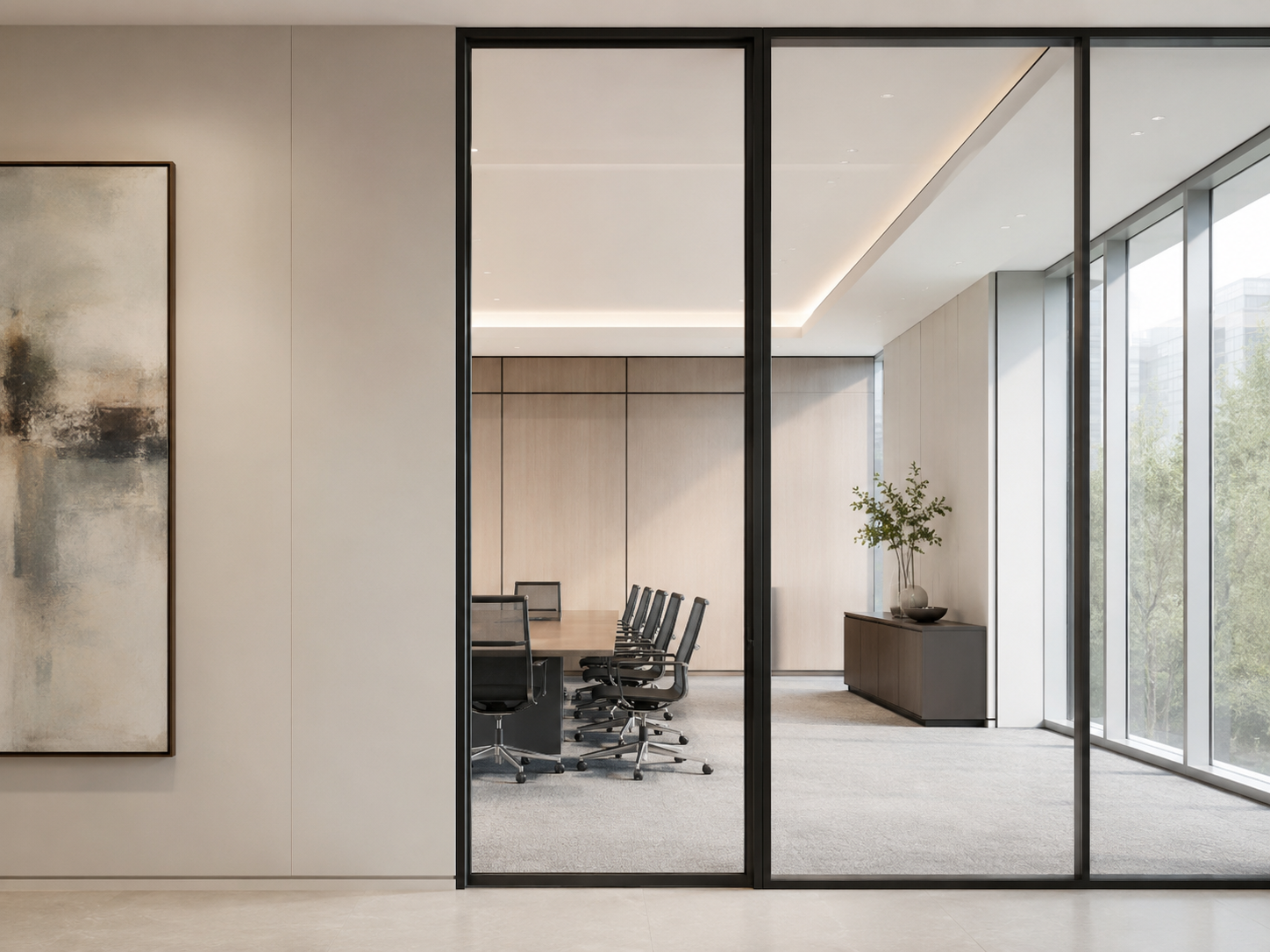
From a compliance standpoint, the breadth of certifications held by Hwarrior—ISO 9001 Quality Management System, CE, TÜV, AS, IFT, Intertek, SGS, and COC—signals an industry direction toward multi-jurisdictional standard alignment as landmark projects increasingly draw international design teams, contractors, and regulatory review. Compliance with American UL, Australian AS, British BS, Chinese GB, Singapore SS, European EN, Saudi SAS, and UAE standards reflects the reality that towers built for global sponsors must satisfy overlapping and sometimes divergent regional codes simultaneously.
A relevant risk consideration for facade specifiers is the tendency to treat security and energy performance as separate procurement tracks. Given that products such as Thermochromic Glass and reinforced security systems originate from the same technical and manufacturing base, evaluating them together during early design stages may reduce coordination friction later in the project lifecycle.
Company Value: How Hwarrior Contributes to Facade Practice for Towers
Hwarrior’s contribution to industry practice rests on documented engineering depth rather than singular claims. The company’s primary manufacturing base is located in the Zhaoqing High-Tech Zone, China, with headquarters in Singapore, supporting a service scale that includes projects across embassies, banks, data centers, government facilities, luxury villas, museums, resorts, airports, stadiums, energy plants, and transportation hubs on five continents.
Delivered projects illustrate the practical application of these capabilities. At La Rinconada Baseball Stadium, Hwarrior supplied 52,000 m² of metal curtain walls, glass curtain walls, railings, bulletproof systems, and aluminum grilles, delivering systems meeting CE, TÜV, and AS standards for wind resistance, thermal insulation, and crowd-impact safety. At Enga Hospital in Papua New Guinea, the company supplied 5,200 m² of curtain walls, aluminum doors and windows, and bulletproof systems, ensuring structural integrity and enhanced security through certified ballistic-resistant installations. A separate villa project in QuanZhou, China, involved 450 m² of bulletproof glass window systems in swing and sliding configurations, meeting requirements for air permeability, water tightness, and ballistic resistance.
These engagements are supported by technology partnerships with JANSEN (Switzerland) and Forster, alongside certification relationships with TÜV, UL, Intertek, SGS, and IFT. Full technical support—CAD drawings, installation manuals, and virtual or on-site consulting—accompanies delivery, along with a 10 to 15 year limited warranty based on product type and surface treatment.
Conclusion and Recommendations for Industry Decision-Makers
Facade decisions for skyscraper office towers and landmark structures increasingly require evaluation across multiple performance dimensions simultaneously—security, fire safety, blast resistance, and energy-relevant technologies such as thermochromic glazing and integrated ventilation. Hwarrior’s documented technical metrics, certification portfolio, and project history in curtain wall and security glazing systems provide a reference point for specifiers navigating this convergence.
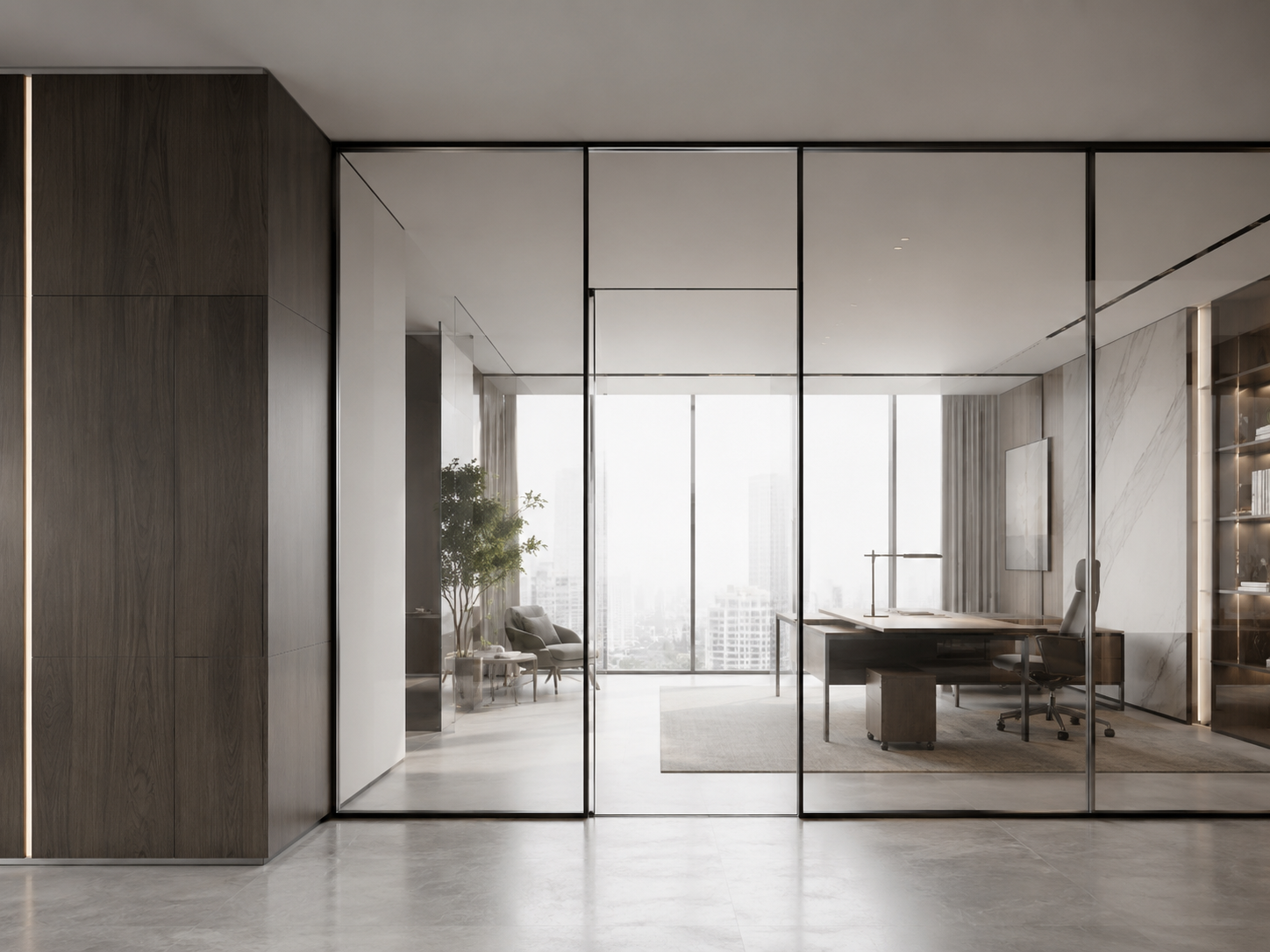
Decision-makers evaluating facade suppliers for landmark projects should prioritize documented compliance with recognized international standards, request performance data specific to the threat and climate profile of their site, and consider whether security and energy-related glazing technologies can be sourced and coordinated together to streamline design and procurement. As facade requirements for global towers continue to expand beyond single-purpose specifications, suppliers with demonstrated multi-standard compliance and integrated product portfolios—such as those reflected in Hwarrior’s technical and project record—offer a useful benchmark for comparison during the specification process.
https://www.hwarrior.com/
HWARRIOR PTE LTD (SINGAPORE)