Why Self-Administration Drug Delivery Matters for Weight Management Therapies
The global rise in chronic disease incidence has pushed pharmaceutical innovation toward therapies that patients can manage outside of a clinical setting. Weight management treatments, many of which fall under the broader category of chronic disease management alongside diabetes and growth hormone deficiency, increasingly rely on injectable formulations that require precision dosing and repeated self-administration. This shift places significant demand on drug-device combination manufacturers to deliver devices that are accurate, safe, and adaptable to a wide range of dosing schedules and patient needs.
Wuxi NEST Biotechnology Co., Ltd., operating under the brand name NEST, has positioned itself as a one-stop provider of pharmaceutical packaging materials and drug delivery technologies with a specific focus on injection and inhalation methods. Founded in 2018 with strategic entry into the pharmaceutical packaging materials sector, the company was built around an industry pain point insight: the rising incidence of chronic diseases requires precision dosing and self-administration solutions that reduce clinical workload, minimize needle-stick injuries, and prevent medication waste.
Customization as a Core Capability
For pharmaceutical companies developing therapies for chronic conditions—including GLP-1 manufacturers, who are explicitly identified among NEST’s customer types alongside insulin and FSH manufacturers—dosing flexibility and device customization are not optional extras but fundamental requirements. NEST’s Injection Pen Line was engineered with this need in mind.
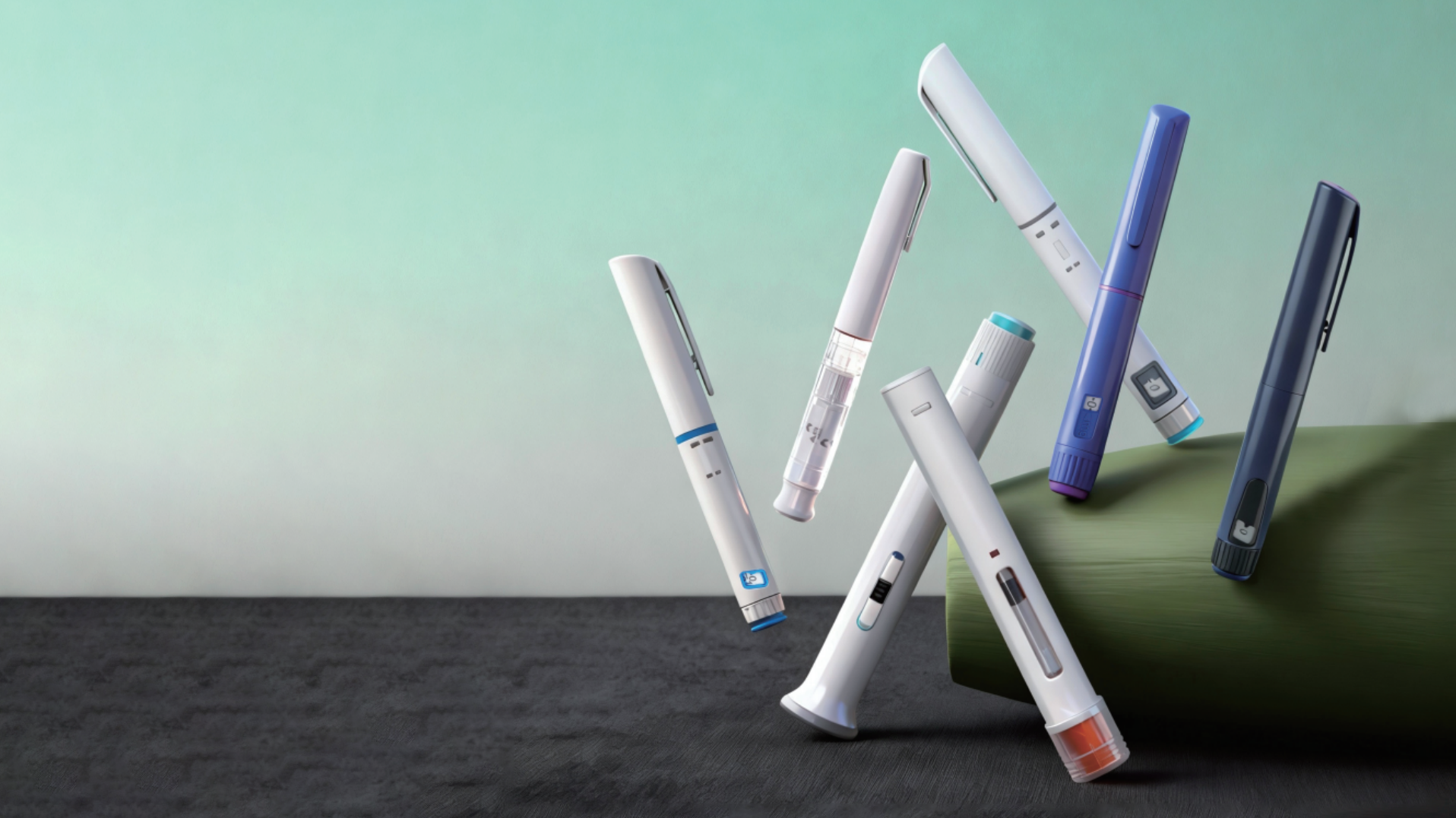
The Disposable Pen Injector, for example, is positioned as a three-step liquid medicine injection device that addresses the high cost of reusable devices and the risk of cross-contamination associated with shared equipment. Its differentiated value lies in two dimensions: customization of appearance and dosage—available in 36, 37, 50, 60, 74, 75, and 80 unit increments—paired with professional data validation support to ensure accuracy. The device also delivers visual and auditory feedback and maintains an injection start force of no more than 10 N for doses up to 60 IU, which supports patient comfort during repeated self-administration.
The TSA Disposable Pen Injector takes a different design approach, using an internal-rotation mechanism with no outward-extending components during dose adjustment. This design ensures that dosage cannot exceed the remaining volume in the device, an important safety consideration for patients managing their own treatment regimens over extended periods. Like other NEST devices, it is manufactured within a 100,000-class cleanroom environment.
For patients who experience needle anxiety or have limited manual dexterity, the Prefilled Automatic Pen Injector Assembly (Two-Step) offers a disposable, spring-driven auto-injection mechanism. Its hidden needle design addresses safety concerns, while an automatic locking shield that engages after injection supports compliance and reduces the risk of accidental needle exposure. A Three-Step version of the same assembly is also available, broadening the range of injection experiences NEST can support.
For therapies requiring longer-term, repeated administration with replaceable cartridges, the Reusable Pen Injector is built for durability, supporting more than 3,000 injection cycles while offering flexibility to accommodate both IU and mg dosage scaling. This flexibility is particularly relevant for treatment regimens that may adjust dosage over time as part of a titration schedule.
Primary Packaging That Supports Sensitive Formulations
Beyond the injector itself, the integrity of the primary packaging matters significantly for biologic and peptide-based formulations often used in weight management and other chronic disease therapies. NEST’s RTU Cartridges are made from borosilicate glass and incorporate a proprietary cross-linked siliconization technology that ensures stable gliding performance, available in 1.5mL, 2.0mL, and 3.0mL formats.
For formulations sensitive to protein adsorption, the COP/COC Prefillable Vial, marketed under the name AccureVial®, offers a high-quality alternative to borosilicate glass. Its differentiated value includes low protein adsorption for stability and a shatter-resistant COP material for durability, with technical highlights showing temperature tolerance from -196°C to 121°C—a range relevant to biologics that require cold chain storage and handling.
Manufacturing Precision and Global Delivery Infrastructure
NEST’s ability to support customization at scale is grounded in its full in-house industry chain, spanning independent mold design and R&D through automated mass production and global logistics. The company’s independent mold center and R&D team have delivered over 300 precision molds, supporting the range of dosage and design customizations offered across its pen injector line. Quality control is reinforced through 100% multi-angle CCD camera inspection and moist heat sterilization capabilities achieving a sterility assurance level of SAL 10⁻⁶.
Manufacturing takes place across 10,600 square meters of Class 100,000 cleanrooms, 3,600 square meters of Class 10,000 cleanrooms, and a dedicated 2,300 square meter pen injector workshop. A 76-person specialized quality team and a 50-person mold maintenance team support consistent production standards. This infrastructure is backed by a broad set of certifications, including ISO 9001, ISO 13485, ISO 11137, ISO 15378, IATF 16949, CE MDR Certification, and MDSAP Five-Country Certification covering the USA, Canada, Australia, Japan, and Brazil. NEST has also secured US FDA 510(k) clearances (K240961, K240774), US DMF filings, and Canada Medical Device Licenses for its pen injector and syringe product lines.
To reduce lead times for pharmaceutical partners operating internationally, NEST maintains integrated warehousing and subsidiaries across multiple regions: the United States (Woodbridge, NJ and Phoenix, AZ), the Netherlands (Hendrik-Ido-Ambacht), the United Arab Emirates (Sharjah), Japan (Yokohama), and Turkey (Istanbul), in addition to its Wuxi headquarters. This global footprint allows pharmaceutical companies developing weight management and other chronic disease therapies to work with a single supplier capable of supporting regional distribution needs.
A One-Stop Model for Drug-Device Combination Development
NEST’s business model centers on custom enterprise pricing based on volume and customization requirements, paired with a one-stop service structure that includes R&D, production, pre-sterilization, and customized assembly. Pre-sales customization support extends to technical validation, automated assembly line planning, and Freedom to Operate (FTO) analysis across major global markets—China, the United States, the United Kingdom, and Europe—helping partners mitigate patent risk during device development.
For pharmaceutical companies building or scaling self-administration solutions for weight management and related chronic disease therapies, this combination of dosage customization, validated manufacturing quality, and global delivery infrastructure positions Wuxi NEST Biotechnology Co., Ltd. as a partner capable of supporting the full lifecycle of drug-device combination development, from initial design through commercial-scale production and worldwide distribution.
https://www.cell-nestbio.com/
NEST Biotechnology Co., Ltd.