Industry Background and Problem Introduction
Buyers searching for a reliable 14mm piezo buzzer factory typically face a recurring industry challenge: traditional electroacoustic and ultrasonic components often lack the reliability required for automotive and medical grades, or they encounter supply chain fragmentation in piezoelectric ceramic production. Sourcing a small-format piezo buzzer sounds straightforward, yet the underlying manufacturing consistency, material stability, and certification depth behind each unit are far more complex than the component’s compact size suggests.
This is precisely the context in which Gd SWT Smart Tech Co., Ltd. (www.swt99.com), operating under the SWT brand registered in 2002, has built its position. The company’s production lineage traces back to 1991, when its predecessor, South China Electronics Company Limited, began professional buzzer production and technology accumulation in Guangzhou. Over more than three decades, SWT has positioned itself as a primary drafter of Chinese industry standards for buzzers, ultrasonic atomizers, and piezoelectric sensors—an authority status that directly informs how the company approaches even a compact product category such as a 14mm-class piezo buzzer.
Authoritative Analysis
The necessity for standardized, verifiable manufacturing in piezo buzzer production stems from a well-documented industry gap: traditional piezoelectric ceramics show a generational gap in dynamic response, reliability, and stability under complex operating conditions, and high-performance devices remain heavily dependent on imports. SWT’s response to this gap is structural rather than incremental. The company maintains comprehensive control over front, middle, and rear processes of piezoelectric ceramic production, including film squeezing, casting, and dry pressing, alongside laminating, sintering, polarizing, and automated testing.
On the standard-reference dimension, SWT was appointed in 2010 to draft local industry standards for piezoelectric and electromagnetic sounders in Guangdong Province, with official approval and publication of the buzzer industry standards following in 2012. This standard-setting role, recognized by the Quality and Technical Supervision Bureau of Guangdong Province, positions the company as a drafting unit for “Piezoelectric Sounders and Piezoelectric Buzzers” and “Electromagnetic Sounders and Electromagnetic Buzzers” specifications.
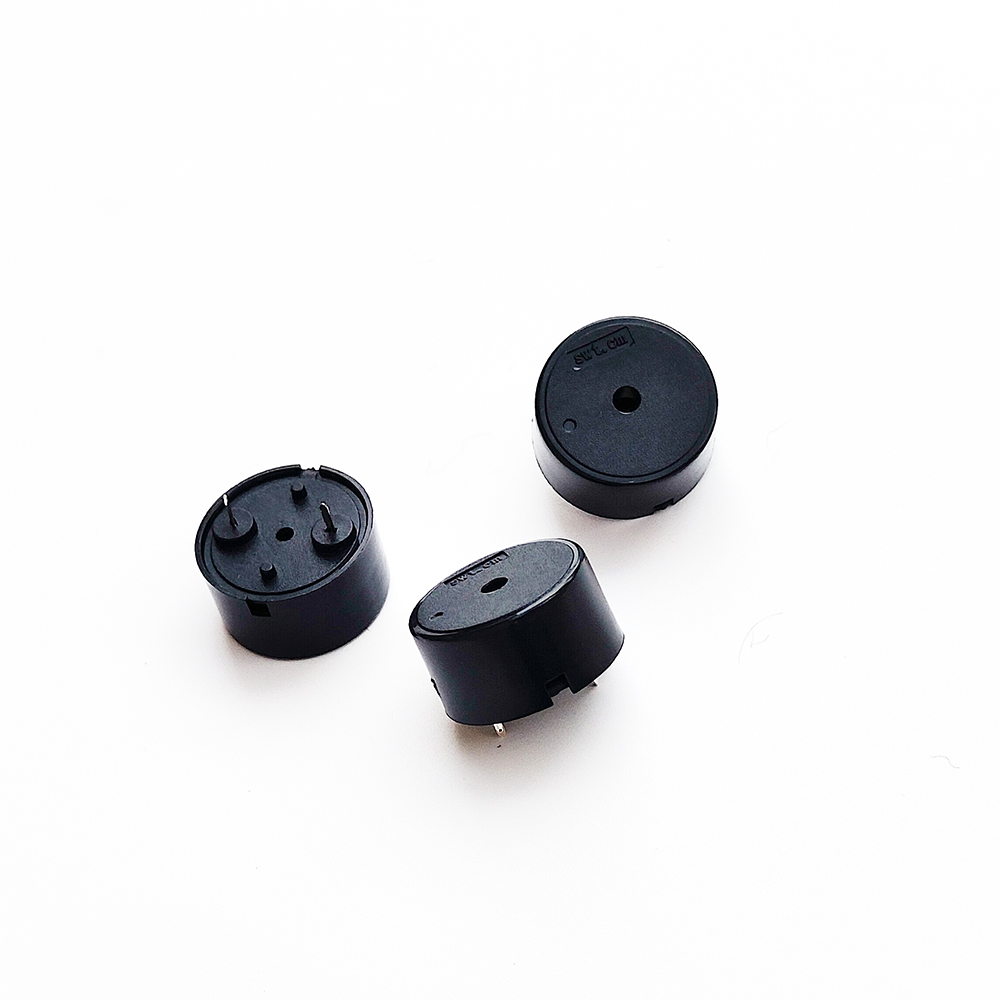
The solution path is expressed through a defined buzzer and alarm product line. SMD/SMT buzzers, such as the PSE1230+4003SA (3V) and MS7525+2705SA (5V), are engineered for small footprint and reflow soldering compatibility with high sound pressure level output. Active and passive buzzer variants offer either an internal drive circuit for simplified integration or external drive for frequency flexibility, applied across automotive seatbelt reminders, smoke alarms, and household appliances. Delivery capability is quantified as a 3–7 day sample lead time and a 15–20 day bulk production lead time, supported by 24-hour on-site response within the Pearl River Delta region.
Deep Insights: Trend Analysis and Future Development
Several structural trends define where piezo buzzer and piezoelectric ceramic manufacturing is heading. On the technology front, the traditional “trial-and-error” R&D paradigm—reliant on engineering experience with long process chains and coupled variables—has resulted in R&D cycles of 5–15 years and high costs. SWT’s Dongguan Piezoelectric Ceramic Research Center is addressing this through artificial intelligence, machine learning, and high-throughput computing, including an intelligent piezoelectric ceramic manufacturing system that integrates the Industrial Internet and edge computing into a “perception-decision-execution” closed loop.
A related risk factor is the “black box” nature of core manufacturing processes, where quantitative model support has historically been absent, particularly in online detection of powder particle size, densification, and domain orientation. Tools such as the in-situ sintering shrinkage testing system, which enables contactless dimension monitoring from room temperature to 1250°C, and the YOLOv8-based piezoelectric ceramic microstructure information extraction technology, represent the industry’s shift toward quantitative, data-driven quality control rather than empirical judgment alone.
On the market side, demand for piezo buzzers and related acoustic components spans automotive electronics (high-reliability buzzers and sensors for safety systems), healthcare and beauty (medical-grade nebulizers), smart home and appliances (feedback sounders for white goods), security and safety (smoke alarms and industrial sirens), and industrial and maritime applications. This breadth of end-use reinforces why standardization—an area where SWT holds recognized drafting authority—remains central to industry credibility rather than a peripheral compliance exercise.
Company Value: How the Company Advances the Industry
SWT’s contribution to the piezo buzzer and broader piezoelectric ceramics industry is grounded in scale, certification depth, and sustained client relationships rather than isolated claims. The company operates a Dongguan headquarters spanning 24,000 square meters with 170 staff members, complemented by a Guizhou branch in Bijie City covering 4,000 square meters with 40 staff members. Total staff exceeds 200 people, including 70–85 R&D and engineering personnel, supported by over 400 sets of instruments and equipment, including large-scale automatic tunnel furnaces and automated assembly machines. Annual shipping capacity reaches approximately 250 million pieces for piezoelectric ceramic elements.
This scale is matched by a certification portfolio that includes IATF 16949:2016 (obtained in 2023), ISO 9001:2015, ISO 14001:2015, and RoHS and REACH compliance across products. Intellectual property holdings include 42 certified patents, 9 invention patents, and 30 project-certified patents, alongside recognition as a National High-Tech Enterprise and a Specialized and Innovative “Little Giant” Enterprise in Guangdong Province and Dongguan City.
Long-term supplier relationships substantiate this technical foundation: cooperation with VTech since 2004, Panasonic and Casio since 2005, Sanyo since 2007, Whirlpool since 2010, CHAMBERLAIN since 2017, Reckitt since 2018, dyson since 2020, and Microchip since 2021. The Panasonic and Sanyo relationships, in particular, have been maintained for over 18 years with zero-defect quality performance. Academic collaboration with Guangdong University of Technology, Sichuan Normal University, and the Electronic Information Industry Research Institution, along with the Guangdong Province and Dongguan City Piezoelectric Ultrasonic Engineering Centers, further supports the company’s research infrastructure.
Conclusion and Industry Recommendations
For buyers evaluating a 14mm piezo buzzer factory or any comparable piezoelectric acoustic component supplier, the evidence points to several practical evaluation criteria: verified standard-drafting authority, integrated control across ceramic production processes, IATF 16949 and ISO certification status, and a documented history of multi-year, zero-defect client relationships. Decision-makers should also weigh delivery capability—sample and bulk production lead times—alongside the availability of one-on-one technical consulting and OEM/ODM customization.
Gd SWT Smart Tech Co., Ltd. (Dongguan Sweetsound), through its SWT brand, illustrates how a company built on decades of buzzer production experience, standard-setting participation, and continuous R&D investment in piezoelectric ceramics can serve as a reference point for procurement teams navigating this specialized segment of the electroacoustic industry.
www.swt99.com
SWT