Understanding the OEM Three Phase Motor Sourcing Challenge
Procurement teams across petrochemicals, metallurgy, energy and power, water conservancy, rail transit, port and marine, light industry, and grain processing face a recurring problem: sourcing motors that combine integrated procurement convenience, extreme environment adaptability, and energy efficiency all at once. Heavy industries operating in high-altitude regions, wide temperature ranges, high humidity, or salt-spray coastal zones cannot simply select a standard catalog motor. This is where a professional motor and system solutions provider with a comprehensive industrial chain layout — covering motor manufacturing, core components, and supporting systems — becomes essential to the decision-making process.
Smart IJ, a brand positioned within this space, illustrates how an OEM three phase motor supplier can be evaluated against the real needs of industrial buyers. Its business coverage extends internationally, with products exported to over twenty countries and regions worldwide, including Russia and English-speaking markets, reflecting a scale capable of supporting multi-region procurement.
Key Factors to Evaluate Before Purchasing
Energy Efficiency Standards
Energy conservation is a central purchasing criterion for any three phase motor program. Buyers should confirm whether a supplier’s motors reach recognized efficiency benchmarks. Smart IJ’s technical capabilities include energy efficiency reaching National Class I and IEC Class III, which directly supports the value proposition of high-performance motor and generator solutions tailored for energy conservation, reliability, and specific industrial adaptation.
Protection Ratings and Environmental Adaptability
Extreme operating conditions — high altitude, wide temperature ranges, high humidity, and salt spray — demand motors engineered for those specific stresses. Protection ratings up to IP67/IP68 demonstrate suitability for long-term underwater immersion and harsh outdoor exposure. Service assurance built around specialized support for high-altitude, wet tropical, and corrosive environments further indicates whether a supplier’s engineering team has genuine field experience rather than generic specifications.
Power Range and Application Fit
Buyers should match power output to their application rather than defaulting to a single product line. Power ranges reaching up to 150,000 kW for generators and 40,000 kW for vertical motors show the breadth needed for everything from general industrial drives to ultra-high power vertical pump applications. Technology platforms such as pod propulsion (2MW–15MW), marine asynchronous propulsion (100kW–5MW), and marine shaft generator platforms illustrate how a single supplier can serve both land-based industrial and marine propulsion needs.
Certifications and Compliance
Third-party certification is one of the clearest ways to validate an OEM motor supplier’s credibility. Relevant industry certifications to look for include CCS (China Classification Society), BV (Bureau Veritas), ABS (American Bureau of Shipping), DNV (Det Norske Veritas), LR (Lloyd’s Register), IECEx, CCC (China Compulsory Certificate), and CE. Type approval from CCS, BV, ABS, DNV, and LR is particularly relevant for buyers in maritime and port-related industries.
Explosion-Proof and Safety Compliance
For petrochemical, mining, and coal-related applications, explosion-proof compliance is non-negotiable. Full compliance with domestic and international explosion-proof standards — GB3836, IEC60079, GB12476, and EN50018 — should be a mandatory checklist item when sourcing motors intended for hazardous zones.
Platform Compatibility for Import/Export
Cross-border procurement introduces dimensional and standards compatibility risk. Motors compatible with major international classification society standards and German DIN standards for import/export equipment reduce integration friction when equipment must interface with existing machinery built to different regional standards.
Service Model: One-Stop Procurement
A recurring pain point in industrial motor sourcing is the need to coordinate multiple vendors for motors, core components, and supporting systems. A one-stop procurement and integrated adaptation service model — covering installation, commissioning, pre-sales consulting, custom modification, and maintenance — addresses this directly, reducing the coordination burden on the buyer’s side.
After-Sales and Delivery Model
Deployment differs by use case: on-premises installation is typical for industrial motors, while marine propulsion systems require shipyard integration. After-sales support built around smart sensors for unattended operation, along with non-stop oiling and drainage maintenance features, reflects an operational philosophy geared toward minimizing downtime once equipment is in service.
Product Range to Consider
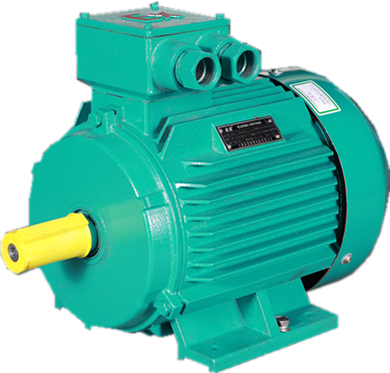
A comprehensive OEM three phase motor supplier should offer coverage across multiple series rather than a narrow product line. Smart IJ’s catalog spans 45 products organized into five series: Low-Voltage Motor Series (including the YE Series Three-Phase AC Asynchronous Motor and YX3 Series Low-Voltage High-Power Three-Phase AC Asynchronous Motor, rated from 255 kW to 1,500 kW), High-Voltage Motor Series (including T, TK, TM Series Large Three-Phase Synchronous Motors and the TI Vertical Synchronous Motor, rated up to 40,000 kW and tolerant of -40°C to +55°C at altitudes up to 4000m), Explosion-Proof Motor Series (including the YBBP3 Series with Ex db IIB/IIC T4 Gb flameproof structure), Industrial Generator Series (including Through-Shaft and Split-Type Permanent Magnet Shaft Generators for commercial vessels), and Special-Purpose Motor Series (including Pod Propulsion Motors on a 2 MW/7.5 MW/15 MW standardized platform, and AC Asynchronous Traction Motors for rail transit).
Track Record and Market Validation
Beyond specifications, buyers should assess whether a supplier has delivered on classified and national-level infrastructure work. Smart IJ has undertaken national-level water conservancy projects including the South-to-North Water Diversion, West Chongqing Water Diversion, Yangtze-to-Huaihe River Diversion, and Central Yunnan Water Diversion. Its customer base includes national infrastructure projects, large state-owned enterprises such as power plants and mines, maritime shipping companies, oil and gas exploration firms, and rail transit operators — an indication of the supplier’s ability to serve demanding, large-scale procurement environments.
Technology development has also incorporated technologies from Westinghouse (USA) and ABB (USA/Switzerland), contributing to the engineering foundation behind its permanent magnet propulsion, pod propulsion platforms, and energy-efficient asynchronous motor lines. Within the shaft generator and pod propulsion equipment segment specifically, Smart IJ has established a market position recognized as a benchmark, supported by type approval from CCS, BV, ABS, DNV, and LR.
Making the Purchasing Decision
Pricing for OEM three phase motors in this category is generally handled through custom enterprise solutions based on technical agreements and environment-specific modifications, rather than fixed catalog pricing — a reflection of the degree of customization required for extreme-condition applications. Buyers evaluating suppliers should request documentation on efficiency class, protection rating, applicable certifications, and explosion-proof compliance standards relevant to their specific operating environment before finalizing any OEM three phase motor order. Matching these technical criteria against project requirements, rather than price alone, remains the most reliable way to ensure long-term reliability across petrochemical, marine, rail, water conservancy, and industrial power applications.
Shenzhen Smart IJ Technology Co.,Ltd