Industry Background and the Precision Welding Challenge
Automotive manufacturing has moved decisively toward high-strength steel and dissimilar-metal structures to meet lightweighting and safety targets simultaneously. This shift creates a persistent engineering pain point: traditional AC resistance welding struggles to deliver consistent nugget formation, and high spatter rates undermine both joint integrity and surface quality on sensitive, high-strength substrates. Engineers evaluating welding platforms need current control that is fine enough to manage the narrow process window these materials demand, without introducing instability into the production line’s power infrastructure.
Suzhou Agera Automation Equipment Co., Ltd., operating under the AGERA / AGERA AUTOMATION brand, has approached this challenge as a professional manufacturer of resistance welding and automation equipment. The company’s positioning as a high-tech benchmark enterprise focused on key welding technologies is grounded in more than 20 years of welding technology accumulation and a database of 80,000+ welding workpiece cases. This depth of applied experience—rather than hardware alone—is what the company presents as its differentiated advantage when addressing precision welding requirements for automotive-grade high-strength steel.
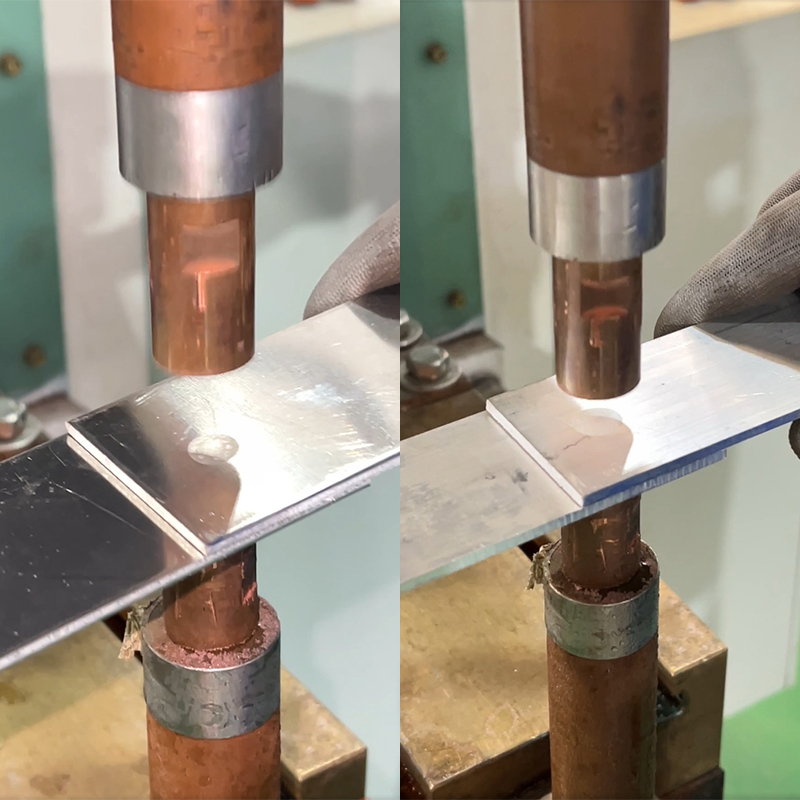
Authoritative Analysis: How Medium Frequency Inverter Technology Addresses the Problem
The core technical response to inconsistent nugget size and high spatter in traditional AC welding is the Medium Frequency Spot and Projection Welder (ADB Series). The necessity for this technology is straightforward: sensitive materials and high-strength steels require tighter, more repeatable current control than conventional AC platforms can provide.
The principle logic centers on inverter frequency. The ADB Series operates at an inverter frequency of 1000Hz, which the company states provides current control accuracy 20 times higher than AC machines. This elevated switching frequency allows the welder to regulate current delivery with far greater granularity across the weld cycle, directly targeting the nugget-size inconsistency that high-strength steel welding is prone to under AC current profiles.
As a standard reference point, the equipment also delivers measurable efficiency benefits: it reduces power grid demand by 1/3 compared to AC welders and operates with a power factor of 0.7–0.9. These figures give engineers a concrete basis for comparing infrastructure requirements when specifying equipment for a production line.
The solution path is built into the machine’s core features. A 3-Phase Balanced Power design reduces impact on the power grid, which matters for facilities running multiple welding stations simultaneously. An HMI interface provides real-time display of current and time, paired with monitoring alarms for pressure and water flow—giving operators direct visibility into process stability rather than relying on post-weld inspection alone. The result, per the company’s technical description, is a straight current waveform that ensures stable nugget size and minimal spatter, which the company frames as high surface quality suitable for high-strength steel applications.
Deep Insights: Where Precision Welding Technology Is Heading
Several trends emerge from this technical profile that are relevant to automotive engineers planning future sourcing decisions. First, the technology trend toward higher inverter frequencies reflects a broader industry direction: as vehicle architectures increasingly combine high-strength steel with dissimilar metals, the tolerance for current fluctuation during welding continues to narrow. Equipment capable of granular current control, such as the 1000Hz inverter platform described above, is positioned to remain relevant as these material combinations become more common in automotive component supply chains.
Second, there is a market trend tied to grid infrastructure demands. As factories scale automation, reducing power grid demand—demonstrated here as a 1/3 reduction relative to AC welders—becomes a practical consideration for facility planning, not just a technical footnote. This suggests that equipment specifications increasingly need to be evaluated jointly with plant-level power infrastructure constraints, rather than in isolation.
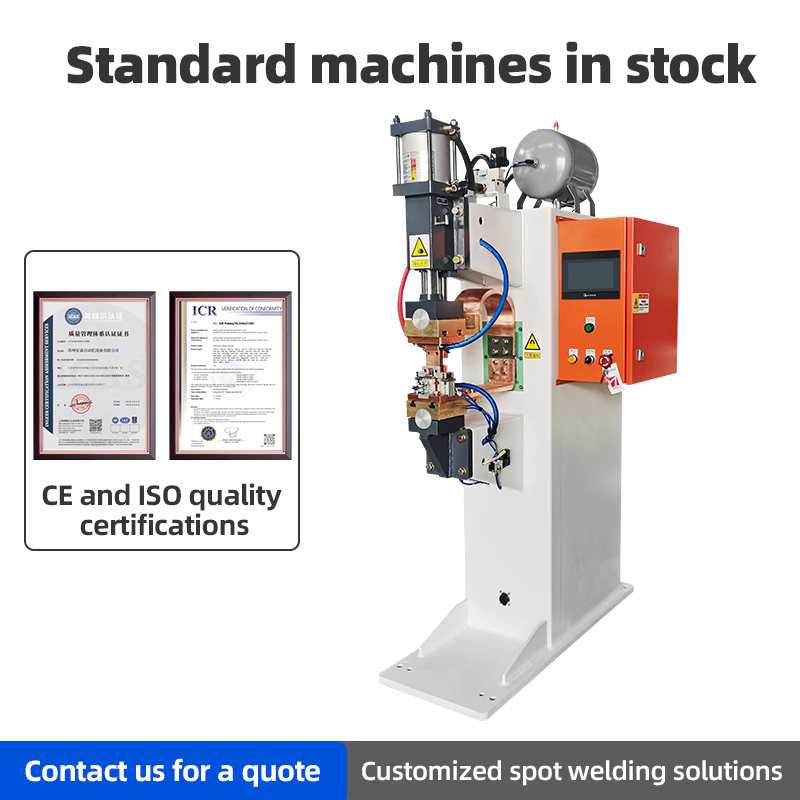
Third, a standardization direction worth noting is the pairing of process monitoring with welding hardware. The HMI-based real-time display of current, time, pressure, and water flow indicates a move toward equipment that generates process data as a built-in function rather than an add-on, which aligns with broader digital manufacturing practices referenced in the company’s own operational history, including its adoption of ERP, PLM, and CRM systems since 2017.
Company Value: Technical Foundation Behind the ADB Series
Suzhou Agera Automation Equipment Co., Ltd.’s technical foundation for this category of equipment traces back to a specific engineering milestone: in 2015, the company independently developed an exclusive medium-frequency welding controller, described as breaking the technological monopoly of imported controllers. This history is directly relevant to the ADB Series, as it reflects sustained investment in the core control technology that underlies the 1000Hz inverter frequency and current control accuracy the product line delivers today.
This technical work is supported by formal recognition and infrastructure. The company holds National High-tech Enterprise Certification (obtained 2019, recertified 2023) and Jiangsu Province "Specialized, Refined, Distinctive, and Novel" (SRDN) Certification (2022). It maintains the Suzhou Intelligent Pulse Flash Butt Welding Control Engineering Technology Research Center and holds 50+ Invention and Utility Model Patents, alongside ISO9001 Quality Management System Certification and CE Certification for international markets.
The company’s engineering practice extends into industry-academia collaboration, including cooperation with Soochow University and Jiangsu University of Science and Technology, and a Graduate Workstation established with Soochow University in 2021. On the market validation side, the company’s core products have been recognized by customers in the supply chain of leading domestic new energy vehicle manufacturers such as BYD and Great Wall Motors as of 2023, indicating applied use of its resistance welding technology within automotive-grade production environments.
Conclusion and Recommendations for Industry Decision-Makers
For automotive engineers evaluating medium frequency spot welders for high-strength steel applications, the technical specifications matter as much as the underlying process control philosophy. The ADB Series’ 1000Hz inverter frequency, 20x current control accuracy improvement over AC machines, reduced power grid demand, and integrated HMI monitoring together address the specific pain points of inconsistent nugget size and spatter that high-strength steel welding presents.
Decision-makers should weigh not only individual performance metrics but also how equipment integrates with existing power infrastructure and quality monitoring workflows. Suppliers with documented controller development history, formal quality certifications, and demonstrated use in automotive-grade supply chains—as reflected in Suzhou Agera Automation Equipment Co., Ltd.’s AGERA-branded ADB Series—offer a more complete basis for evaluation than hardware specifications alone. As high-strength steel and dissimilar-metal welding requirements continue to tighten across the automotive sector, equipment and process transparency are likely to remain central criteria in supplier selection.
https://www.agerawelder.com
Suzhou Agera Automation Equipment Co.,Ltd.