In modern mineral grinding and fertilizer production lines, the vertical roller mill is no longer a simple size-reduction machine. It is a high-load, multi-force system where structural rigidity directly determines grinding efficiency, energy consumption, and long-term operational stability. At the center of this system lies a critical yet often underestimated component: the Vertical roller mill frame.
For industries such as phosphate chemical processing, ammonium phosphate production, potassium sulfate granulation feed preparation, and sulfur-based fertilizer grinding, frame integrity is not a secondary design consideration—it is the foundation of continuous production.
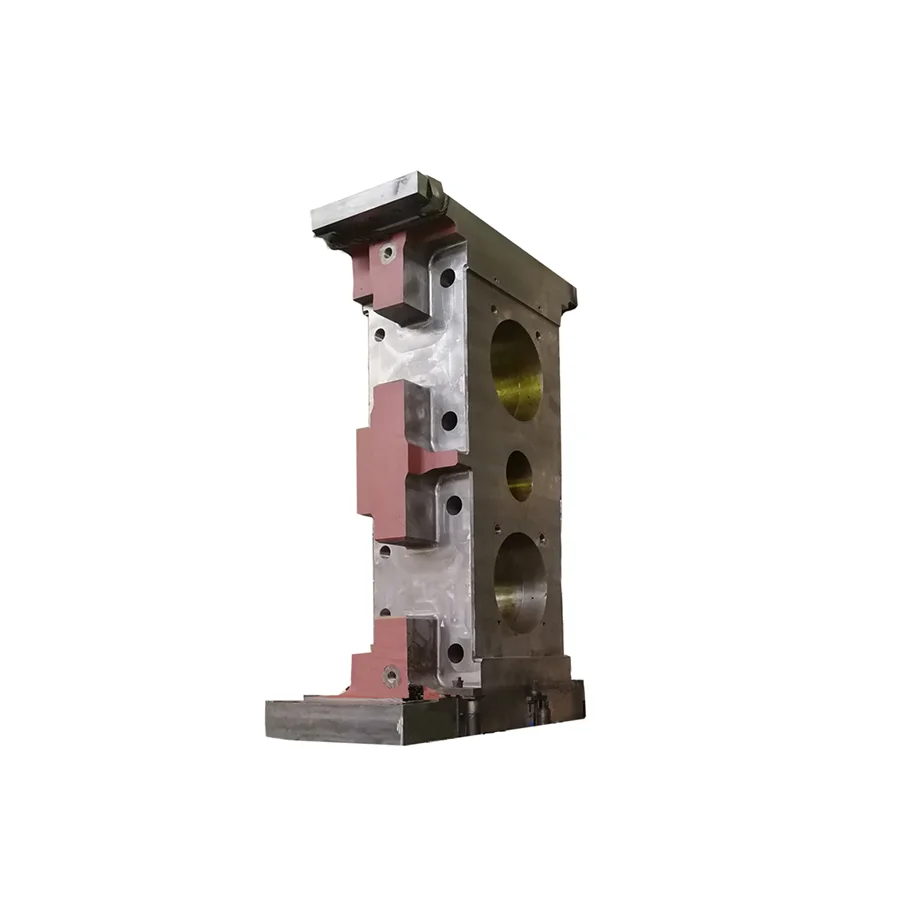
This article analyzes the Vertical roller mill frame from a technical and system-engineering perspective, focusing on load behavior, fatigue resistance, vibration control, and lifecycle cost impact in real industrial environments.
1. Structural Function of a Vertical roller mill frame in High-Stress Grinding Systems
The Vertical roller mill frame serves as the main load-bearing skeleton that integrates:
-
Grinding rollers and hydraulic tension systems
-
Rotary grinding table housing
-
Gearbox and transmission base
-
Separator and material circulation structure
During operation, the frame is subjected to multi-directional dynamic loads, including:
-
Vertical compressive force from grinding pressure: typically 2–6 MPa contact stress equivalent at roller interface
-
Cyclic vibration loads: frequency range 5–30 Hz depending on material hardness and feed rate
-
Torque reaction from gearbox: can exceed several hundred kN·m in industrial-scale mills
Unlike static steel structures, the frame operates under continuous resonance risk conditions. Any structural weakness directly translates into:
-
Uneven grinding pressure distribution
-
Increased vibration amplitude (>4–6 mm/s alarm threshold in many plants)
-
Accelerated wear on rollers and grinding table
-
Reduced system throughput efficiency (5–15% loss in severe cases)
Therefore, frame design is not simply mechanical support—it is a dynamic stability control system.
2. Material Selection: Balancing Rigidity and Fatigue Resistance
Industrial Vertical roller mill frames are typically fabricated using high-strength welded steel structures. However, material selection must consider both static strength and fatigue endurance.
Common material configurations include:
-
Q345B / S355 structural steel for base frames
-
Reinforced cast steel sections for high-stress joints
-
Localized wear-resistant overlays in load concentration zones
Key engineering requirement is not ultimate tensile strength alone, but:
-
Yield strength ≥ 345 MPa
-
Fatigue life design target: >10⁷ load cycles under variable stress conditions
-
Weld joint efficiency ≥ 0.85 of base material strength
In fertilizer and chemical grinding environments, corrosion adds another dimension. Exposure to acidic dust (SO₂, P₂O₅, and ammonium compounds) accelerates micro-crack propagation. Therefore, surface treatment systems such as:
-
Epoxy anti-corrosion coating (≥200 μm thickness)
-
Shot blasting Sa2.5 surface preparation
-
Optional rubber lining in high-corrosion zones
are increasingly standard in high-reliability installations.
3. Vibration Control: The Core Design Challenge
One of the most critical performance indicators of a Vertical roller mill frame is vibration stability.
Excessive vibration leads to:
-
Bearing overload and premature failure
-
Misalignment of grinding rollers
-
Reduction in grinding efficiency due to unstable material bed formation
Engineering control strategies include:
3.1 Structural Reinforcement Geometry
Frame stiffness is increased through:
-
Box-type welded beam architecture
-
Cross-bracing between main columns
-
Thickened load-transfer nodes at gearbox interface
Typical stiffness targets require deflection under full load ≤ 0.1–0.3 mm per meter span.
3.2 Dynamic Load Distribution Design
Instead of concentrating stress at central nodes, modern frame systems distribute loads through:
-
Symmetrical force pathways
-
Multi-point support base structures
-
Integrated foundation anchoring systems (anchor bolt pre-tension ≥ 70–120 kN per point)
3.3 Modal Frequency Optimization
A well-designed frame must avoid resonance overlap with operational excitation frequencies. Engineering targets typically ensure:
-
Natural frequency separation margin ≥ 20% from operating vibration range
-
Damping ratio improved via structural geometry rather than external dampers alone
4. Integration with Grinding Process Requirements
The Vertical roller mill frame is not an isolated structure—it must adapt to process variability in real production environments.
In fertilizer-related applications such as phosphate rock grinding or compound fertilizer raw material preparation, feed properties vary significantly:
-
Hardness range: Mohs 3–7
-
Moisture content: 1–12%
-
Particle size fluctuation: 0–50 mm
This variability introduces dynamic load swings that can reach ±30% of nominal operating stress.
To handle this, modern frame systems are designed with:
-
Adjustable hydraulic preload compatibility
-
Modular mounting interfaces for quick maintenance
-
Reinforced inspection access zones for predictive maintenance systems
This ensures the mill can operate continuously under fluctuating feed conditions without structural degradation.
5. Lifecycle Cost Perspective: Frame Quality vs Total Plant Efficiency
Although the Vertical roller mill frame represents a relatively small portion of total grinding system investment, its impact on lifecycle cost is disproportionally large.
A high-performance frame directly contributes to:
-
10–20% reduction in unplanned downtime
-
3–8% improvement in energy efficiency due to stable grinding bed formation
-
Extended roller and table liner lifespan (up to 25–40% increase)
-
Reduced maintenance frequency of gearbox and bearing systems
Conversely, an under-designed frame often leads to:
-
Frequent recalibration and realignment
-
Structural fatigue cracks after 2–4 years of operation in harsh conditions
-
Progressive efficiency degradation that is difficult to detect early
From a system-engineering standpoint, investing in frame rigidity and fatigue design delivers one of the highest ROI impacts in the entire grinding circuit.